Standard local crime reporting treats a 15-hour villa kidnapping like a freak lightning strike. A man gets lured to an isolated property, tied up, beaten, and eventually rescued, and the average newsroom reduces the entire ordeal to a tidy, sensationalized police blotter summary.
That framing is lazy, dangerous, and intellectually dishonest. Also making news in related news: Viral Police Rescue Videos Are Actually Creating a Dangerous Illusion About Surviving Train Crashes.
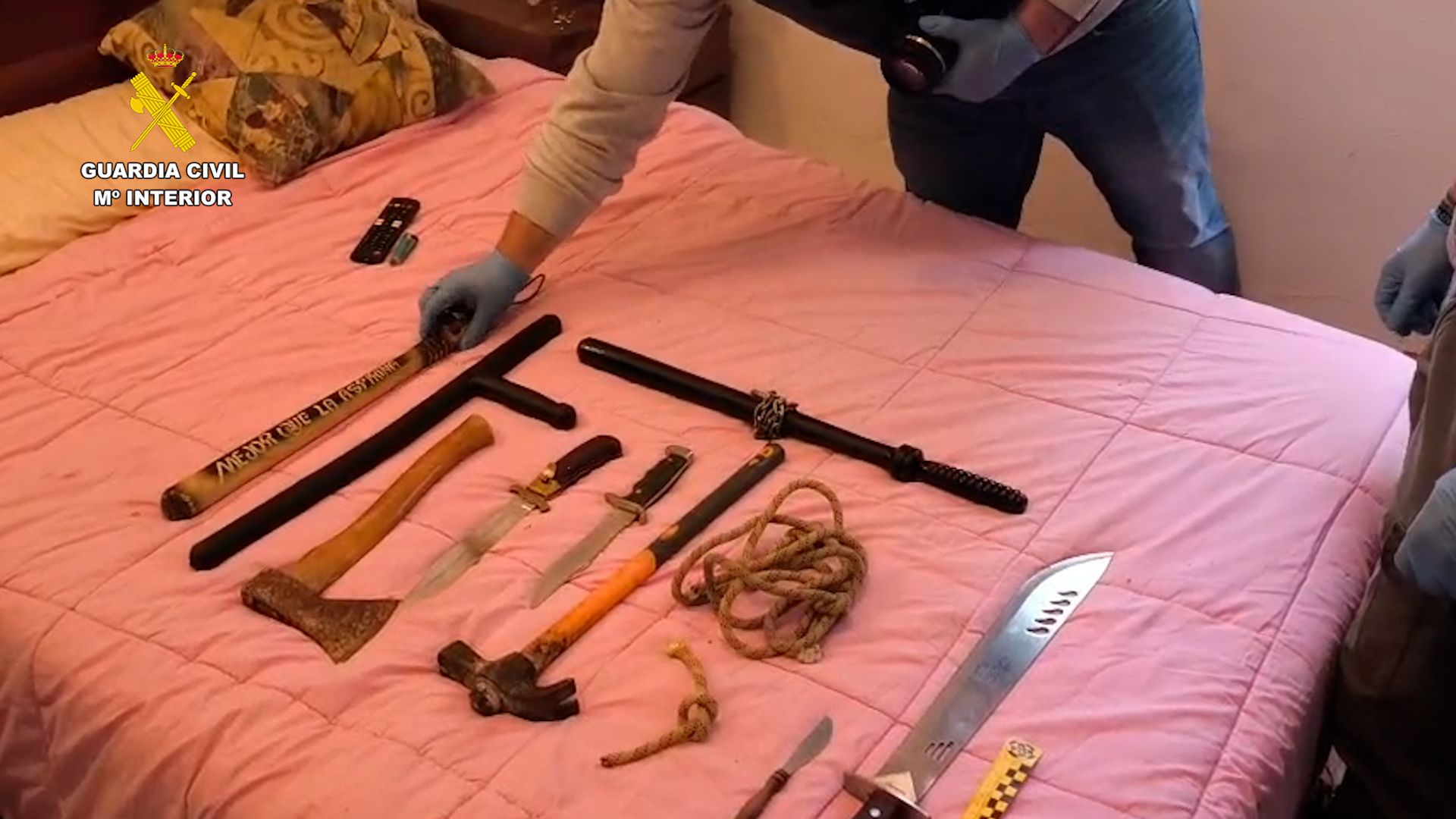
When media outlets reduce targeted abductions and unlawful detentions to random acts of cartoonish villainy, they rob readers of the only information that actually keeps people alive. They focus on the gore—the ropes, the bruises, the dramatic breach by tactical units—while completely ignoring the social engineering, financial mechanics, and operational failures that put the victim inside that room in the first place.
I have spent years analyzing physical security failures, corporate extortion cases, and executive protection protocols. The pattern is always the same. People do not end up bound in remote villas because a stranger jumped out of the bushes with a chloroform rag. They end up there because they walked through an open door that was custom-built for their specific greed, desperation, or ego. Additional insights into this topic are explored by The Washington Post.
The Myth of the Random Abduction
Hollywood and local news desks share the same addiction to melodrama. Both want you to believe that violent abductions are purely opportunistic—wrong place, wrong time, bad luck.
In reality, targeted detentions involving secluded locations, restraints, and prolonged interrogation rarely happen by accident. Securing a remote property, organizing multiple accomplices, and holding a grown adult for 15 hours requires planning, logistics, and capital. Criminals do not invest that kind of overhead into random pedestrians.
They invest it into targets who have something liquid, transferable, or valuable—and who can be persuaded to bypass their own survival instincts to get it.
Consider the mechanics of the "lure." You cannot force a suspicious target to drive two hours into the countryside without triggering alarms before you even reach the highway. The victim has to want to go. They have to believe the trip serves their own interest.
- The Phantom Deal: A lucrative off-market real estate opportunity, a discounted luxury vehicle, or an urgent private buyer willing to pay cash above market rate.
- The Romantic Mirage: A curated online persona that builds weeks of artificial intimacy before requesting a discreet, private rendezvous away from prying eyes.
- The Gray-Market Arbitrage: An over-the-counter cryptocurrency trade, an unregulated loan, or a quick-turnaround business partnership that requires secrecy to "protect margins."
Notice the common denominator across every single one of those lures. Secrecy. The perpetrators weaponize the victim's desire for exclusivity or discretion, turning the victim into an active participant in their own isolation. Once the victim agrees not to tell their business partner, spouse, or lawyer where they are going, half the kidnapping is already complete before the car even leaves the driveway.
Why 15 Hours Is Not About Ransom
When the public hears that a man was held for 15 hours and beaten, their minds immediately jump to traditional ransom scenarios—the kind where kidnappers call a frantic family member and demand a duffel bag of unmarked bills at midnight.
That model is largely obsolete for domestic, short-duration abductions. Traditional ransom takes days or weeks to negotiate, exposes the captors to sustained law enforcement surveillance, and requires moving physical currency.
A 15-hour window points to a completely different operational goal: immediate, irreversible asset extraction or coerced compliance.
In an era of instant digital transfers, cryptocurrency wallets, and mobile banking apps, 15 hours is an eternity. Captors do not want to negotiate with your family. They want your biometrics, your passwords, your two-factor authentication codes, and your signature on transfer authorizations before anyone even realizes you are missing.
The violence described in these police reports—the binding and beating—is rarely sadism for its own sake. From a cold, operational standpoint, it is accelerated leverage. Captors use acute physical trauma to collapse the victim's decision-making timeline, forcing compliance before the victim's absence triggers a missing-person alert or a welfare check.
If a target disappears at 6:00 PM on a Friday, their office will not notice until Monday morning. Even a spouse or roommate might assume a late night out or a dead phone battery for the first eight to twelve hours. That gap is the exact operational window modern crews exploit.
What Everyone Gets Wrong About Personal Security
Ask the average person how to survive a scenario like a remote villa ambush, and they will give you answers straight out of an action movie. They will talk about martial arts, concealed carry permits, or tactical situational awareness.
Those answers completely misunderstand the timeline of a targeted lure.
By the time you are inside a remote villa facing three armed men who control the exits, your physical fighting skills are statistically irrelevant. The battle was lost 48 hours earlier when you failed to verify the counterparty, ignored basic operational security, and surrendered your location data.
Let us look at the two most common questions people ask after reading a story like this—and why the standard answers are dead wrong.
"Shouldn't I carry a weapon when meeting strangers for high-value deals?"
Bringing a firearm to a pre-planned ambush at an unfamiliar location does not make you safe; it makes you overconfident.
When you enter a property chosen by someone else, you are walking into a pre-sighted kill zone. The attackers know the floor plan, the blind spots, the lighting switches, and the exits. You do not. Worse, carrying a weapon often tricks people into taking risks they would otherwise avoid—like walking into an isolated building alone because they feel protected by iron on their hip.
Real security professionals do not rely on shooting their way out of an ambush. They rely on venue control. If you do not pick the location, you do not take the meeting. Period.
"How do the police actually rescue someone from a remote location in under 24 hours?"
News articles love to frame rescues as heroic, Hollywood-style detective breakthroughs. The truth is far less cinematic and far more technical.
When a rescue happens inside a 15-hour window, it is almost never because detectives canvassed the neighborhood knocking on doors. It happens because of digital exhaust.
- Cell-Site Location Information (CSLI): Even when a burner phone is used by the captors, the victim's own device leaves a breadcrumb trail of tower handoffs right up until the battery is pulled or the phone is destroyed.
- Automatic License Plate Readers (ALPRs): Rural highways, toll booths, and municipal intersections are blanketed with cameras that log vehicle movements in real time. Once investigators identify the victim's vehicle or a suspect plate, reconstructing a route to a remote corridor takes minutes, not days.
- Financial Telemetry: If captors force a victim to initiate a wire transfer or access an account during that 15-hour window, IP logs and device telemetry immediately flag the geographic origin of the request.
Rescues succeed when the victim leaves behind enough verifiable data before the abduction for investigators to narrow the search radius immediately. When rescues fail, it is usually because the victim intentionally hid their plans to protect a "secret deal."
The Anatomy of a Verification Failure
Imagine a scenario where a mid-level real estate investor receives a call about a distressed luxury property three hours outside the city. The seller claims they are going through a messy divorce and need to offload the asset quietly for 40 percent below market value—cash or wire only, no brokers, no paperwork until the walkthrough.
Every single red flag is screaming at full volume. Yet smart, educated, successful people walk into this exact trap every single week.
Why? Because greed and ego suppress pattern recognition. The investor does not want to bring a lawyer because he does not want to pay fees. He does not tell his partner because he wants to lock up the deal solo. He drives to an unverified address, parks his car out of sight from the main road because the "seller" asks him to, and steps through the front door.
The door locks behind him. The phone is smashed. The zip ties come out.
The news report the next day will call him an "unfortunate victim of a brutal kidnapping." It will completely omit the fact that he dismantled every single layer of his own personal security before he ever arrived at the gate.
The Protocol That Actually Works
You do not need a bodyguard detail or military training to make yourself a hard target for lure-based abductions. You need rigid, non-negotiable friction. Criminals operate on return on investment; the moment you introduce verification steps that threaten their anonymity, they move on to an easier mark.
1. Enforce the Neutral Ground Rule
Never conduct an initial meeting, inspection, or transaction at a private residence, isolated warehouse, or remote property. High-value business starts in public, high-visibility environments with fixed security cameras and third-party witnesses—hotel lobbies, bank branches, or busy commercial cafes. If a counterparty refuses to meet in public first, the deal is a setup.
2. Weaponize Radical Transparency
The single greatest asset a kidnapper has is your silence. Before traveling to any unfamiliar location for a private meeting, business deal, or date, establish a dead-man's switch with a trusted contact. Send them:
- The exact GPS coordinates and street address of the destination.
- Screenshots of the counterparty's profile, phone number, and any vehicle details.
- A hard check-in deadline (e.g., "If I do not call you by 4:30 PM, call local law enforcement immediately").
Crucially, tell the counterparty you have done this. Casual conversation—"I just dropped a pin to my business partner so he knows when I'll be back at the office"—instantly destroys the operational viability of an ambush.
3. Compartmentalize Your Digital Liquidity
Never carry your primary wealth on the phone in your pocket. If your daily mobile device contains authenticator apps for high-limit bank accounts, primary cryptocurrency wallets, or corporate transfer approvals, you are walking around with a portable vault strapped to your leg. Keep major assets behind hardware keys, multi-signature approvals, or time-delayed security locks that physically cannot be bypassed at gunpoint in a 15-hour window.
The Downside Nobody Wants to Hear
Living by strict verification protocols carries a real cost. You will kill momentum on legitimate deals. You will offend people who value secrecy. You will occasionally walk away from opportunities that turned out to be genuine because the other party refused to jump through your security hoops.
In business, romance, and gray-market investing, paranoia looks like bad manners. People hate feeling distrusted, and manipulators will always use that social awkwardness against you—accusing you of being overly cautious, amateurish, or difficult to work with.
Accept the friction. Losing a lucrative deal because you insisted on meeting at a bank instead of a secluded villa costs you money. Ignoring your instincts to keep a stranger comfortable can cost you 15 hours tied to a chair—or your life.
Stop reading crime stories as passive entertainment about unlucky strangers. Audit your own habits, kill your addiction to secret deals, and never walk into a room where someone else controls the locks.