Everyone wants to frame Peru's coastline as a simple tug-of-war where Washington is throwing money at container cranes to beat Beijing. That story sounds neat on cable news. It's also mostly wrong.
When the U.S. State Department disclosed in November 2026 that Washington had committed $4.5 million in Foreign Military Financing for the design phase of infrastructure work at Peru's Port of Callao, headlines immediately pitted the check against China's $1.3 billion Chancay megaport less than 80 kilometers up the coast. On paper, $4.5 million next to $1.3 billion looks like bringing a pocketknife to a naval artillery duel. If you actually look at what that money buys, how Peruvian port logistics work, and what the Pentagon approved earlier in 2026, a completely different picture emerges.
The $4.5 Million Misunderstanding and the Real $1.5 Billion Number
Here's the first thing most surface-level coverage misses. The $4.5 million announced during Under Secretary of State Thomas DiNanno's November 2026 visit to Lima isn't a standalone commercial port grant. It's seed funding for the engineering and technical design phase of a much bigger project—modernizing and relocating Peru's primary naval base at Callao.
Back in January 2026, the U.S. Defense Security Cooperation Agency (DSCA) notified Congress of a potential Foreign Military Sale to Peru valued at up to $1.5 billion for design and construction at Callao Naval Base. That package covers engineering studies, construction management, maritime infrastructure, and up to 20 U.S. government or contractor personnel stationed on site for as long as a decade to oversee the build. By April 2026, Virginia-based Planate Management Group had already picked up the technical design package contract for the base.
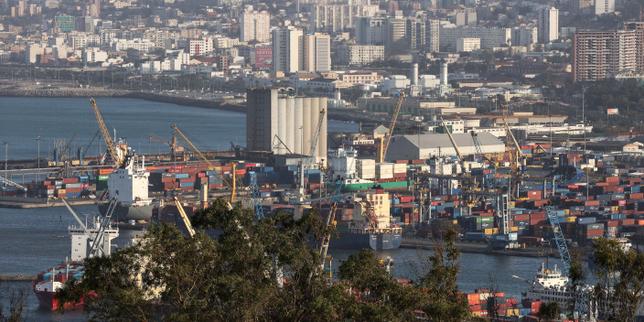
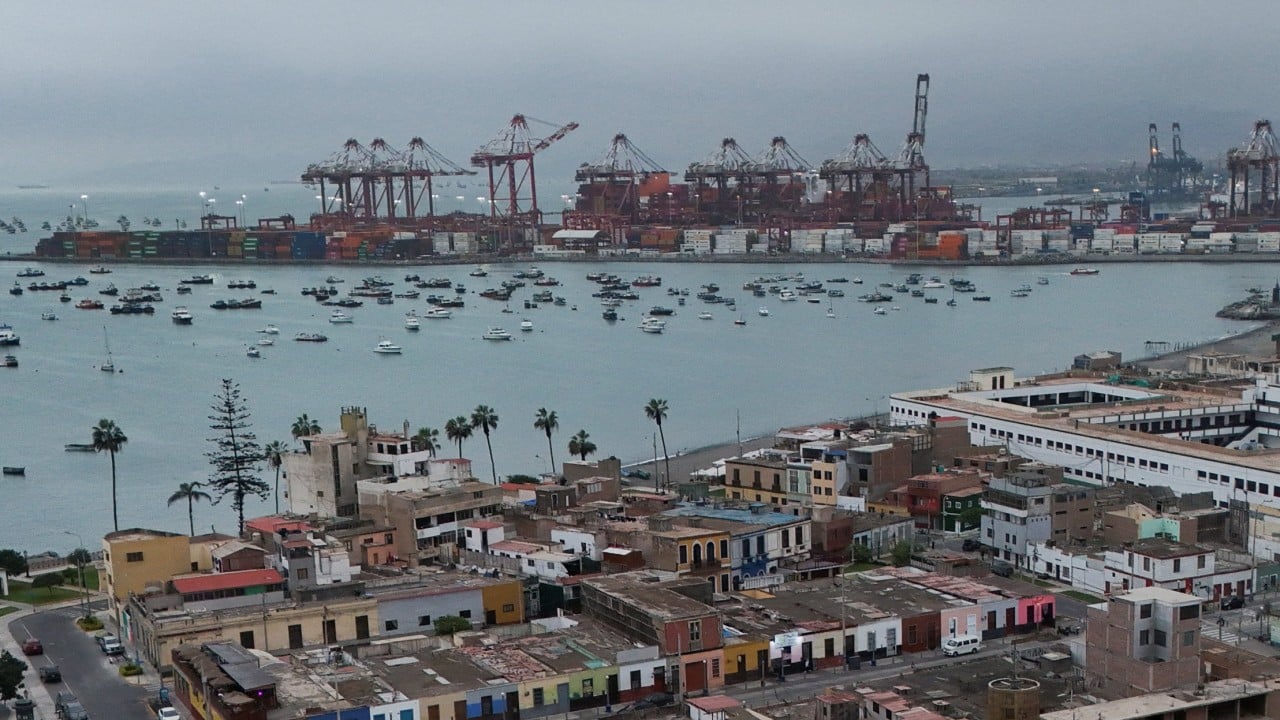
Why does a naval base matter in a commercial port battle? Because in Callao, warships and container ships share the exact same congested waterways. Every time the Peruvian Navy maneuvers vessels in and out of its existing facility, commercial traffic slows down, and security friction spikes. Relocating and upgrading the naval base doesn't just make military operations safer—it physically unlocks waterfront space so Callao's commercial terminals can expand.
Why Chancay Changed the Math on Peru's Coast
To understand why Lima and Washington are suddenly moving fast on Callao, you have to look at what happened 60 to 80 kilometers north in Chancay.
Opened in November 2024 as a joint venture between Chinese state-owned giant COSCO Shipping Ports (holding a 60 percent stake) and Peruvian mining firm Volcan, Chancay wasn't built as a modest regional pier. Its first phase cost $1.3 billion, with total long-term investment projected around $3.5 billion. With a natural water depth of 17.8 meters and four initial berths, Chancay can handle ultra-large container vessels that struggle with draft limits elsewhere on South America's west coast.
And the numbers coming out of Chancay aren't hypothetical anymore. After receiving its formal commercial operating license in June 2025, the terminal moved over 584,900 twenty-foot equivalent units (TEUs) and $4.29 billion in trade through July 2026. By the end of August 2026, cumulative trade had climbed to roughly $4.57 billion, with container volumes surging 51.6 percent year-on-year in the first eight months of 2026 alone. Direct shipping routes now link Chancay to major Chinese ports while feeding cargo into Chile, Colombia, Ecuador, Panama, and Costa Rica.
Callao still dominates Peru's overall cargo volume, hands down. Global operators like APM Terminals (part of Maersk) and DP World run massive facilities there. Yet Callao has suffered from notorious landside bottlenecks—trucks idling for hours on choked urban roads and tight turning basins inside the harbor. Chancay arrived with automated cranes, dedicated tunnels, and zero legacy congestion.
What Callao Is Actually Doing to Fight Back
If you think Peru is sitting around waiting for Washington to save Callao, you haven't read Peru's National Port Authority (APN) filings from late November 2026.
Just days after the U.S. State Department's November announcement, the APN approved a sweeping revision to Callao's master plan. The blueprint lays out more than $3.9 billion in projected investments stretching toward 2055 to keep Callao competitive against Chancay. Without major expansion, Peruvian planners estimate Callao would face an annual capacity deficit of 3.64 million TEUs by 2055.
The revised plan tackles the exact operational headaches that have frustrated shipping lines for years:
- A new two-way access channel: Long-term plans call for dredging a channel roughly 400 meters wide and 18 meters deep, backed by a four-kilometer breakwater, matching Chancay's deep-water advantage.
- Truck staging and rail links: An external truck waiting area (antepuerto) designed for 696 heavy vehicles, mandatory appointment systems, dry ports, and a five-kilometer rail connection linking into the Central Andean Railway to pull cargo off Lima's streets.
- The Chancay-Callao-Pisco corridor: Peru's Ministry of Transport and Communications is bundling 29 infrastructure projects and contract addenda worth over $12.5 billion to stitch Chancay, Callao, and the southern port of Pisco into one integrated central logistics corridor.
Notice the irony here. Lima doesn't view Chancay and Callao as a zero-sum death match. Peruvian planners are literally designing road and rail networks to connect them.
The Sovereignty and Dual-Use Debate Nobody Wants to Touch
Still, ignoring the geopolitical friction would be naive. Washington's sudden enthusiasm for Callao's naval infrastructure isn't purely about helping Peruvian blueberry exporters beat shipping schedules.
U.S. defense officials—including former U.S. Southern Command leaders—have repeatedly warned that deep-water ports controlled by Chinese state-owned enterprises pose dual-use risks. In plain English, the Pentagon worries that a pier built for COSCO container ships today could resupply or repair People's Liberation Army Navy vessels in a future Pacific crisis. Adding fuel to that fire, a Peruvian court ruling earlier in 2026 restricted local regulatory oversight at Chancay, prompting the U.S. State Department to publicly warn in February 2026 that China's exclusive control over the facility threatened Peru's sovereignty.
Peru's government pushes back hard against that framing. Foreign Minister Carlos Espá has stated flatly that Peru refuses to choose between Washington and Beijing, calling for a strict ban on any foreign military use of Peruvian ports. There is zero public evidence that Chancay has hosted Chinese military vessels or operated as anything other than a commercial cargo hub.
For shipping executives and supply chain managers, though, the political noise creates real operational consequences. When Washington backs Callao's naval relocation while Beijing's state champions run Chancay, you end up with two rival superpowers subsidizing infrastructure upgrades within an hour's drive of each other. Peru gets world-class maritime capacity either way.
What Smart Importers and Analysts Should Watch Next
If you move freight through South America's Pacific coast, invest in regional infrastructure, or track U.S.-China competition, stop watching headline dollar figures and track three concrete milestones instead:
- Follow the DSCA execution timeline, not the press releases. Under Foreign Military Sales rules, a $1.5 billion congressional notification is a ceiling, not an overnight wire transfer. Watch how quickly Peru signs formal Letters of Offer and Acceptance following Planate Management Group's design phase—that tells you whether the Callao naval base relocation will break ground before 2028 or stall in Peruvian procurement bureaucracy.
- Track inland rail and highway bottlenecks. Deep water means nothing if containers sit stuck on the Pan-American Highway. Monitor whether Peru's 120-kilometer central highland rail link and Callao's 696-truck staging facility actually secure environmental permits and private financing.
- Compare total landed costs, not ocean transit times. Chancay shaves roughly 10 to 12 days off direct trans-Pacific transit to Shanghai, which is huge for perishable agro-exports like Peruvian blueberries and avocados. Yet Callao still offers denser feeder networks, established customs brokers, and fierce terminal competition between DP World and APM Terminals. Pricing leverage for shippers will come from playing both ports against each other during annual contract negotiations.
The real story on Peru's coast isn't that Washington finally matched Beijing's checkbook. It's that Peru figured out how to get China to build a $1.3 billion commercial megaport while getting the United States to help modernize its premier naval base right next door. For a mid-sized economy navigating superpower rivalry, Lima is playing both sides better than either capital wants to admit.
For additional background on how the U.S. funding fits into Peru's broader naval modernization, see U.S. funds port design in Callao, which breaks down the specific role of the Callao Naval Base within the infrastructure program.