They brought in the industrial power washers, the cranes, and the taxpayer-funded security details. They scrubbed fifty stories of illegal aerosol paint off the stalled Oceanwide Plaza in downtown Los Angeles. City Hall threw a victory lap. The local press ran breathless headlines celebrating the restoration of civic order.
They all missed the point entirely.
Celebrating the erasure of the Graffiti Towers is like putting a fresh coat of primer over a cracked foundation and calling the house fixed. City officials and mainstream commentators are treating a symptom of catastrophic urban development failure as if it were the disease itself. The paint is gone, sure. The concrete carcass remains. And by spending millions of public dollars to sanitize a private billionaire's abandoned monument to hubris, Los Angeles just subsidized failure while destroying the only organic value that distressed asset had left.
If you work in commercial real estate, municipal finance, or urban planning, you know the truth nobody at City Hall wants to say out loud. The graffiti did not ruin downtown Los Angeles. The towers were already dead long before the first tagger scaled the perimeter fence.
The Myth of the Broken Windows Victory
The lazy consensus dominating local coverage relies on a bastardized reading of James Q. Wilson and George Kelling’s 1982 Broken Windows theory. The standard narrative goes like this: visible disorder invites violent crime, depresses adjacent property values, and scares away tourists before major global events like the World Cup and the Olympics. Therefore, scrub the glass, arrest the trespassers, and downtown magically heals.
That logic collapses under five minutes of scrutiny.
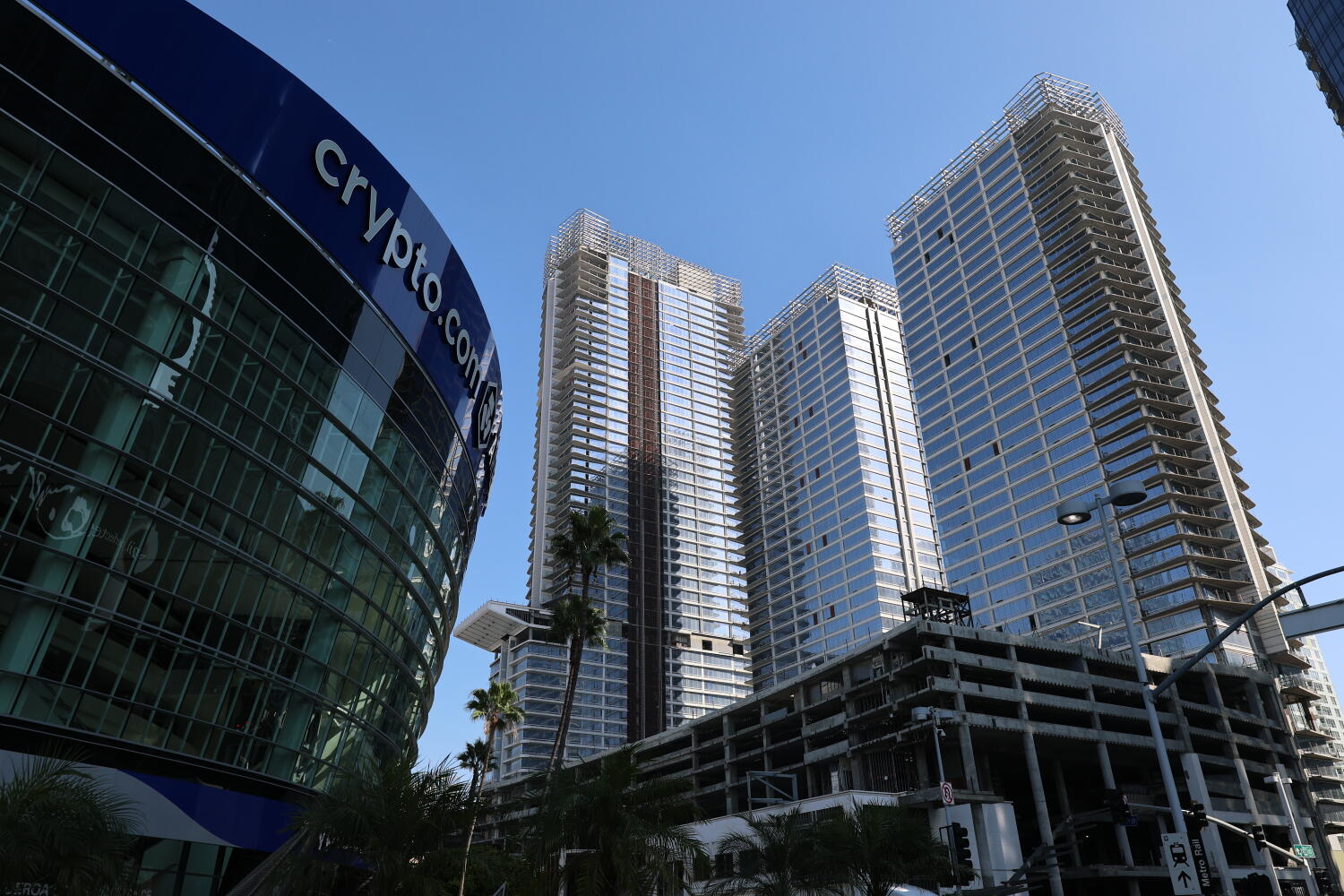
Broken Windows policing was designed for active, functioning neighborhoods teetering on the edge of neglect—places where replacing a shattered storefront window signals that residents are watching and caring. Oceanwide Plaza is not a corner bodega. It is a 1.5-million-square-foot, three-tower megaproject sitting across from the Crypto.com Arena that has been frozen in concrete and steel since early 2019.
When Beijing-based Oceanwide Holdings ran out of cash, leaving behind over a billion dollars in stalled construction and hundreds of millions in unpaid mechanic's liens, the building became a vertical ghost town. Leaving a half-built skyscraper empty for half a decade is the actual broken window. Spray paint on thirty-foot glass curtain walls was simply the inevitable biological reaction to a corpse left out in the sun.
I have spent fifteen years advising distressed debt funds and watching municipal governments burn cash on cosmetic urbanism. Whenever a city panics over optics, they reach for the pressure washer instead of the bankruptcy code. Scrubbing those towers did not add a single dollar to the structural valuation of the asset. It did not clear a single title dispute. It merely turned an internationally famous cultural landmark back into an internationally ignored eyesore.
What the Paint Actually Accomplished
For a brief window in early 2024, something bizarre happened in the heart of South Park. A dead asset came alive.
Before the tagging crews breached the site, Oceanwide Plaza was invisible. Tourists walked past its chain-link fences staring at their phones, annoyed by the blocked sidewalks. Once twenty-seven floors of the tallest tower were covered from edge to edge in massive, multi-story block letters, people stopped. They looked up. Photographers flew drones through the downtown canyon. Art critics debated the logistics of rigging ropes down a fifty-three-story facade in the dead of night. BASE jumpers used the scaffolding as a launchpad.
For three months, the Graffiti Towers were the most photographed, discussed, and organically viral piece of architecture in North America.
Consider the sheer absurdity of the city's reaction. Municipalities spend tens of millions of dollars hiring branding agencies, commissioning sterile corporate murals, and building public art installations to generate a fraction of the global attention those three abandoned towers generated for free. Downtown Los Angeles has suffered from a catastrophic post-pandemic identity crisis, plagued by a roughly 30 percent office vacancy rate and collapsing commercial tax revenues. Suddenly, the neighborhood had an unmistakable, gritty, undeniable cultural pulse—and the city's first instinct was to sandblast it into oblivion.
Does illegal trespassing pose a massive liability risk? Obviously. Nobody in their right mind wants a twenty-year-old kid falling down an unguarded elevator shaft in the dark. Securing the perimeter was non-negotiable. Paying to erase the facade, however, was pure political theater designed to appease downtown business improvement districts that confuse sterility with prosperity.
The Real Financial Mechanics of a Zombie Skyscraper
To understand why wiping the towers clean is a financial blunder, you have to look at the capital stack—the hierarchy of debt and equity sitting on that parcel of land.
Oceanwide Plaza is trapped in Chapter 11 bankruptcy limbo. Lenders, contractors, and the developer have spent years locked in litigation over who gets paid first when the property finally liquidates. Here is the brutal math of distressed high-rise construction:
- Demolition costs are prohibitive. Tearing down three concrete-core skyscrapers in a dense urban grid would cost hundreds of millions of dollars and choke downtown traffic for years.
- Completion costs have exploded. Since construction halted in 2019, commercial construction costs in Southern California have surged by more than 35 percent, while high-interest debt has crushed the math on luxury condos and hotel rooms.
- Carrying costs bleed value daily. Security, insurance, weatherproofing, and legal fees eat into whatever recovery creditors hope to salvage.
Any buyer stepping into that bankruptcy auction is not buying a turnkey luxury development. They are buying raw concrete, weathered mechanical systems, and a mountain of red tape. Because the exterior curtain wall has been exposed to the elements without climate control for years, much of that glass and framing will likely require extensive remediation or replacement anyway before a certificate of occupancy is ever issued.
Let that sink in. The city spent roughly $4 million of taxpayer money—funds pulled from municipal coffers while Los Angeles faces a massive budget deficit—to clean glass panels that a future developer may have to rip out and replace regardless.
Answering the Questions Nobody Wants to Confront
When this story broke, public discourse immediately split into predictable, shallow camps. If you look at what people are actually searching for regarding the Oceanwide Plaza cleanup, the questions reveal just how completely the public has been misled about how urban real estate works.
Why did Los Angeles taxpayers pay to clean a private building?
Because the city blinked first. Under municipal nuisance abatement laws, a city can step in to remediate public hazards on private property and slap a super-priority tax lien on the deed to recover the costs. In theory, taxpayers get paid back when the property sells. In practice, adding another $4 million lien onto a property already drowning in hundreds of millions of dollars of senior debt simply depresses the final sale price further, prolonging the exact bankruptcy deadlock the city wants to end.
Will cleaning the graffiti attract a buyer faster?
No. Institutional real estate private equity firms—the only entities with the balance sheets capable of rescuing a billion-dollar megaproject—do not make acquisition decisions based on whether there is Krylon on the fortieth floor. They underwrite capitalization rates, construction loan spreads, municipal permitting timelines, and downtown absorption rates. Removing the paint changes zero variables in an Excel financial model. In fact, removing the cultural notoriety strips away the single easiest marketing hook a savvy adaptive-reuse developer could have leveraged to rebrand the project.
Isn't leaving the graffiti up an invitation for more crime?
Only if you conflate a lack of physical perimeter security with visual art. Once the LAPD and private contractors welded the access points shut, installed motion-detection cameras, and stationed round-the-clock guards at the base, the physical breach was solved. The paint on the outside of the building had zero operational impact on street-level safety once the doors were locked. The cleanup was entirely about optics, not security.
The Counter-Intuitive Play That Would Have Worked
Imagine a scenario where Los Angeles leadership possessed an ounce of commercial imagination instead of reflexive bureaucratic panic.
Once the perimeter was secured and the trespassers were cleared, the city and the bankruptcy court had an unprecedented piece of leverage sitting right across from a major sports and entertainment arena. Instead of spending millions to return the towers to beige corporate anonymity, they could have monetized the spectacle while the bankruptcy litigation played out.
- Freeze the facade as a temporary living monument. Leave the existing pieces intact behind a fortified perimeter. Use the global media spotlight to shame the stalled creditors and force an accelerated timeline in bankruptcy court. Nothing moves slow-walking lawyers faster than daily international embarrassment.
- Auction temporary commercial wraps. Downtown Los Angeles sits in a prime billboard corridor. Rather than letting taxpayers foot the bill for maintenance and security, the bankruptcy receiver could have partnered with the city to allow massive, revenue-generating commercial wraps over sections of the lower podium, funneling every dollar directly into site security and municipal abatement costs.
- Curate a legitimate urban art bridge. Before demolition or construction resumes—which will take years—commission the world's top legal street artists and muralists to transform the remaining concrete surfaces into a sanctioned, documented open-air exhibition, charging admission to viewing decks across the street and splitting proceeds with local housing funds.
Is there a downside to embracing the chaos? Yes, and anyone pretending otherwise is lying. Leaving a tagged skyscraper standing invites copycat climbers, forces the city to maintain an expensive police perimeter, and infuriates neighboring luxury landlords who want downtown to look like an outdoor shopping mall in Irvine. You trade short-term aesthetic compliance for long-term cultural relevance and financial leverage.
Los Angeles chose compliance.
The Illusion of Control
Look closely at the photos of the newly scrubbed Oceanwide Plaza. The glass gleams in the California sun. The concrete columns are gray and uniform once more. To the untrained eye, order has been restored.
To anyone who understands cities, the building looks terrifyingly hollow.
Great cities are not sterile theme parks scrubbed clean for visiting dignitaries. They are friction machines. When a speculative bubble pops and leaves a billion-dollar skeleton towering over the streets, the graffiti that grows on its bones is the city's immune system telling the truth about what happened. By scrubbing the walls without fixing the zoning, the permitting bottlenecks, or the financial paralysis that froze the project in 2019, Los Angeles didn't solve its downtown crisis.
They just bought a very expensive eraser and pretended the math never happened.