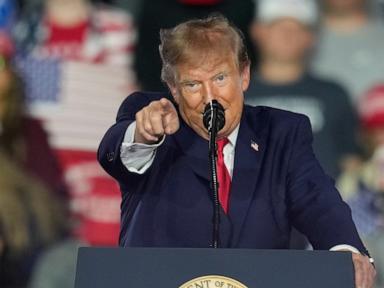
When President Donald Trump took the stage in Dubuque, Iowa, and Salina, Kansas, on November 1, 2026, conventional political wisdom missed the real story. Pundits saw a victory lap in reliable red territory. They were wrong. Those rallies were a frantic, last-minute defensive play to stop a catastrophic Republican collapse in the 2026 midterm elections.
Let's look at the actual numbers and logistics. Just days before the November 3 election, Trump's team initially canceled both the Iowa and Kansas appearances in favor of tele-rallies. Then they abruptly reversed course. Why would a sitting Republican president burn precious final-weekend hours in states he dominated in previous presidential cycles? Because internal polling and voter sentiment in the Heartland were flashing bright red warning signs for GOP control of both the Senate and the House.
Why Iowa and Kansas Suddenly Became Battlegrounds
Normally, a Republican president spends the final 48 hours of a midterm cycle in swing states like Pennsylvania, Michigan, or Nevada. You don't fly to Salina Regional Airport in central Kansas unless your Senate majority is actively slipping away. Kansas hadn't elected a Democratic senator since 1932—a 94-year streak. Yet going into November 2026, Democratic candidate Adam Hamilton was mounting an unexpectedly competitive challenge against incumbent Republican Sen. Roger Marshall.
Iowa told a similar story. Rep. Ashley Hinson, the Republican Senate nominee, found herself locked in a brutal fight against Democrat Josh Turek. According to Reuters/Ipsos polling from October 2026, Trump's approval rating among rural Americans had dropped to a low of 45 percent. For a party that relies on massive rural turnout to offset urban and suburban losses, a 45 percent approval rating in the farm belt is an existential crisis.
The Economic Pain Driving Rural Voter Frustration
If you talk to voters and local officials across the Midwest, the cause of this sudden vulnerability isn't a mystery. Two major administration policies weighed heavily on Republican candidates throughout the fall of 2026:
- Aggressive Tariffs: Agricultural economies in Iowa and Kansas depend directly on export markets. Outgoing Republican Rep. Don Bacon of Nebraska stated publicly on CNN's "State of the Union" that tariffs were unpopular across the Midwest and warned that he had tried telling the president directly.
- The War in Iran: Voters in rural communities—who bear a disproportionate share of military service—began questioning the economic and human fallout of the administration's military conflict in Iran.
At the Five Flags Event Center in Dubuque, loyal supporters still turned out in force. Attendees like 60-year-old civil engineer Lutz expressed strong satisfaction with Trump's second-term record, telling reporters he wanted Republicans to keep the House and Senate so the president's agenda could keep moving forward. Others, like 44-year-old Wendy Kuenzler of Burlington, noted that Iowa felt like it was at a genuine crossroads with multiple competitive races on the ballot.
Inside the Final Weekend Rally Strategy
The contrast between the message on stage and the reality in the stands highlighted the exact tension Republicans faced. In Dubuque and Salina, Trump framed the midterm elections squarely around his own record and leadership. Sen. Tim Scott of South Carolina reinforced that framing on NBC's "Meet the Press," noting that the president himself had said the election was about him and that his agenda was undeniably on the ballot.
Meanwhile, Secretary of State Marco Rubio joined the closing push, arguing to voters that keeping families safe was a president's primary duty and claiming America was stronger under Trump's leadership. Trump himself capped off a relentless month-long sprint—more than two dozen rallies across 19 states since October 1—with a nearly 90-minute speech in Salina that stretched close to 10 p.m. local time.
Yet even among the faithful in central Kansas, fatigue was visible. Associated Press reporters on the ground observed hundreds of attendees beginning to file out midway through the 90-minute address. When a campaign has to scramble to re-book rallies in states that haven't sent a Democrat to the Senate in decades, enthusiasm gaps matter.
Democratic Infighting Gave the GOP False Hope
One reason Republican strategists believed they could hold the line—and why Trump made the late pivot back to Iowa and Kansas—was visible turmoil on the Democratic side. Heading into the final weekend, Democrats were dealing with a public rift in Michigan's crucial Senate race.
Democratic nominee Abdul El-Sayed found himself feuding with former primary rival Rep. Haley Stevens over an outside group's advertisement and differing stances on U.S. support for Israel. On the very same Sunday Trump was rallying in the Midwest, Stevens skipped a planned joint church appearance with El-Sayed and Rep. Jim Clyburn in Detroit, choosing instead to attend a separate service alongside Republican Senate candidate Mike Rogers. Michigan State University political scientist Matt Grossmann noted that continued visible division right before Election Day was unhelpful for the El-Sayed campaign.
Republicans hoped that if they could pick off Michigan—or at least keep Democrats tied down defending their own turf—they wouldn't have to worry about deeper red states like Texas, Ohio, Iowa, or Kansas. The White House was simultaneously preparing executive contingency plans to push forward parts of Trump's agenda without congressional cooperation just in case the House or Senate flipped.
What Actually Happened When Voters Cast Their Ballots
In politics, late-stage defensive rallies rarely reverse months of economic frustration. More than 52 million Americans had already cast early in-person or mail ballots before November 3, shattering the previous midterm record of nearly 46 million early votes set in 2022, according to the University of Florida's Election Lab. By the time Trump stepped off the plane in Dubuque and Salina, millions of Midwesterners had already locked in their choices.
When the votes were counted on November 3, the warning signs that forced Trump's last-minute detour proved completely accurate:
- The House Flipped Decisively: Democrats swept into the House of Representatives, capturing at least 258 seats in the party's largest House victory since 1992.
- Kansas Broke Its 94-Year Streak: Despite Trump's late-night rally in Salina alongside Sen. Roger Marshall, Democrat Adam Hamilton won the Senate seat, becoming the first Kansas Democrat elected to the U.S. Senate since 1932.
- Iowa Flipped to the Democrats: Democrat Josh Turek defeated Ashley Hinson in Iowa's Senate race, campaigning on what he described as a common-sense prairie populist agenda.
- Broad Senate Losses: Beyond Iowa and Kansas, Democrats picked up Senate seats across the map—including Mary Peltola in Alaska, giving the party its ninth Senate flip of the cycle, the most since 1958. Even in Michigan, despite the pre-election friction with Haley Stevens, El-Sayed prevailed to join the incoming Democratic Senate majority.
How to Read Midterm Signals Before Election Day
If you follow political campaigns or analyze election cycles, the 2026 Iowa and Kansas rallies offer a masterclass in separating campaign optics from actual electoral math. Next time you watch a closing weekend rally blitz, apply these practical checks instead of relying on crowd size or cable news spin:
- Watch the travel itinerary, not the speech: Ignore what candidates say about momentum. Look at where the airplane lands in the final 72 hours. When a party sends its top surrogate into states it won comfortably two years earlier, internal polling is showing severe trouble.
- Track early vote totals against structural trends: High early turnout—like the 52 million pre-Election Day ballots recorded in 2026—means late campaign pivots can only reach a shrinking pool of undecided voters.
- Listen to departing incumbents: Outgoing lawmakers who no longer face primary threats—like Nebraska's Don Bacon warning about Midwest tariff backlash—usually tell the unvarnished truth about what voters are saying at town halls.
- Separate primary friction from general election alignment: High-profile spats like the Detroit church split between Haley Stevens and Abdul El-Sayed generate massive headlines, but macroeconomic pressures and presidential approval ratings almost always override local party drama in a wave election.
The rallies in Dubuque and Salina weren't a sign of Republican strength. They were the clearest possible signal that the GOP's congressional firewall had already cracked—and that two days of speeches couldn't rebuild it.
You can watch footage from the closing campaign push in Trump rallies in Iowa and Kansas in final push, which captures the rallies alongside the late-stage party dynamics heading into the midterm vote.