The United Arab Emirates is making one thing unmistakably clear to Washington, Tel Aviv, and every hawkish think tank in between. Military strikes against Iran will not produce a clean victory, a rapid regime collapse, or a neat diplomatic exit. For Emirati policymakers, kinetic warfare in the Persian Gulf does not offer an off-ramp—it detonates the exact economic foundation the federation spent fifty years building.
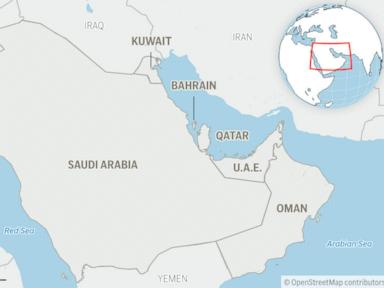
When senior UAE officials warn that military solutions carry no quick exit strategies, they are not reciting boilerplate diplomatic platitudes. They are reading a map. From the glass towers of Dubai to the sovereign wealth corridors of Abu Dhabi, the Emirates sits minutes away by ballistic missile or low-flying drone from Iranian launch sites across the water. A shooting war does not happen to the UAE from a safe distance. It happens directly over its desalination plants, its aviation hubs, and its liquefied natural gas terminals.
Geography Is a Stubborn Ledger
Washington planners often view the Persian Gulf through the lens of carrier strike groups, standoff munitions, and layered missile defense grids. Emirati strategists look at the same body of water and see a narrow, 34-mile-wide choke point at the Strait of Hormuz alongside the world's most concentrated cluster of exposed civilian infrastructure.
You cannot intercept everything. Even the most sophisticated air defense networks operate on probabilities, not guarantees. When Iran or its regional proxies launch saturation swarms of cheap one-way attack drones mixed with maneuvering ballistic missiles, defenders face a brutal math problem. Interceptors cost millions of dollars per shot and take months to manufacture, while incoming munitions cost a fraction of that price and can be fired in waves.
If even two percent of a major barrage slips through the net, the consequences for a small, hyper-modern coastal state are immediate. Consider the desalination vulnerability. Unlike nations with deep freshwater aquifers or major river systems, the Gulf Arab states rely on coastal desalination facilities for the overwhelming majority of their potable water. Knocking out three or four major plants in Abu Dhabi or Dubai would not merely disrupt business; it would render major urban centers uninhabitable within days. No air superiority campaign can un-break a shattered water grid before panic sets in.
The Architecture of Emirati Deterrence Has Changed
For much of the 2010s, the UAE earned a reputation in Western capitals as "Little Sparta." Abu Dhabi deployed special forces to Yemen, built forward operating bases along the Horn of Africa, and projected hard power well beyond its borders. That era ended not because Emirati leaders lost their nerve, but because they audited the return on investment.
The turning point arrived in September 2019, when precision drone and cruise missile strikes crippled Saudi Aramco's processing facilities at Abqaiq and Khurais, temporarily knocking out roughly half of the kingdom's oil production. The message echoed across every royal court in the Gulf. American security guarantees were real, yet Washington had zero appetite for triggering a regional war to avenge an attack on Gulf energy assets.
Abu Dhabi drew a cold, pragmatic conclusion. If the United States would not fight an all-out war on behalf of its Gulf partners, those partners could not afford to be the forward staging ground for someone else's confrontation with Tehran.
Since 2019, the UAE has systematically re-engineered its foreign policy around de-escalation and compartmentalization. It restored full diplomatic ties with Iran, reopened high-level security channels, and positioned itself as an indispensable commercial intermediary. Dubai remains one of Tehran's most vital economic breathing tubes, handling billions of dollars in re-exports, logistics, and gray-market trade despite sweeping Western sanctions.
That commercial entanglement is not a bug in Emirati strategy. It is a deliberate shield. By weaving itself into Iran's economic survival, Abu Dhabi raises the price Tehran would pay for turning Dubai into a target. Destroying the UAE's ports means destroying Iran's own supply lines.
Why "Limited Strikes" Never Stay Limited
Hawks in Western capitals frequently argue that surgical military pressure can compel Tehran to abandon its nuclear ambitions or curb its regional network of militias without triggering a full-scale conflict. Emirati diplomats regard that theory as dangerous fiction.
In military doctrine, escalation dominance only works when both sides share the same threshold for pain and the same timeline for victory. Tehran does not fight on a Western political calendar. Its leadership views survival through a multi-decade prism and possesses an asymmetric toolkit specifically designed to drag a conventional superpower into an expensive, exhausting war of attrition.
If an external coalition launches strikes against Iranian nuclear sites or Revolutionary Guard bases, Tehran does not need to defeat the U.S. Navy in a symmetrical battle. It only needs to make the global economy bleed.
- Maritime strangulation: Mining the Strait of Hormuz, seizing commercial tankers, or launching anti-ship missiles from mobile coastal batteries immediately spikes global maritime insurance rates, halting energy shipments even without a formal blockade.
- Proxy horizontal escalation: Groups aligned with Tehran in Iraq, Yemen, and Lebanon can strike energy infrastructure, commercial shipping in the Red Sea, and diplomatic compounds simultaneously, stretching coalition air defenses thin across thousands of miles.
- Economic contagion: Global oil markets price in fear long before physical barrels disappear from the supply chain. A sustained spike in crude prices triggers inflation across Western economies, eroding political support for military action within weeks.
Once that cycle begins, there is no diplomatic button that resets the board. A leader who orders an initial strike cannot unilaterally declare the conflict over once the bombs land. The target gets a vote on how and when the fighting stops.
The Brand Equity of Stability
To understand why the UAE speaks with such urgency against military escalation, you have to look at its balance sheet rather than its defense budget. Over the past decade, Abu Dhabi and Dubai have executed one of the most aggressive economic diversification drives in modern history.
The federation's wealth no longer rests solely on crude oil exports. Its modern growth model depends on global capital mobility, tourism, aviation, and artificial intelligence infrastructure. Emirates and Etihad rely on uninterrupted airspace to connect East and West. Sovereign wealth funds like Mubadala and ADIA manage hundreds of billions of dollars in global assets while courting multinational corporations, hedge funds, and tech giants to relocate their regional headquarters to the Emirates.
Capital is notoriously cowardly. Hedge fund managers, logistics executives, and wealthy expatriates do not stay in a jurisdiction where air raid sirens interrupt dinner. Even a brief, contained military exchange in the Gulf shatters the carefully curated image of the UAE as an oasis of predictability in a volatile neighborhood.
Rebuilding physical infrastructure takes years; rebuilding investor confidence takes a generation. When Emirati officials warn against military adventures, they are defending the core asset class of their post-oil economy—the perception of absolute safety.
What Western Hawks Miss About Gulf Realism
There is a persistent misreading in Washington that equates Gulf caution with appeasement or weakness. Critics argue that by refusing to endorse kinetic action against Iran, Arab capitals embolden Tehran and undermine collective deterrence.
That critique ignores the reality of burden-sharing. When lawmakers in Washington or commentators in London advocate for decisive military action in the Middle East, they do so from behind two oceans or across a continent. Their cities are not within range of short-range ballistic missiles. Their drinking water does not come from coastal plants sitting directly across from Bandar Abbas.
Abu Dhabi is not naive about Tehran's intentions. Emirati intelligence agencies track Iranian ballistic missile programs, drone proliferation, and maritime harassment as closely as anyone in the world. They have zero illusions about the ideological hostility of the Islamic Republic toward Western-aligned Gulf monarchies.
Yet realism demands distinguishing between desirable outcomes and achievable ones. Unless an external coalition is prepared to launch a massive, multi-year ground invasion to occupy a mountainous country of nearly ninety million people—a prospect zero Western nations would ever entertain—airstrikes alone can only delay, not permanently eliminate, Iranian capabilities.
You can bomb centrifuges, bunker complexes, and radar installations. You cannot bomb away institutional knowledge, scientific expertise, or political grievance. Worse, external military attacks historically rally domestic populations around regimes they otherwise despise, handing hardliners in Tehran the exact nationalist pretext they need to crush internal dissent and accelerate covert weapons programs deeper underground.
The Quiet Battle Over Airspace and Basing
Beneath the public diplomatic statements lies a far more immediate operational friction between the UAE and its Western security partners. Modern air campaigns require basing rights, aerial refueling corridors, intelligence-sharing hubs, and unrestricted overflight permissions.
By publicly ruling out military solutions as a viable off-ramp, Abu Dhabi is signaling strict boundaries on how its territory and airspace can be used in any offensive contingency. Allowing foreign powers to launch strikes against Iran from Emirati soil makes the UAE an automatic co-belligerent under international law and Iranian military doctrine.
This puts Washington in a bind. The United States maintains critical military assets in the region, including personnel and hardware at Al Dhafra Air Base near Abu Dhabi. While those forces remain vital for regional intelligence, surveillance, and defensive deterrence, the political cost of using Gulf bases for offensive strikes against Iran has skyrocketed.
Without clear host-nation buy-in, military planners are forced to rely on longer-range strike packages launched from aircraft carriers, Diego Garcia, or bases further afield. That reduces sortie rates, complicates logistics, and drives up operational risk. Emirati diplomacy is actively shaping the military math before a single jet leaves the tarmac.
The Long Game of Containment
If military force offers no exit, what does Abu Dhabi actually propose? Its strategy relies on patient, unglamorous containment paired with relentless economic integration.
Rather than betting on a dramatic military breakthrough, the UAE favors boxing Iran in through regional diplomacy and economic interdependence. By normalizing relations with Tehran while simultaneously deepening security and trade ties with Israel, India, China, and the United States, Abu Dhabi is building a multi-directional web of leverage.
In this framework, stability is maintained not by eliminating adversaries, but by making conflict prohibitively expensive for every actor in the neighborhood. When Iran relies on Emirati ports for trade, when China relies on Gulf stability for energy security, and when Western firms rely on Emirati hubs for regional operations, every major power acquires a vested interest in keeping the Strait of Hormuz quiet.
It is an imperfect, messy, and occasionally frustrating doctrine for policymakers who crave decisive endings. It leaves core ideological disputes unresolved and requires tolerating a level of regional tension that never fully disappears.
Yet as Emirati diplomats have spent months reminding their counterparts, history in the Middle East is littered with military campaigns promised as quick fixes that metastasized into decade-long quagmires. Abu Dhabi has looked closely at the exit doors of a war with Iran and realized none of them actually open.