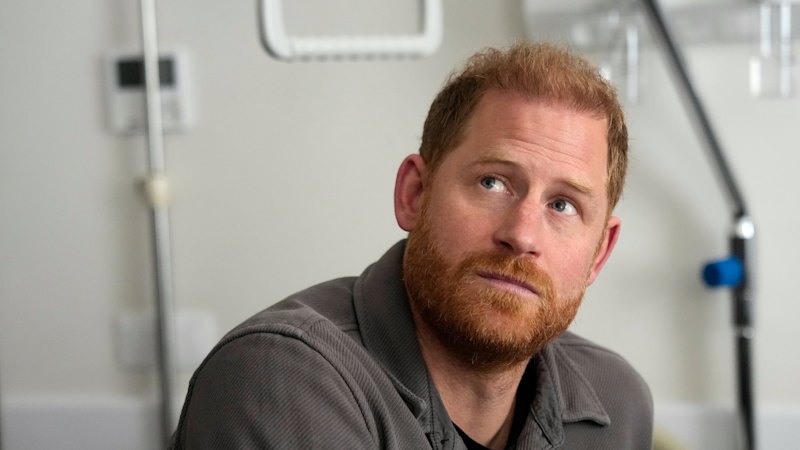
When Prince Harry sat down in Lviv and told reporters he'd "100 per cent" rejoin the British military to fight Russia, the internet split right down the middle. One side called it a hollow PR stunt from a guy who hasn't flown a combat mission since 2013. The other side treated it like a dramatic royal call to arms.
Both sides missed the actual story.
If you look closely at British military law, his specific service record, and what the Ministry of Defence is doing right now, Harry's comment isn't some wild hypothetical. He's legally on the hook for a recall anyway. And the timing of his remarks lines up directly with one of the biggest shifts in UK defense policy since the Cold War.
What Prince Harry Actually Said in Lviv
Let's strip away the tabloid headlines first. During an unannounced trip to western Ukraine in mid-November 2026—his fourth visit since Russia's full-scale invasion in 2022—the Duke of Sussex spoke on The Telegraph's Ukraine: The Latest podcast. He was there visiting wounded troops at Lviv's Superhumans Centre and watching athletes try out for Ukraine's 2027 Invictus Games squad.
He didn't claim he was packing his bags for the Donbas tomorrow. What he actually said was conditional, blunt, and aimed squarely at Western complacency.
"If asked to sign up again, if the need is there, then I will 100 per cent be there to serve my country alongside my fellow veterans and service personnel," Harry told the podcast. He went further, arguing that Europe and Britain have already been locked in a conflict with Moscow for a decade. "Just because there's not drones, bullets and rockets flying at us, that doesn't mean that we're not at war," he said.
That's a very different message than "Prince Harry wants to go to war." He was talking about readiness. Specifically, he argued that people who have already worn the uniform need to stay mentally and physically prepared to put it back on if Europe's security deteriorates further.
The Timing Wasn't Accidental
You have to look at the calendar to understand why those words landed like a grenade in British media.
Just weeks before Harry's interview, the UK government rolled out updated civil resilience guidance telling every British household to stockpile a three-day emergency kit—three liters of drinking water per person per day, tinned food, cash, a wind-up FM radio, and a torch—in case hostile states target critical infrastructure. Days after his podcast aired, the Ministry of Defence began sending letters to roughly 100,000 former military personnel in the Strategic Reserve, asking them to update their contact details and civilian skill sets ahead of major 2027 NATO exercises.
Harry didn't drop his quote into a vacuum. He said it while the British government was actively dusting off mobilization plans for former soldiers.
The Legal Reality Most Commentators Missed
Here's the part that almost every celebrity gossip column gets wrong. They frame Harry rejoining the British Army as a dramatic personal choice, as if he'd have to walk down to a recruitment office in London and fill out paperwork like a teenager.
Under UK law, he doesn't get a vote.
When Prince Harry resigned his short service commission in June 2015 after ten years in uniform, he didn't simply vanish from the Ministry of Defence's books. Because he left as a commissioned officer—holding the rank of Captain—he entered what's known as the Strategic Reserve.
Under the Reserve Forces Act 1996, enlisted soldiers (known as Other Ranks) in the Army and RAF carry a recall liability for 18 years after discharge, capped at age 55. Former regular officers are different. Former regular officers retain a recall liability in perpetuity.
In plain English, Harry is legally liable to be called back into uniform for the rest of his life if Britain faces a national emergency or major conflict. While Defence ministers have noted that standard policy avoids recalling former officers over age 55, Harry is 42 in late 2026. He sits right inside the prime window where the British Army expects former officers to be reachable and usable.
How the Armed Forces Bill 2026 Changes the Picture
Even if he weren't an officer, Britain is rewriting the rules on veteran recall right now. The Armed Forces Bill 2026 introduces the most sweeping updates to reserve liability in decades:
- Raising the upper recall age limit for former Other Ranks from 55 to 65 to match NATO allies.
- Extending the recall window for former Royal Navy and Royal Marines personnel from six years to 18 years.
- Allowing the Ministry of Defence to recall former personnel when "warlike operations" are being prepared or conducted, rather than waiting until an attack on UK soil is already underway.
Existing veterans have to opt into the revised terms, while currently serving troops can opt out, so the government isn't ambushing retirees overnight. Still, the direction of travel is obvious. London is building a deeper bench of experienced personnel because modern high-intensity warfare burns through trained specialists faster than peacetime academies can replace them.
Could a 42-Year-Old Former Apache Pilot Actually Be Useful?
Let's be realistic for a second. Nobody is putting a 42-year-old member of the Royal Family into a trench outside Kharkiv, and nobody is handing him the keys to a frontline attack helicopter tomorrow morning.
Military aviation doesn't work like riding a bike. Harry qualified as an Apache helicopter co-pilot gunner in February 2012, flew combat missions in Helmand Province during his second Afghanistan tour from September 2012 to January 2013, and passed his Apache aircraft commander check in July 2013. That was over thirteen years ago. Aircraft avionics, threat environments, and electronic warfare systems have changed beyond recognition since Helmand. Getting a pilot current on modern attack platforms after a decade-plus break takes months of simulator time and flight hours.
So where would someone with his background actually fit in a real mobilization?
First, look at his first tour. Between December 2007 and February 2008, Harry deployed to Afghanistan with the Blues and Royals as a Forward Air Controller—what the US military calls a Joint Terminal Attack Controller, or JTAC. That job involves sitting on the ground near combat zones and coordinating close air support strikes. Second, after returning from his second tour, he worked at HQ London District helping organize the inaugural Invictus Games, dealing with casualty recovery, military coordination, and public operations.
In a large-scale conflict, armies don't just need trigger-pullers. They need experienced captains who understand joint air-land integration, command-post operations, training pipelines, and morale. When the Ministry of Defence wrote to 100,000 strategic reservists in November 2026, it specifically asked for their current civilian employment and professional qualifications. Why? Because a former captain with command experience, logistics background, or media and coalition-liaison skills is far more valuable in an operations center or training base than on a front line where his presence would turn his own unit into a high-value target for Russian intelligence.
The Security Target Problem
That last point is huge, and anyone who remembers 2008 knows why.
During Harry's first deployment to Helmand, the British media agreed to a strict news blackout so Taliban fighters wouldn't target his patrol. The moment a foreign outlet broke the embargo, the Ministry of Defence had to pull him out immediately because his presence put every soldier standing next to him in disproportionate danger.
Modern Russian surveillance—satellites, electronic intercept teams, long-range drones, and human intelligence networks—is infinitely more sophisticated than the Taliban in 2008. Putting the King's younger son anywhere near an active theater would attract every missile battery within 300 kilometers. He knows that. The British General Staff knows that. Any real role for him in a crisis would be stateside, at a NATO headquarters, or in a rear-area training and liaison capacity.
Why His Ukraine Trip Hit a Nerve in Britain
If Harry isn't going to fly an Apache over Eastern Europe, why did his interview spark such intense debate?
Because he said out loud what European defense officials have been whispering behind closed doors for two years: peacetime assumptions are dead.
During his Lviv visit, Harry pointed out that Ukraine's survival isn't charity—it's a live classroom for Western militaries. He praised the resilience of wounded Ukrainian soldiers preparing for the 2027 Invictus Games and condemned Russian strikes on hospitals and humanitarian aid centers. More importantly, he warned that Europe's biggest vulnerability isn't Russian military strength on its own, since Moscow has been taking massive monthly casualties, but the risk that European nations lose focus and turn on each other politically.
For years, coverage of Harry has been trapped in a soap opera loop—royal rifts, Montecito real estate, Netflix deals, and palace protocol. Even when his Telegraph interview dropped, several British outlets framed it around the timing of Prince William and Princess Catherine's royal tour in India and the Earthshot Awards.
You can criticize Harry's past media choices all you want, and plenty of people do. Honestly, though, his work with wounded veterans through the Invictus Games has remained consistent since 2014. Having relocated back to the UK with Meghan and their children in August 2026, his decision to travel to Lviv four times during an active war carries more weight than a standard celebrity soundbite. He isn't lecturing soldiers from a California studio; he's sitting in rehabilitation clinics in western Ukraine talking to amputees about adaptive sports and long-term recovery.
What This Means If You're Tracking UK Defense or Veteran Policy
Whether you care about royal news or not, the story behind Harry's remarks points to concrete shifts happening right now in Britain. If you're a former service member, a defense watcher, or just a UK resident trying to separate media noise from actual policy, focus on three things instead of the headlines:
- Check your actual reserve status if you've served. If you left the British Armed Forces as an officer, your recall liability doesn't expire. If you left as an Other Rank, check your Certificate of Service and watch how the Armed Forces Bill 2026 opt-in rules apply to your discharge date. Make sure the Ministry of Defence has current contact information if you fall inside the Strategic Reserve window.
- Follow the 2027 NATO exercise ramp-up. The 100,000 letters sent out by the MoD aren't a draft notice—they're a skills audit and an invitation for voluntary training. Watch how many reservists actually volunteer for the 2027 drills, because that number will tell you far more about Britain's true readiness than any politician's speech.
- Take the basic civil preparedness guidance seriously without panicking. Stocking three days of water, non-perishable food, cash, and a battery radio isn't about preparing for Russian tanks in Kent. It's basic insurance against cyberattacks on power grids, subsea cable disruptions, and severe weather outages.
Prince Harry's quote made for loud headlines because people still picture him as a 23-year-old lieutenant in desert camouflage. The reality is simpler and much more serious: Britain is quietly rebuilding its reserve depth for an unstable decade, and even a royal captain is still on the roster.