Defense tech headlines usually sound like rejected movie scripts, and the buzz around Palmer Luckey launching a genetically engineered war dogs startup is no exception. You've probably seen the viral posts claiming the Anduril Industries co-founder is breeding mutant super-hounds in a secret bunker to replace human infantry. That's pure internet exaggeration.
The reality behind military working dog genetics is way more grounded, far more interesting, and rooted in decades of actual Pentagon research. If you're trying to separate sci-fi hype from how modern defense contractors actually approach canine biotechnology, you need to look at how traditional breeding programs fail, what modern gene editing can realistically do, and why Silicon Valley money is suddenly sniffing around military kennels.
Why Traditional Military Dog Breeding Has a Massive Bottleneck
Anyone who's spent time around working dog handlers knows one painful truth. Getting a dog from puppyhood to active deployment is an absolute nightmare of attrition.
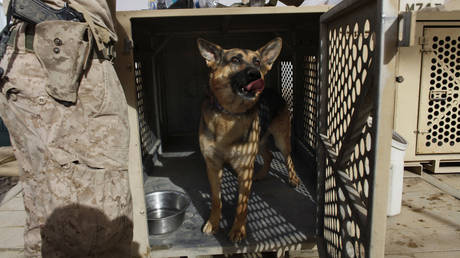
The U.S. military relies heavily on breeds like Belgian Malinois, German Shepherds, and Dutch Shepherds for patrol, bomb detection, and search-and-rescue operations. The Department of Defense runs its own breeding program at Lackland Air Force Base in Texas, yet it still has to buy the vast majority of its working dogs from European brokers. Why? Because genetics are messy.
Even when you breed two elite working dogs together, you're rolling the dice. Out of a litter of eight puppies, maybe two or three will actually possess the exact combination of high drive, emotional stability, physical durability, and sharp olfactory focus required for combat zones. The rest wash out due to hip dysplasia, elbow issues, noise sensitivity, or a lack of focus under extreme stress.
Training a single military working dog costs tens of thousands of dollars and takes well over a year. When a dog washes out at eighteen months because of a hereditary joint defect or a sudden onset of gun-shyness, that entire investment evaporates. Defense founders look at a 50% to 70% washout rate and see a massive supply chain failure begging for a technological fix.
What Genetically Engineered War Dogs Actually Means in Practice
Forget glowing eyes or cybernetic jaws. When defense entrepreneurs talk about applying modern genetics to working canines, they're talking about solving specific, expensive biological failure points.
CRISPR-Cas9 and advanced genomic screening have completely changed how scientists look at animal husbandry over the last decade. Back in 2015, researchers in China made headlines by using CRISPR to knock out the myostatin gene in beagles, producing dogs with double the normal muscle mass. That experiment proved canine gene editing was technically possible, even if muscle-bound beagles weren't exactly storming beaches.
For a defense-focused venture, the real targets are much more practical:
- Eliminating orthopedic failure. Hip and elbow dysplasia end more military dog careers than enemy fire ever will. Screening embryos or editing out the specific polygenic markers tied to joint degradation could double a working dog's active service life.
- Upgrading olfactory receptors. A dog's nose is still the best chemical sensor on the battlefield, outperforming electronic sniffers at detecting improvised explosive devices in chaotic environments. Selecting or enhancing the genes tied to olfactory receptor density makes a dog faster and more accurate at finding buried threats.
- Stress and acoustic resilience. Loud explosions, helicopter rotors, and urban gunfire wreck a dog's nervous system. Identifying the genetic pathways that govern cortisol spikes and startle responses allows breeders to produce calmer animals under fire.
- Heat and environmental tolerance. Working dogs wear heavy tactical vests in brutal climates. Fur density, metabolic efficiency, and cardiovascular stamina are all heavily influenced by known genetic traits.
Honestly, calling this "creating war dogs" is mostly just punchy PR framing. In practice, it's precision animal biotechnology aimed at lowering washout rates and extending operational lifespans.
Palmer Luckey and the Silicon Valley Defense Playbook
To understand why Palmer Luckey's name keeps popping up next to wild defense concepts, you have to understand how he operates. Since co-founding Oculus VR and later launching Anduril Industries in 2017, Luckey has built an entire brand around taking controversial, sci-fi-adjacent military problems that legacy contractors won't touch and throwing venture capital at them.
Traditional defense primes like Lockheed Martin or Northrop Grumman build billion-dollar fighter jets and missile defense systems. They don't want the PR headache of animal experimentation, nor do they have the agility to run small, experimental biotech labs. Luckey thrives in that exact vacuum. Whether he's talking about autonomous drone swarms, AI-powered sentry towers, or biological enhancements, his playbook stays consistent: identify a neglected capability gap, move fast before regulators even know what's happening, and force the Pentagon to pay attention.
When rumors or reports surface about a Luckey-backed startup entering the canine genetics space, investors immediately connect the dots. You have a founder with deep Pentagon connections, billions in defense contracts, and zero fear of public backlash. Even a modest breakthrough in reducing working dog attrition represents a massive recurring contract opportunity with the Department of Defense, Border Patrol, and federal law enforcement agencies.
The Technical Hurdles Nobody Likes Talking About
If you think editing a dog's genome is as simple as flipping a few switches on a computer, you haven't looked at canine reproductive biology. Dogs are notoriously difficult to clone and genetically modify compared to mice or pigs.
First, canine reproductive cycles are weird. Female dogs only ovulate once or twice a year, and their eggs are released in an immature state, maturing inside the oviduct rather than the ovary. Harvesting viable eggs at the exact right window for microinjection requires surgical precision and crazy timing.
Second, behavioral traits like "courage" or "focus" aren't controlled by a single gene. You can't just snip out one base pair and get a fearless bomb-sniffing Malinois. Temperament is polygenic, meaning hundreds of genes interact with early puppyhood socialization and training environments. If you mess with dopamine or serotonin pathways to make a dog less anxious, you might accidentally kill its toy drive—and toy drive is the exact reward mechanism trainers use to teach a dog to find explosives.
Third, off-target mutations are still a real risk. If an edit meant to strengthen cartilage accidentally impairs vision or causes autoimmune issues three years down the line, you've just created a very expensive, sick pet.
Ethical Backlash and the Pentagon's Red Lines
Military animal research sits on a razor's edge politically. The U.S. public loves military dogs—they get medals, funerals, and viral homecoming videos. The moment headlines start screaming about "Frankenstein war hounds," animal rights organizations, lawmakers, and defense oversight committees wake up fast.
The Department of Defense already operates under strict Institutional Animal Care and Use Committee (IACUC) guidelines. While private startups funded by venture capital have way more leeway in early-stage research than government labs, they still have to sell their final product to federal buyers. If a procurement officer thinks buying genetically modified canines will trigger a congressional hearing or a public relations disaster, that contract dies on their desk.
There's also a massive international angle. The European Union heavily restricts genetically modified animals, and many allied nations won't touch gene-edited working dogs for joint operations. Any startup in this space has to navigate a minefield of bioethics, veterinary oversight, and export controls before a single dog ever steps onto a transport plane.
How to Separate Real Biotech Progress From Defense Hype
Whenever a splashy defense tech story hits your feed, it's easy to get swept up in the clickbait. If you want to track whether a working dog genetics venture is actually making real progress or just burning venture capital on cool press releases, watch for three concrete signals instead of flashy headlines:
- Peer-reviewed veterinary partnerships. Real canine genomics companies don't operate in total isolation; they partner with major veterinary research institutions like Cornell, UC Davis, or the Broad Institute's Darwin's Ark project to validate health outcomes.
- Focus on health screening before gene editing. Any credible startup will start with commercial genomic sequencing and selective embryo screening—which is legal, proven, and avoids regulatory gridlock—long before trying to deploy CRISPR-edited animals into active duty.
- SBIR contracts and DoD solicitation matches. Check public defense contracting databases for Small Business Innovation Research (SBIR) awards related to canine health, olfactory enhancement, or working dog longevity. That's where real Pentagon money shows up first.
Keep an eye on the veterinary genetics journals and federal procurement registries over the next few quarters—that's where you'll see whether this technology actually makes it out of the lab and onto the field.