Every few months, another breathless headline claims NASA is summoning the ghost of Apollo to slap together a lunar base and put boots on the Moon inside twenty-four months. Space journalists eat it up. Aerospace PR departments distribute the press releases like candy.
They are selling a lethal hallucination.
Trying to force permanent lunar infrastructure through an Apollo-style sprint is like trying to build a transcontinental railroad using the engineering playbook of a fireworks display. Apollo was a geopolitical stunt designed to plant a flag, grab a bag of rocks, and get out before the Soviet Union figured out how to keep their N1 rocket from exploding on the pad. It was never meant to last. Applying that frantic, burn-the-furniture urgency to a permanent moon base does not accelerate human expansion into the solar system. It guarantees catastrophic schedule slips, bloated cost-plus contracts, and dead hardware sitting in regolith.
If you want to understand why the aerospace press keeps falling for this narrative, look at how easily nostalgia replaces basic systems engineering.
The Myth of "Apollo Urgency"
Let’s strip away the sepia-toned mythology around the 1960s. When John F. Kennedy stood at Rice University in 1962 and committed the United States to reaching the Moon before the decade was out, NASA did not use magic. They used a blank check and an astronomical tolerance for risk.
At its peak in 1966, NASA consumed roughly 4.4 percent of the entire federal budget. Today, the agency operates on less than half of one percent. More importantly, Apollo operated under a single, brutal directive: beat Moscow, whatever the cost, and accept that everything you build is single-use trash. The Lunar Module was built with aluminum foil walls so thin you could practically poke a screwdriver through them, precisely because it only had to survive three days on the surface before being discarded into lunar orbit.
Now compare that to a moon base.
A lunar base is not a camping trip. It is an off-world industrial outpost operating in one of the most hostile thermal and radiative environments known to physics. You are dealing with fourteen-day lunar nights where temperatures plummet to minus 280 degrees Fahrenheit, abrasive electrostatic dust that chews through spacesuit seals like powdered glass, and galactic cosmic radiation that shreds human DNA.
You cannot "sprint" your way past thermodynamics. When politicians and agency administrators demand a two-year timeline for lunar surface habitation, they are not channel-surfing into the spirit of Gene Kranz. They are setting up an engineering trap where contractors cut testing corners to hit arbitrary political milestones, only to watch those shortcuts trigger multi-year stand-downs when valves freeze or cryogenic propellants boil off prematurely.
Why Two Years Is a Mathematical Fantasy
I have watched aerospace programs burn through hundreds of millions of dollars chasing arbitrary calendar dates dictated by congressional election cycles rather than hardware readiness. Every single time, the pattern is identical: management compresses the integration and testing phase to preserve the launch date, a critical subsystem fails during thermal vacuum testing, and the ensuing investigation costs twice as much time as doing the engineering properly in the first place.
Look at the actual architecture required to land astronauts and sustain a base within twenty-four months:
- Human-Rated Cryogenic Propellant Transfer: Unlike Apollo, which launched everything on a single Saturn V stack, modern Artemis-era architectures rely on orbital refueling. SpaceX’s Starship HLS requires multiple tanker flights to fill a depot in Low Earth Orbit before sending a lander to the Moon. Transferring hundreds of tons of super-chilled liquid methane and liquid oxygen in microgravity has never been demonstrated at scale. Mastering fluid settling, boil-off management, and automated docking at that mass scale is a multi-year flight-test campaign on its own.
- Surface Power That Survives the Dark: Solar panels work great for two weeks, and then the sun sets for 336 straight hours. Batteries heavy enough to keep a habitat heated and oxygenated through a two-week lunar night break the mass budget of every lander currently on the drawing board. That means you need fission surface power—compact nuclear reactors deployed on the regolith. You do not design, regulatory-clear, fuel, launch, and commission a space-rated nuclear reactor in two years. Not even close.
- Closed-Loop Environmental Control: The International Space Station sits in Low Earth Orbit, roughly 250 miles up. If a water processor fails or an oxygen generator dies on the ISS, a resupply capsule can dock within days, or the crew can drop back to Earth in a few hours. On the Moon, you are 240,000 miles away with a three-day transit window and orbital mechanics dictating when you can even leave. Your Environmental Control and Life Support Systems (ECLSS) must operate with near-zero failure rates before a single human sleeps on the surface.
Imagine a scenario where NASA forces a crewed surface mission onto an aggressive twenty-four-month clock before orbital cryogenic transfer and closed-loop life support are proven through uncrewed endurance runs. Even if the crew lands safely, they are tethered to a short-duration sortie—essentially Apollo 18 with nicer touchscreens. That is not a moon base. That is a trillion-dollar photo op followed by another five-year gap while engineers rebuild the ground infrastructure they skipped.
The Architecture Trap Nobody Wants to Admit
The real problem isn't a lack of urgency at NASA. The problem is that the agency is trying to run a marathon while wearing concrete boots mandated by Congress.
To understand why timelines keep stretching, you have to look at the bifurcated mess at the heart of modern American spaceflight. On one side, you have commercial fixed-price contracts—SpaceX, Blue Origin, Intuitive Machines—operating on iterative, hardware-rich development cycles where blowing up prototypes is an accepted data-gathering expense. On the other side, you have legacy cost-plus programs like the Space Launch System (SLS) and Orion, which were explicitly architected to keep aerospace jobs distributed across key congressional districts.
You cannot graft Apollo’s rapid decision-making onto a supply chain designed as a federal jobs program.
When Wernher von Braun ran Marshall Space Flight Center, he had consolidated authority over vehicle architecture, testing, and contractor accountability. Today, a single Artemis mission requires synchronizing a government-owned rocket built by Boeing and Northrop Grumman, a crew capsule built by Lockheed Martin, a European service module built by Airbus, a commercial lunar lander built by SpaceX, and next-generation spacesuits built by Axiom Space.
Every interface between those contractors is a contractual battleground. Every design tweak triggers an engineering change proposal, a schedule re-baselining, and a fresh round of congressional hearings. Calling that system "Apollo urgency" is an insult to the people who actually built the Saturn V.
Where the Money Actually Goes
Let’s look at the incentives driving this two-year narrative. Why do headlines suddenly flare up promising imminent lunar bases?
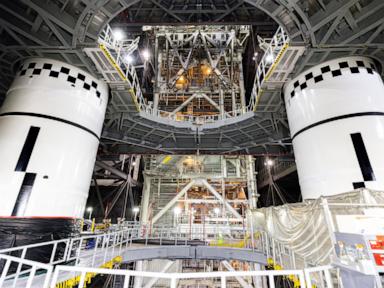
- Budget Defense: NASA’s leadership has to justify tens of billions of dollars in sunk costs to appropriators who grow impatient when rockets sit in the Vehicle Assembly Building for years between launches. Promising boots on the ground in twenty-four months keeps the funding spigot open for another fiscal year.
- Geopolitical Theater: China’s steady, methodical march toward a crewed lunar landing by 2030—paired with their International Lunar Research Station roadmap—has triggered panic in Washington. Instead of matching China’s disciplined, multi-decade industrial planning, American policymakers reflexively demand a short-term sprint to "win" a race that has no finish line.
- Media Click Economics: Nuanced reporting about propellant boil-off rates, lunar regolith sintering, and deep-space communications relays does not generate viral traffic. "NASA Racing to Build Moon Base in Two Years" does.
Answering the Questions You Should Actually Be Asking
When readers search for news about NASA’s lunar timeline, they usually get fed sanitized FAQ lists from agency blogs. Let’s dismantle the real questions behind the search traffic.
Can NASA realistically land astronauts on the Moon within two years?
Strictly speaking, putting two humans on the lunar surface for a brief, Apollo-style sortie within a compressed window is physically possible if—and only if—every single uncrewed test flight of the lunar lander succeeds on the first attempt and zero hardware anomalies emerge during crewed flight certification. In aerospace, betting your schedule on zero anomalies is amateur hour. Building an actual base—habitats, power grids, rovers, and surface logistics—inside two years is flatly impossible under current launch cadences.
Why did Apollo take eight years from scratch while Artemis takes decades?
Because Apollo started with a blank sheet of paper and zero legacy constraints, whereas Artemis started with a congressional mandate to reuse Space Shuttle components. Adapting 1970s solid rocket boosters and RS-25 engines for a deep-space heavy-lift vehicle sounds economical on a PowerPoint slide, yet it locked NASA into an architecture that costs over $4 billion per launch and can barely fly once every eighteen months. You cannot build a permanent settlement when your primary crew transport flies less often than a leap year.
Is private industry faster than NASA at building lunar infrastructure?
Yes, in hardware iteration—and no, in systems integration. Companies like SpaceX and Blue Origin build engines and airframes at a pace that makes traditional defense primes look frozen in amber. However, private companies still rely on NASA’s deep-space tracking networks, life-support research, and planetary science data. More critically, private companies answer to capital markets and billionaire founders whose timelines shift based on internal cash flow and orbital launch priorities. Handing the keys to commercial vendors removes government bureaucracy, yet it introduces commercial schedule risk that NASA cannot directly control.
What Actually Builds a Permanent Moon Base
If we strip away the two-year fantasy, what does a serious, non-delusional strategy for permanent lunar habitation actually look like? It looks boring, unsexy, and ruthlessly focused on logistics rather than flags.
First, decouple cargo from crew. The single greatest mistake in modern lunar planning is tying surface infrastructure delivery to the launch readiness of human-rated capsules. Heavy cargo landers—carrying nuclear fission units, inflatable habitat modules, regolith-moving bulldozers, and oxygen-extraction plants—should be landing on the lunar south pole years before astronauts arrive to turn the lights on. Let robots unpack the groceries and verify the power grid before risking human lives.
Second, stop treating lunar regolith as dirt and start treating it as an industrial feedstock. Shipping water, oxygen, and radiation shielding out of Earth’s gravity well costs tens of thousands of dollars per kilogram. A real moon base is not built out of aluminum cylinders shipped from Florida; it is built by sintering lunar dust into bricks using concentrated solar energy or microwaves, and extracting oxygen directly from ilmenite-rich rocks. Until In-Situ Resource Utilization (ISRU) moves from laboratory papers to functioning pilot plants on the lunar surface, any "base" is just a glorified life-support tent waiting to run out of supplies.
Third, build a propellant economy before building hotels. The Moon’s true strategic value isn't real estate; it is the water ice trapped in permanently shadowed craters at the poles. Splitting that water into liquid hydrogen and liquid oxygen creates a refueling station at the top of Earth’s gravity well. Once you can refuel spacecraft in lunar orbit using lunar-derived propellant, the economics of the entire solar system invert. Mars becomes accessible. Asteroid mining becomes viable. Deep-space telescopes become serviceable.
The Honest Downside of Slowing Down
Let’s be candid about the flaw in a methodical, infrastructure-first approach: political attention spans are shorter than orbital periods.
When you tell Congress and the public that the next five years will be spent launching uncrewed cargo landers, testing cryogenic fluid valves in orbit, and laying power cables across Shackleton Crater before a single astronaut steps onto the surface, eyes glaze over. Budgets get raided to pay for domestic priorities. Administrations change, new NASA administrators get appointed, and the whole roadmap gets scrapped and renamed every four to eight years.
That is the tightrope NASA actually walks. If they move too slowly, Congress kills the funding for lack of spectacle. If they promise an Apollo-style sprint to keep the money flowing, they set themselves up for public humiliation when physics refuses to bend to a two-year press release.
Stop Cheering for the Sprint
The next time you read that NASA is adopting "Apollo urgency" to throw together a moon base in twenty-four months, recognize it for what it is: a press strategy disguised as an engineering plan.
Apollo proved that humans could reach another world if we were willing to spend a fortune and throw everything away when the show was over. The hard part—the part that actually matters for the next century of human civilization—is learning how to stay. Staying requires patience, redundant life support, nuclear power, robotic logistics, and the discipline to test hardware until it cannot fail.
You don't build a city with the mindset of a drag racer. Either NASA abandons the two-year PR fantasy and commits to uncrewed industrial infrastructure first, or we are going to spend another twenty billion dollars watching astronauts plant another flag, take another selfie, and abandon the Moon all over again.