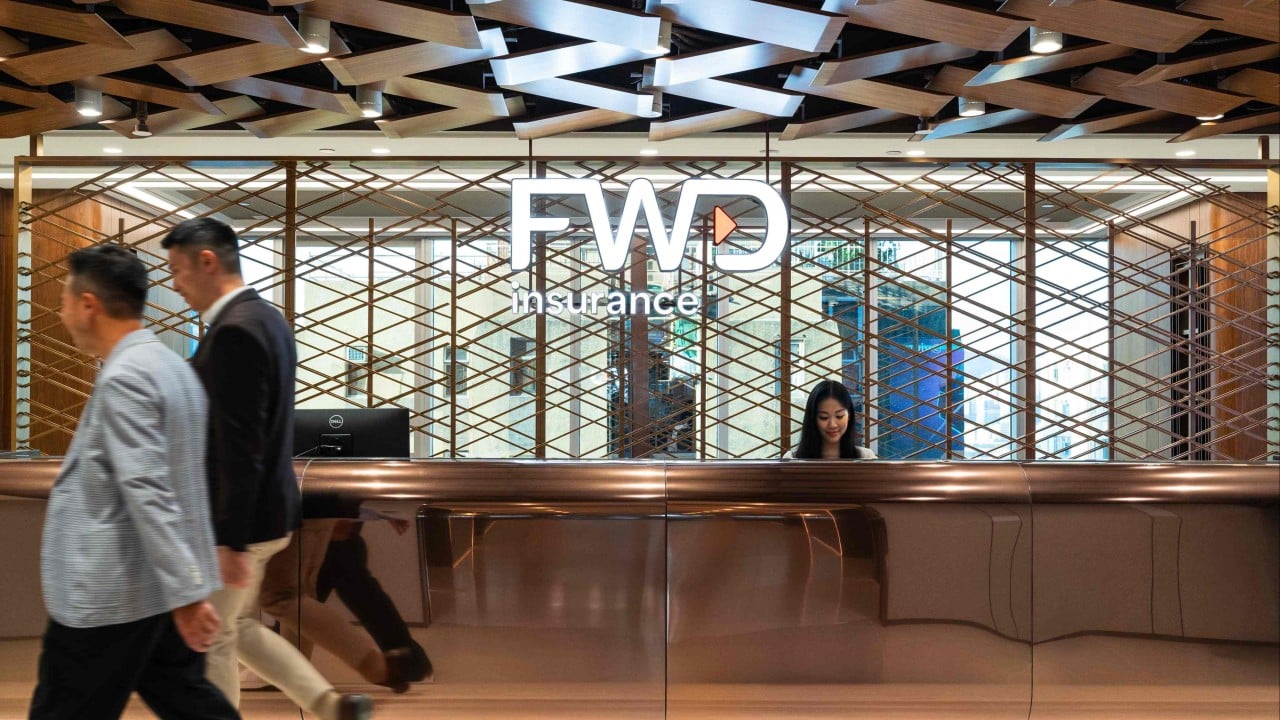
When news broke that Richard Li’s FWD Group sold a single life insurance policy worth US$318 million, most headlines treated it like a flashy trophy purchase by an anonymous billionaire. That misses the actual financial mechanics behind the deal. Nobody drops that kind of capital on an insurance contract just to flex on their peers at a private banking dinner.
In March 2024, Guinness World Records officially verified the transaction as the most valuable life insurance policy ever sold. The policy smashed the previous record of US$201 million set by a Silicon Valley tech executive in 2014. FWD Hong Kong issued the policy to an ultra-high-net-worth individual, proving that Asia’s private wealth market has officially outgrown traditional Western legacy planning. Learn more on a connected issue: this related article.
Let’s be honest about what this really is. It isn't standard family protection. When you operate at the nine-figure net worth level, a massive life insurance policy functions as a high-powered tax shelter, a liquidity engine, and an estate equalization tool rolled into one contract.
Why Ultra-Wealthy Buyers Pay for a US$318m Life Insurance Policy
If you have hundreds of millions of dollars in assets, your biggest headache isn't running out of money before you die. Your biggest problem is what happens to your empire the morning after you pass away. More reporting by MarketWatch explores similar perspectives on the subject.
Most ultra-high-net-worth individuals don't keep US$300 million sitting in a checking account. Their wealth is locked up in illiquid assets—private equity stakes, commercial real estate, controlling shares in family conglomerates, and fine art. When an estate settles, heirs often face brutal inheritance taxes or immediate debt obligations that require cash within months.
Without liquid cash on hand, families get forced into fire sales. Selling a massive commercial property or dumping a block of company shares under a strict deadline destroys value. A US$318 million death benefit solves that problem instantly. It injects tax-free liquidity directly into the estate right when the heirs need it most, keeping the core business intact.
There's also the issue of family harmony. Imagine a founder has three children, and only one wants to run the family manufacturing business. Giving the business to one child leaves the other two feeling cheated, while splitting the shares three ways invites boardroom gridlock. Using a massive life insurance payout allows the founder to leave the operating company to the active child and hand hundreds of millions in pure cash to the other two. Everyone walks away happy, and the company survives.
How Premium Financing Makes Mega-Policies Possible
You might assume the buyer wrote a personal check for US$100 million or more to fund this record-breaking contract. They almost certainly didn't.
In the private wealth world, mega-policies are almost always funded through premium financing. Here is how the mechanics actually work in practice:
- The buyer sets up an irrevocable life insurance trust or an offshore holding structure to own the policy.
- A private bank lends the money required to pay the massive upfront single premium directly to the insurer.
- The buyer pledges the policy's cash surrender value—along with a portion of their existing investment portfolio—as collateral for the bank loan.
- The policy's internal cash value grows over time at a steady, predictable crediting rate.
Why borrow money to buy insurance when you're already rich? Arbitrage. If a billionaire's private equity and hedge fund investments generate 10% to 12% annually, pulling cash out of those assets to pay an insurance premium carries a massive opportunity cost. By borrowing from a private bank at a lower institutional rate, the buyer keeps their capital working in higher-yielding markets while still locking in the US$318 million payout.
Of course, this strategy isn't without risk. When interest rates spiked globally between 2022 and 2024, plenty of wealthy borrowers got squeezed because the cost of their bank loans suddenly exceeded the crediting rates on their universal life policies. Structuring a US$318 million deal in that environment required serious financial engineering and ironclad collateral buffers.
Why FWD Hong Kong Won the Deal
Richard Li didn't build FWD Group by playing it safe with legacy bureaucracy. Since founding the pan-Asian insurer in 2013 under Pacific Century Group, Li has aggressively targeted the booming wealth corridors across Hong Kong, Singapore, and Southeast Asia.
Landing a US$318 million policy isn't just a marketing win for FWD. It's a massive vote of confidence in Hong Kong’s regulatory environment and underwriting capacity. No single insurance company absorbs US$318 million of mortality risk on its own balance sheet. If the policyholder passes away unexpectedly in year two, taking that hit alone would dent even a major insurer's annual earnings.
To pull this off, FWD's underwriting and actuarial teams had to syndicate the risk across a network of global reinsurance giants. Reinsurers like Swiss Re, Munich Re, or Hannover Re typically step in to take slices of the risk, leaving the primary insurer with a manageable retention limit. Pulling together that level of reinsurance capacity requires deep institutional trust, spotless medical underwriting, and airtight financial vetting of the buyer.
Hong Kong has spent the last few years fighting to reclaim its crown as Asia's premier wealth hub against stiff competition from Singapore. By issuing the world's largest life insurance policy, FWD proved that Hong Kong’s private banking and insurance ecosystem still has the muscle to execute transactions that few other jurisdictions can match.
The Underwriting Reality Behind Nine-Figure Policies
If you think getting approved for a standard US$1 million term policy is annoying, try applying for US$318 million. At that level, the underwriting process looks less like a routine checkup and more like a forensic investigation.
First comes the medical scrutiny. The applicant undergoes exhaustive examinations—cardiac stress tests, full-body imaging, detailed blood panels, and a complete review of decades of medical records. Underwriters aren't just looking for current illnesses; they are modeling genetic predispositions and lifestyle risks down to the smallest statistical probability. If the applicant pilots their own private jet, races yachts, or travels frequently to high-risk regions, those factors get priced directly into the contract or excluded entirely.
Then comes financial justification. Insurance companies won't just let you buy US$318 million of coverage because you feel like it. You have to prove insurable interest—meaning your death would genuinely cause a financial loss of at least that magnitude.
Underwriters typically apply a strict income or net worth multiplier. For a US$318 million payout to make actuarial sense, the buyer’s verified net worth almost certainly sits well north of US$1 billion, or their ongoing business operations generate tens of millions in annual cash flow that would vanish without their leadership. Every offshore trust, corporate entity, and tax return gets audited by compliance teams to ensure the money isn't tied to money laundering or sanctions evasion.
Common Misconceptions About Record-Breaking Insurance
Whenever a massive financial number hits the news, bad assumptions follow immediately. Let's clear up three things people constantly get wrong about deals like FWD’s record setter.
Myth 1 The Buyer Paid US$318 Million Out of Pocket
They didn't. The US$318 million figure is the death benefit (the face value paid out when the insured passes away), not the premium paid upfront. Depending on the buyer's age, health, and policy structure—typically an indexed universal life or whole life contract—the actual upfront premium paid to FWD was likely a fraction of the final payout, often ranging between US$60 million and US$120 million.
Myth 2 It Is Only Useful for Billionaires
While you won't be buying a nine-figure policy anytime soon, the underlying mechanics apply directly to anyone with a growing business or significant real estate holdings. Many entrepreneurs assume life insurance is only for replacing a paycheck while their kids are young. In reality, permanent life insurance is widely used by mid-market business owners to fund buy-sell agreements. If your business partner dies suddenly, a properly structured policy gives you the cash to buy out their shares from their spouse without bankrupting the company.
Myth 3 The Insurer Loses Money When the Payout Happens
People love to look at a US$318 million payout and assume FWD is praying the buyer lives to 110 so they don't take a bath. That misunderstands how actuarial math works. Between the compounding investment returns earned on the upfront premium over decades and the risk-sharing agreements with global reinsurers, the policy is priced to be profitable for FWD regardless of when the claim arrives.
What This Means for Your Own Wealth Planning
You don't need Richard Li’s phone number or a ten-figure balance sheet to apply the lessons from this record-breaking deal to your own financial setup. Whether your estate is worth US$2 million or US$200 million, the core vulnerabilities remain identical.
Start by auditing your estate's liquidity ratio. Add up your total net worth, then separate the assets that can be turned into cash within 30 days from the ones that require a buyer, a broker, or a lengthy legal process. If more than 70% of your wealth is tied up in real estate, private business equity, or restricted stock, your heirs are sitting on a liquidity trap.
Next, check how your existing policies are owned. Buying a large life insurance policy in your personal name often defeats the purpose of estate planning because the payout gets added right back into your taxable estate upon death. Working with an estate attorney to hold the policy inside an irrevocable trust keeps the death benefit outside your taxable estate while ensuring the cash goes exactly where you intend.
Finally, stop treating insurance as a standalone product you buy once and forget in a drawer. At higher net worth levels, life insurance is a dynamic financial instrument that needs to be stress-tested against interest rate shifts, tax law changes, and business valuations every two to three years.