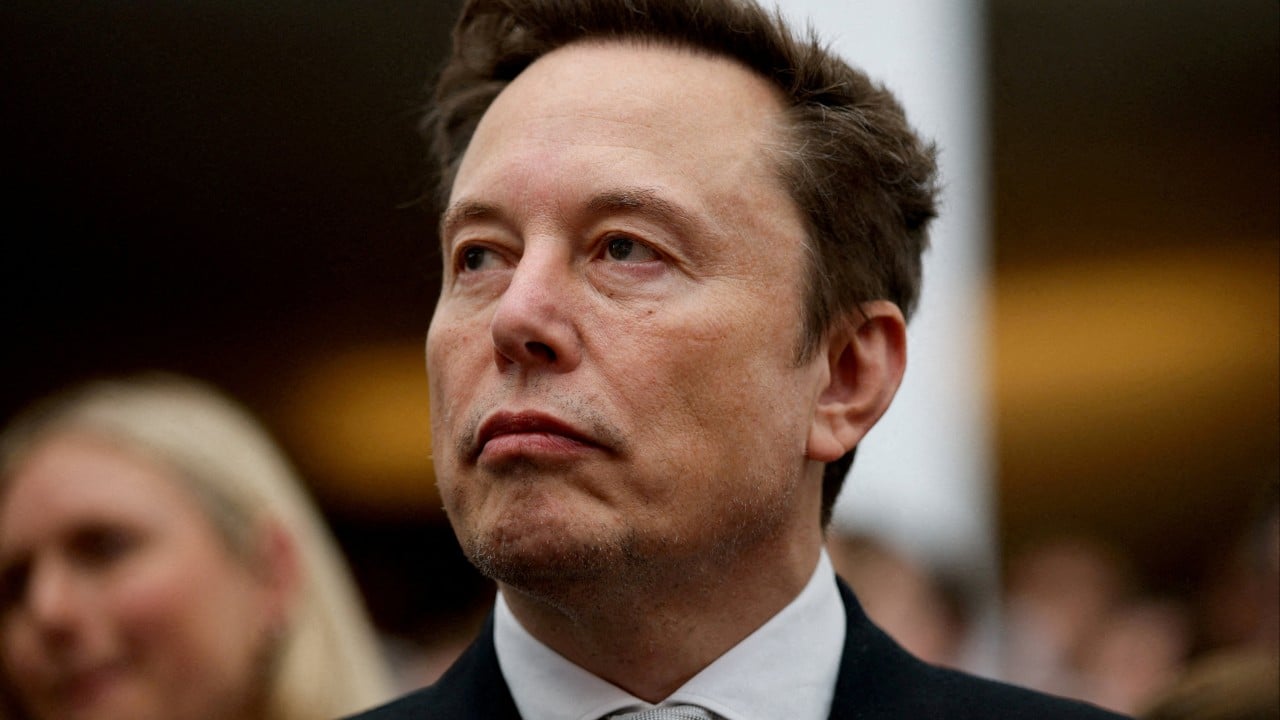
Seeing Elon Musk and Mastercard CEO Michael Miebach join Donald Trump for the Asia-Pacific Economic Cooperation (APEC) summit in Shenzhen makes complete sense once you look at what actually moves money and manufacturing across the Pacific. The bigger question everyone in tech is asking right now is where Jensen Huang stands.
Let's be honest. When high-stakes trade diplomacy happens on Chinese soil, who gets a seat on the plane tells you everything about what Washington actually wants to negotiate. It isn't just a photo op. It's a calculated roster of corporate leverage.
Shenzhen isn't a random backdrop either. China hosted the 2026 APEC Economic Leaders' Meeting right in the heart of its hardware and tech manufacturing engine. Bringing American corporate heavyweights directly into Shenzhen sends a specific message to Beijing, and the absence of Nvidia's chief executive speaks just as loudly as the presence of Tesla and Mastercard.
The Strategic Logic Behind the Shenzhen Guest List
If you've ever watched how trade delegations get assembled behind closed doors, you know they balance two things—access and friction. You bring executives who have deep, existing operations inside the host country, alongside leaders whose industries sit right on the fault lines of regulatory disputes.
Elon Musk fits both categories effortlessly. Tesla's Gigafactory in Shanghai remains one of the most productive automotive plants on earth, accounting for roughly half of the company's global vehicle deliveries in recent years. Musk doesn't just sell cars in China; he relies on Chinese battery supply chains, local engineering talent, and municipal support to keep Tesla's margins intact.
At the same time, Musk's position within Trump's inner circle gives him a unique dual role. He isn't just lobbying for electric vehicle tariffs or autonomous driving approvals for Full Self-Driving (FSD) software in China. He acts as an informal bridge between Washington's trade hawks and Beijing's economic planners.
Then you have Michael Miebach. Most casual observers overlook payment networks when they think about geopolitical tech rivalries, which is a massive mistake.
Mastercard spent years fighting for domestic clearing access in China, finally securing formal approval from the People's Bank of China through its joint venture, Mastercard NetsUnion, to process local yuan-denominated transactions. Having Miebach in Shenzhen highlights a completely different set of American priorities:
- Financial market access for US payment processors and banks operating inside mainland China.
- Cross-border data flows that allow global financial institutions to verify transactions without running afoul of Beijing's strict data localization laws.
- Consumer spending stability, since Mastercard's transaction volume data offers real-time visibility into how Chinese and international consumers are actually spending money.
Where Does Jensen Huang Fit Into the APEC Picture
So why all the speculation around Jensen Huang? Simple. Nvidia sits at the absolute center of the US-China technology standoff.
While Musk builds cars and Miebach moves digital payments, Huang controls the compute infrastructure that powers artificial intelligence. Every major cloud provider and AI lab in China wants Nvidia's GPUs, and almost every export control rule coming out of the US Department of Commerce is designed specifically to restrict what Huang is allowed to sell them.
That creates an awkward diplomatic reality. Putting Jensen Huang front and center alongside Trump at an APEC summit in Shenzhen would immediately turn the conversation toward semiconductor export bans, chip smuggling networks, and national security restrictions.
Think about the optics. If Huang stands next to Trump in Shenzhen, Beijing immediately demands concessions on advanced AI chip restrictions. If Washington refuses—which bipartisan national security hawks in Congress practically guarantee—the summit risks stalling over a single company's product catalog.
Huang has also been careful about how he navigates both capitals. Over the past couple of years, he has visited mainland China to meet with local employees and industry partners while simultaneously maintaining close ties with Washington policymakers to protect Nvidia's supply chain in Taiwan. Keeping a lower profile during a presidential trade summit avoids forcing Nvidia into a political corner where any public statement alienates either its biggest regulators or one of its largest historical markets.
What Shenzhen Represents for US-China Trade Dynamics
Holding APEC in Shenzhen carries massive symbolic weight. Forty-five years ago, Shenzhen was a quiet border town across from Hong Kong. Today, it is the headquarters of Huawei, Tencent, BYD, and DJI—the exact companies driving China's push for technological self-reliance.
When American executives walk into meetings in Shenzhen, they aren't negotiating with an economy that only assembles foreign designs anymore. They are sitting across from direct global competitors.
Look at the contrast between the companies represented on this trip and the ones left off the manifest:
- Established physical and financial footprints win seats. Tesla has factories on the ground. Mastercard has a licensed clearing network. Both companies have tangible, ongoing operational issues that bilateral diplomacy can directly unblock.
- National security flashpoints stay in the background. Advanced semiconductors, defense tech, and frontier AI models carry too much export-control baggage to serve as easy icebreakers during a multilateral summit.
- Supply chain interdependence remains real. Despite years of talk about decoupling, the presence of Musk and Miebach proves that major US corporations still view China as indispensable to their global revenue models.
The Real Takeaway for Investors and Industry Watchers
Don't misread Jensen Huang's absence from a joint appearance with Trump as a sign that Nvidia is losing influence. In Washington and Beijing alike, Nvidia is arguably the single most scrutinized company on the planet. You don't need to be in the summit photo when your hardware dictates the pace of global AI development.
Instead, pay attention to what Musk and Miebach actually walk away with after the Shenzhen meetings conclude. Watch for concrete regulatory movement rather than vague diplomatic press releases.
Specifically, keep an eye on three measurable signals over the next quarter:
- Regulatory green lights for Tesla's FSD rollout in China, particularly regarding how vehicle training data is handled across borders.
- Merchant acceptance expansion for Mastercard across tier-one and tier-two Chinese cities, which will show whether Beijing is genuinely opening its domestic payments market to foreign networks.
- Any subtle adjustments to Commerce Department licensing rules for modified, export-compliant AI chips, which will tell you whether Nvidia's interests were quietly negotiated behind closed doors even without Huang on stage.
Watch the regulatory filings and export license approvals rather than the summit headlines, because those documents reveal who actually won the room in Shenzhen.