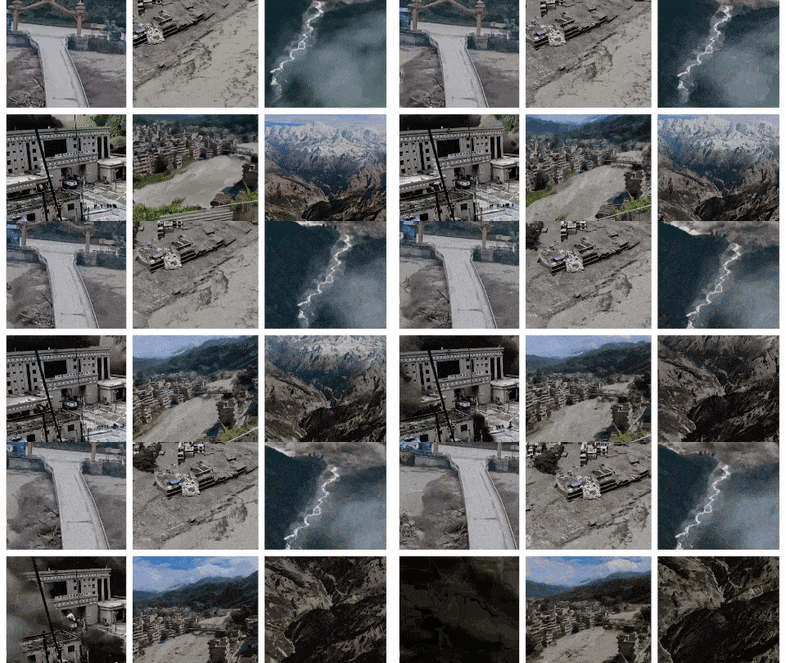
The morning air in the Rasuwa district was quiet until the mountain literally broke. A terrifying roar echoed down the valley, followed instantly by a wall of water, mud, and boulders. Within minutes, entire settlements near the Nepal-Tibet border vanished beneath a thick blanket of grey silt.
If you followed the initial reports, you probably heard that a sudden earthquake triggered the disaster. That turned out to be entirely wrong. According to updated data from the U.S. Geological Survey and mountain research groups like ICIMOD, the catastrophe was driven by a massive glacial collapse high at 5,200 meters, which sent an avalanche of ice and rock crashing into the Lhende Khola tributary. Water levels on the Trishuli River spiked by nine meters in just thirty minutes. You cannot outrun water moving at that speed. You might also find this related story insightful: Why the Malacca Dilemma Still Haunts Beijing and What Changes Next.
The Reality on the Ground in Rasuwa and Nuwakot
The human toll of the flash flood is staggering. Confirmed deaths have climbed past 160, while hundreds of locals, pilgrims, and foreign tourists remain unaccounted for across the Bhote Koshi and Trishuli river corridors. Survivors pulled from rooftops or airlifted out by military helicopters describe a surreal scene of total erasure. Timure, a bustling border town, was practically swallowed whole by the debris.
Rescue operations have faced massive hurdles. Helicopters are struggling to land in narrow gorges where roads and bridges have been ripped away. Ground teams are dealing with impassable sludge and the persistent threat of secondary floods. Experts warn that debris from the initial avalanche may have temporarily formed a natural dam upstream. If that blockage gives way, another surge could tear through downstream districts without warning. As extensively documented in detailed reports by USA Today, the implications are worth noting.
Why Himalayan Cryosphere Hazards Are Escalating
We need to talk about why this keeps happening. The Himalayas are undergoing rapid environmental shifts. Rising temperatures melt mountain glaciers and thaw permafrost, destabilizing steep slopes that have stood firm for millennia. When heavy liquid water pools inside a glacier, it acts like a lubricant, causing huge sections of ice to shear off cliffs.
Most travelers and local infrastructure projects are not built to withstand cryosphere disasters of this magnitude. Traditional flood warning systems rely on heavy rainfall metrics, but glacial collapses happen silently and suddenly high above inhabited zones. By the time downstream sensors register a surge, the wall of water is already barrelling around the final bend.
If you are tracking relief efforts or looking for missing loved ones, rely on official channels rather than unverified social media rumors. The Indian Embassy in Kathmandu, the Nepal Tourism Board, and international humanitarian delegations have established active emergency hotlines for families searching for stranded citizens. Support local emergency funds and stay clear of riverbanks throughout the northern districts as scientists continue monitoring upstream blockages.