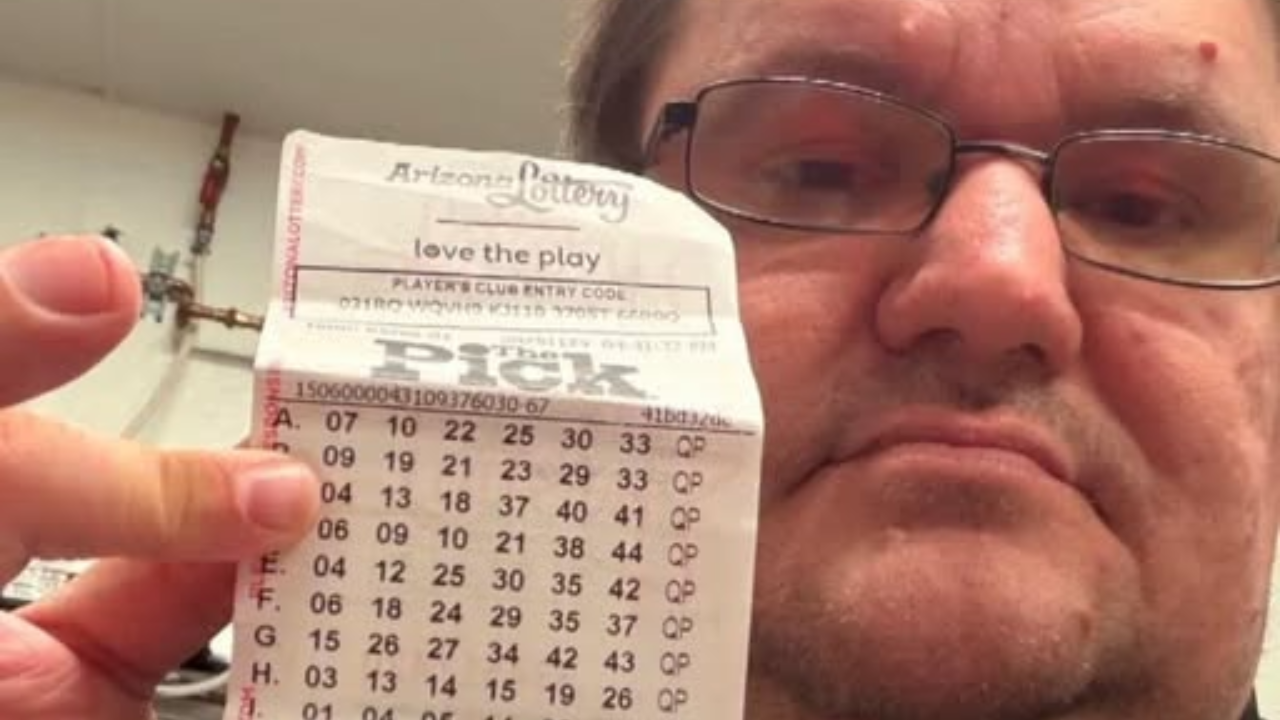
Imagine walking out of a convenience store, leaving a slip of paper on the counter, and finding out later it was worth $12.8 million. Worse yet, the cashier who rang you up bought that exact ticket after clocking out.
That's the mess sitting in an Arizona courtroom right now. A Circle K employee purchased a customer's abandoned lottery ticket after finishing a shift, and that ticket hit a $12.8 million jackpot. Now a judge has refused to toss the case out, clearing the way for a full legal fight over who actually owns the money.
Most people reading the headlines assume this is an open-and-shut case of "finders keepers." They're wrong. Lottery law doesn't care about playground rules, and convenience store corporate policies make things even murkier.
Why The Judge Let This Lawsuit Move Forward
When a lawsuit survives a motion to dismiss, it doesn't mean the plaintiff has won. It means the judge looked at the facts and decided there's a legitimate legal question that can't be settled without discovery, depositions, and possibly a jury.
Here's the core dispute. A customer ordered lottery tickets at a Circle K counter and left one behind. Depending on which side you ask, that ticket was either accidentally forgotten or intentionally rejected because the customer didn't want to pay for an extra print. Later, after clocking out, the Circle K worker bought that specific ticket.
Then the numbers hit. Twelve point eight million dollars.
When that kind of money appears, everybody suddenly remembers the transaction differently. Circle K, the former employee, and the customer all have competing claims or liabilities tied to that single piece of thermal paper. By allowing the legal fight to proceed, the judge signaled that standard retail rules don't automatically hand a jackpot to an off-the-clock cashier.
The Legal Traps Hidden Inside Convenience Store Lotteries
If you've ever worked behind a retail counter—or spent enough time around commercial litigation—you know lottery terminals are magnets for weird edge cases. They aren't like normal inventory. You can't just void a printed draw game ticket like a scanned bag of chips.
Once a lottery terminal prints a ticket, the store is generally on the hook to pay the state lottery commission for it unless specific cancellation rules apply. Many state lotteries strictly prohibit canceling certain draw game tickets once printed. So when a customer walks away from a misprinted or unwanted ticket, the clerk is stuck holding a live piece of paper that costs the store money.
Store managers hate eating that loss. In plenty of gas stations and convenience stores across the country, clerks toss unclaimed tickets into a cup by the register and try to sell them to the next customer who walks up. Sometimes employees buy them themselves at the end of a shift just to balance the drawer.
That's where corporate policy collides with state law.
Employee Purchase Policies Are Strict For A Reason
Almost every major convenience store chain—including Circle K—has strict written rules governing when and how employees can buy lottery tickets. Retailers put these guardrails in place to prevent internal theft, skimming, and the exact public relations nightmare playing out in court right now.
Typical corporate restrictions include:
- No buying tickets while on the clock. Employees usually have to clock out, remove their uniform vest or name tag, and stand on the customer side of the counter.
- No ringing yourself up. A second employee or manager typically has to process the transaction on a separate register.
- Strict rules on abandoned or misprinted tickets. Many chains explicitly ban employees from buying tickets that were originally printed for a customer, even after a shift ends.
Notice the catch here. Even if the Circle K worker followed the "clock out first" rule, violating an internal company policy about which tickets an employee can buy creates massive legal leverage for the other side. Breaking store policy isn't automatically a crime, though. A violation of corporate handbooks doesn't automatically transfer legal ownership of a winning ticket to a customer who never paid for it.
And that's the entire ballgame.
Did The Customer Actually Own The Ticket?
Let's look at the hardest question the court has to answer. Can you claim ownership of a lottery ticket you never paid for?
Under basic contract law, buying a lottery ticket is a simple transaction. You hand over cash, the retailer hands over the bearer instrument, and the deal is done. State lotteries treat tickets as bearer instruments—meaning whoever physically holds the unsigned ticket is presumed to be the owner, unless someone proves fraud, theft, or a breach of duty.
If the customer walked out without paying for that specific ticket, the defense argument is straightforward. No payment means no purchase. No purchase means no ownership. Under that logic, the ticket belonged to Circle K until someone legally bought it—and the worker stepped up with cash after clocking out.
The counterargument is way more nuanced. What if the customer did pay, or thought they paid, and the clerk negligently left one ticket on the counter? What if the customer asked for five tickets, paid for five, and only got handed four? Or what if the clerk intentionally held back a ticket?
Those factual disputes are precisely why a judge can't throw the case out early. You need security camera footage, terminal transaction logs, timestamps, and cash drawer audits to see what actually happened at the register.
The Role Of Digital Audit Trails
People tend to think of paper lottery tickets as anonymous and untraceable. They aren't. Every single draw game ticket printed on a state lottery terminal leaves a permanent digital footprint.
State lottery systems log the exact second a ticket is generated, the terminal ID, the clerk sign-on code, and whether it was a quick pick or manual selection. When you line those timestamps up against Circle K's point-of-sale register logs and overhead CCTV cameras, a clear timeline emerges.
Investigators and attorneys in these cases look at three specific data points:
- The gap between printing and payment. Did the register record payment for all printed tickets during the customer's visit, or was one ticket left unpaid on the counter?
- The clock-out timestamp. Exactly how many minutes passed between the customer leaving the store, the employee clocking out, and the ticket being rung up?
- Physical handling of the ticket. Did the ticket sit in plain view on the counter, or was it tucked out of sight behind the register?
If the camera shows a customer paying for three tickets while four printed, and the clerk pocketed the fourth until 5:01 PM, the worker is in serious trouble. On the flip side, if the customer clearly rejected the extra ticket, refused to pay for it, and walked out, the worker's defense gets dramatically stronger.
Why Circle K Is Caught In The Middle
You might wonder why Circle K is even dragged into a fight between a customer and a former worker. Deep pockets.
In civil litigation, plaintiffs rarely sue an hourly retail worker alone. An individual cashier doesn't have millions of dollars sitting around unless the lottery commission has already paid out the jackpot—and state lotteries routinely freeze payouts the second a ownership dispute hits the courts.
By naming the corporate parent in the lawsuit, plaintiffs target the company's liability insurance and corporate assets. The legal theories usually boil down to negligent supervision, failure to enforce lottery handling protocols, or vicarious liability for an employee's actions behind the counter.
Circle K faces a delicate balancing act here. If the company argues the employee broke store policy by buying an abandoned ticket, it risks validating the idea that the transaction was improper. If it defends the employee's purchase as totally valid, it risks alienating lottery customers who want to trust that clerks aren't cherry-picking tickets behind the counter.
Retailers live and die by lottery foot traffic. Lottery commissions take retail integrity seriously because public trust is the only thing keeping draw games alive. If shoppers suspect cashiers are gaming the system on unclaimed tickets, sales drop fast.
Other High-Profile Lottery Ticket Disputes Show How Messy This Gets
This Arizona case isn't the first time an abandoned or mishandled convenience store ticket triggered years of courtroom warfare. Look at how similar disputes have played out across the U.S., and you'll see why judges tread carefully.
In several past cases across states like California, Texas, and New York, courts have had to untangle disputes involving:
- Store clerks telling customers a winning ticket wasn't a winner, then keeping the ticket to claim the prize themselves. State lottery investigators catch this regularly using terminal scan logs, and it almost always leads to felony theft charges alongside civil lawsuits.
- Misprinted tickets left on the counter that another customer—or an employee—bought minutes later. When another paying customer buys the abandoned ticket, courts almost universally side with the second customer because they paid full value in an arm's-length transaction.
- Group pool disputes and family disagreements where one person bought the ticket and others claimed an oral agreement to split the winnings.
The Circle K case sits right in the gray zone between an innocent second-chance purchase and an insider advantage. Because the buyer worked at the store, they had physical access to the ticket that an ordinary customer walking in off the street never had.
What Happens Next In The Courtroom
Now that the judge has allowed the case to move forward, the lawsuit enters the discovery phase. This is where the real leverage gets built—and where most high-stakes civil disputes quietly settle out of court.
During discovery, attorneys will subpoena every piece of data tied to that shift. They'll depose the store manager about how unclaimed tickets were normally handled at that specific Circle K location. If the manager admits, "Yeah, we let clerks buy leftover tickets all the time so the drawer wouldn't come up short," that testimony changes the entire trajectory of the case.
Meanwhile, the $12.8 million jackpot itself remains in limbo. State lotteries don't hand over eight-figure checks while a judge is deciding who owns the winning slip. Even after taxes, a lump-sum payout on a $12.8 million prize is roughly $5 million to $7 million depending on federal withholding and state tax rules. That's enough money to fund years of appellate litigation.
How To Protect Yourself Every Time You Buy A Lottery Ticket
Most people treat lottery tickets like pocket change until the moment the numbers match. By then, it's too late to fix a sloppy transaction. If you play draw games at convenience stores or gas stations, a few simple habits eliminate almost every risk of ending up in a dispute like this:
- Count your tickets before stepping away from the counter. Verify the number of slips in your hand matches the number you asked for and paid for.
- Check the draw dates immediately. Make sure the terminal printed tickets for the upcoming drawing, not a future multi-draw sequence you didn't ask for.
- Sign the back of every ticket right away. Because lottery tickets are bearer instruments, your signature is the fastest legal proof of ownership if a ticket is lost, dropped, or left behind.
- Keep your printed receipt. Always ask for the cash register receipt showing you paid for the lottery purchase, especially if you're buying multiple tickets or paying with cash.
Take thirty seconds at the register to verify your slips and put your name on the back. It's the easiest way to make sure a life-changing jackpot doesn't turn into a multi-year legal battle.