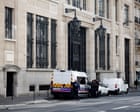
Parisian police just stopped what could have been a catastrophic explosion in the heart of the city's financial district. In the early hours of the morning, specialized units neutralized an explosive device discovered right outside the Bank of America building. This isn't just another headline about urban crime. It's a wake-up call regarding the vulnerability of international corporate landmarks in European capitals.
The threat was real. Officers cordoned off the area around the Place des États-Unis, a high-profile zone known for its concentration of diplomatic and financial institutions. While the investigation remains in its early stages, the precision of the police response suggests that French intelligence services might have had this particular cell or individual on their radar for some time. You don't just stumble upon a bomb outside a major US bank by accident.
The Immediate Response and What We Know
French tactical units didn't mess around. Once the suspicious package was identified as a viable explosive, the neighborhood went into a total lockdown. Security perimeters expanded quickly. Residents were told to stay away from windows. This reflects a shift in how Paris handles these threats since the 2015 attacks. They've moved from a reactive stance to an aggressive, proactive containment strategy.
The device itself was reportedly sophisticated enough to cause significant structural damage and loss of life. It wasn't some haphazardly thrown together firework. This implies a level of planning and technical knowledge that points toward organized extremism or a highly motivated lone actor with access to specific blueprints.
Why Bank of America
Attacking a US-based financial giant in the middle of Paris sends a very specific message. It’s a dual strike at Western capitalism and the security apparatus of the French state. Banks are symbolic. They represent the "global order" that many radical groups, whether from the far-left, far-right, or religious extremist factions, claim to despise.
Security experts have long warned that high-profile American targets on European soil are magnets for this kind of activity. The Bank of America building isn't just an office. It’s a piece of the American footprint in France. By targeting it, the perpetrators are trying to prove that nowhere is truly safe, not even under the watchful eye of the Prefecture of Police.
The Security Blind Spot
We often think these cities are under a total surveillance net. Thousands of cameras. Plainclothes officers. AI-driven threat detection. Yet, someone still managed to get close enough to leave a bomb at the doorstep of a global bank. This reveals a persistent gap in ground-level security.
Building managers and corporate security teams often rely too heavily on the "deterrence" of being in a "good" neighborhood. That’s a mistake. If you’re a high-value target, the neighborhood doesn't protect you. Only rigorous, multi-layered defense does. This event will likely trigger a massive audit of how private security firms coordinate with the national police in Paris.
What This Means for Global Business
If you're running a multinational firm, this incident should change your risk assessment. It’s no longer enough to have a badge reader and a guy at a desk. You have to think about the perimeter.
- Perimeter hardening is mandatory. You can't have "soft" entry points where someone can linger long enough to drop a device.
- Intelligence sharing is broken. Often, private firms and government agencies don't talk until after something goes wrong. That needs to change.
- Response time matters. The Paris police were fast, but the bomb was already there. The goal has to be prevention, not just neutralization.
The French authorities haven't released the names of any suspects yet. They’re likely sweeping digital footprints and CCTV from blocks away to trace the route taken. In these cases, the "how" is often more important than the "who" for preventing the next one.
Moving Forward in a High Threat Environment
The reality is that Paris remains a top-tier target. The city's history with terrorism makes it a place of constant tension. This foiled attack is a victory for the police, but it’s a reminder that the threat is constant.
Businesses operating in major European hubs should immediately review their "left of bang" strategies. This means looking at everything that happens before an incident occurs. Check your camera angles. Test your staff’s ability to spot anomalies. Don't wait for a formal warning from the authorities because, as we saw today, the warning is often the device itself sitting on your sidewalk.
Keep your eyes open and your security protocols tight. The next attempt might not be stopped as cleanly as this one. It's time to stop treating security as a line item on a budget and start treating it as a core component of your operational survival.