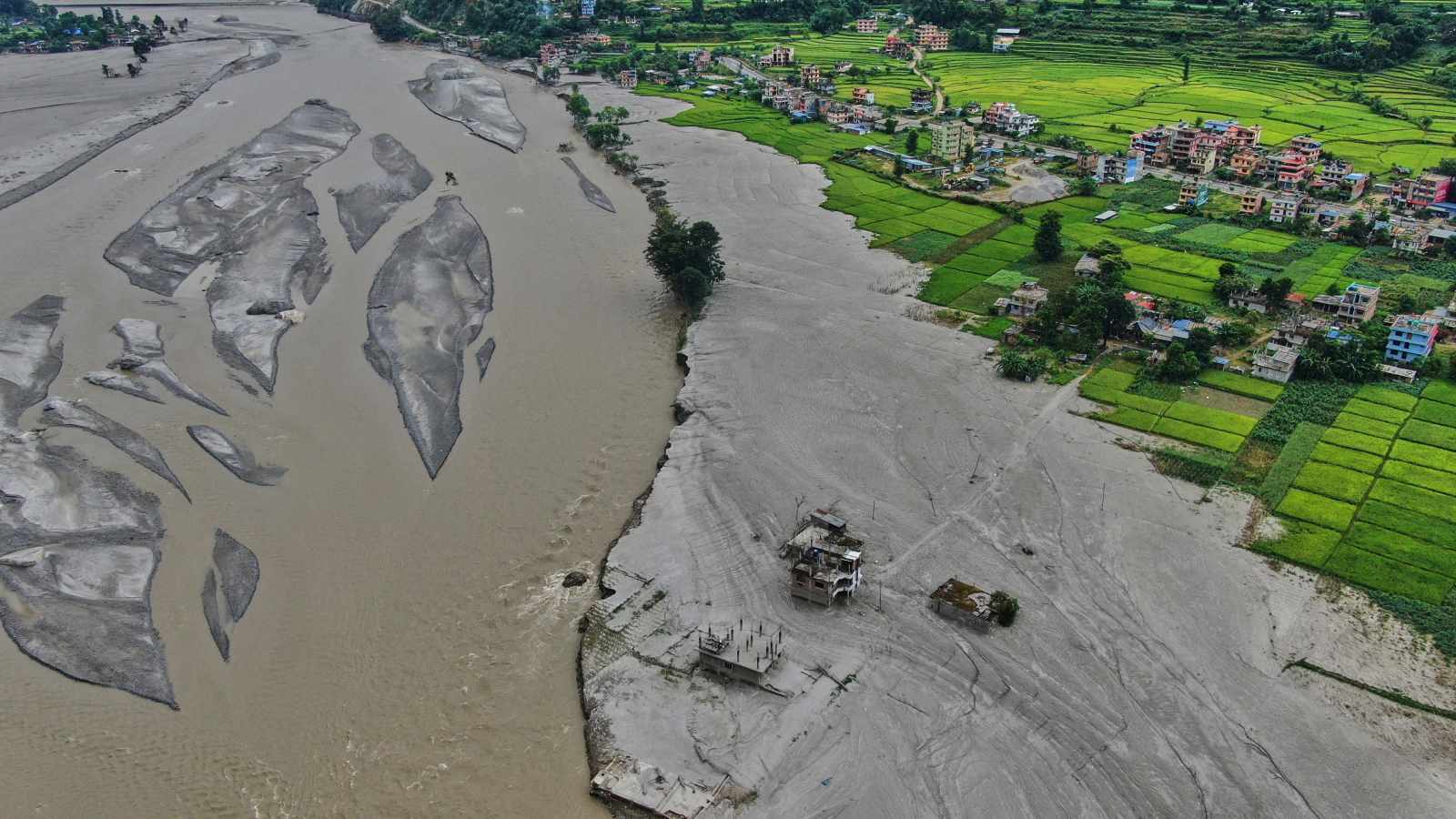
Water isn't just a resource in South Asia. It's an existential lifeline, and right now, it's the most dangerous flashpoint between two nuclear-armed neighbors. When Pakistani Prime Minister Shehbaz Sharif stepped up to the podium at the 81st United Nations General Assembly in New York, he didn't mince words. He drew a hard line in the riverbed, declaring that any move by India to stop, impede, or divert Pakistan's share of the Indus River waters would be treated straight up as an act of war.
If you've been watching India-Pakistan relations deteriorate over the last few years, this escalation shouldn't shock you. But it does signal a terrifying shift from territorial disputes over land to resource warfare. Let's break down why this specific threat matters, what's actually happening to the 1960 Indus Waters Treaty, and why water security is turning into the ultimate geopolitical time bomb. Don't miss our previous article on this related article.
The Treaty Under Siege
The 1960 Indus Waters Treaty has survived wars, military coups, and decades of border skirmishes. Brokered by the World Bank, it managed to distribute the rivers of the Indus basin between India and Pakistan with rare functional stability. Both sides complained about it occasionally, but the framework held.
That stability fractured recently. New Delhi moved to place the treaty in abeyance, arguing that structural changes, cross-border dynamics, and a need to reassess terms necessitated a radical rethink. Pakistan responded with fury, taking the matter to international legal forums, including the Court of Arbitration, which ruled largely in favor of Islamabad's legal standing on the treaty's permanent validity. If you want more about the background of this, Associated Press provides an excellent breakdown.
Sharif leaned heavily on these international legal rulings during his UN speech, pointing out that India's unilateral holds have zero legal basis under international law. But legal arbitration doesn't stop concrete pouring or upstream dam construction. Pakistan relies entirely on the Indus basin to feed its massive agricultural sector. Over 200 million people depend on these waters for survival. When you threaten a nation's water supply, you aren't just messing with their economy—you're threatening mass famine. That's why Islamabad is using language as sharp as an "act of war".
Why Water Weaponization is the New Frontier
Geopolitics used to be about oil, gas, and territorial buffer zones. In the modern era, climate change and vanishing glaciers are rewriting the rules. The rivers feeding the Indus basin originate in the Himalayas and the Tibetan Plateau, regions experiencing rapid glacial melt and shifting weather patterns.
When upstream nations gain the engineering capacity to throttle flows through large-scale infrastructure projects, downstream nations panic. India argues it has every right to maximize its usage of western rivers under specific exemptions for run-of-the-river hydroelectric projects. Pakistan sees those exact same projects as stealth mechanisms to control the tap.
Sharif's warning at the UN was designed to force international intervention. By explicitly framing water diversion as a military trigger rather than an administrative dispute, Islamabad wants global powers to treat hydro-infrastructure projects on the Indus with the same urgency they treat nuclear proliferation or active military mobilization.
The Domestic Audience and Realpolitik
We also have to look at the domestic pressure cooker. Prime Minister Sharif faces a deeply unstable political and economic landscape at home. Inflation, structural debt, and security threats from militant factions draining state resources mean that leaders often look outward to unify a fractured public. Taking a defiant, unyielding stance against India on the global stage plays well domestically. It signals strength when internal metrics look grim.
Yet, shouting about war at Turtle Bay doesn't solve the structural problem of water scarcity. Experts have repeatedly pointed out that hollow rhetoric doesn't capture rainwater or fix leaky agricultural distribution networks that waste massive percentages of Pakistan's current water allocation. Relying purely on nuclear deterrence to keep water flowing is a terrifying gamble that leaves zero room for error.
Where This Leaves Us
The standoff over the Indus basin isn't going away. As glacial recession accelerates and water tables drop across the subcontinent, pressure on both governments will only mount. New Delhi hasn't taken the bait with a loud public counter-threat yet, preferring a calculated silence. But actions on the ground speak louder than speeches in New York.
If both sides refuse to return to bilateral compliance or accept updated, mutually agreed-upon modifications to the treaty, minor technical disagreements will harden into military flashpoints. Keep an eye on upstream construction milestones and international legal updates over the coming months. That is where the real conflict will play out long before any shots are fired.