Water does not negotiate. It does not pause for diplomacy, nor does it care about lines drawn on parchment by departing empires seventy years ago. It falls on the high glaciers of the roof of the world, rushes down granite gorges, and spreads across the plains to feed a billion lives. When that flow stutters, empires do not simply grow thirsty. They ready their weapons.
Imagine, if you will—and here we step into a hypothetical room to understand a very real terror—an elderly farmer sitting on the sun-baked soil of Punjab. Let us call him Tariq. For sixty years, his calloused hands have guided water from a small canal into rows of wheat. He knows the exact sound the distributary makes when the snows of the Hindu Kush are melting fast. It is a rushing, greedy murmur. But lately, that sound has changed. It is thinner. The mud at the edge of his irrigation ditch is cracking open into geometric puzzles, baking white under a merciless sun.
Tariq does not read international treaties. He does not know the exact wording of the Indus Waters Treaty of 1960, brokered by the World Bank when the world was younger and hope seemed easier to institutionalize. He only knows one terrifying metric: dry soil means no harvest. No harvest means hunger.
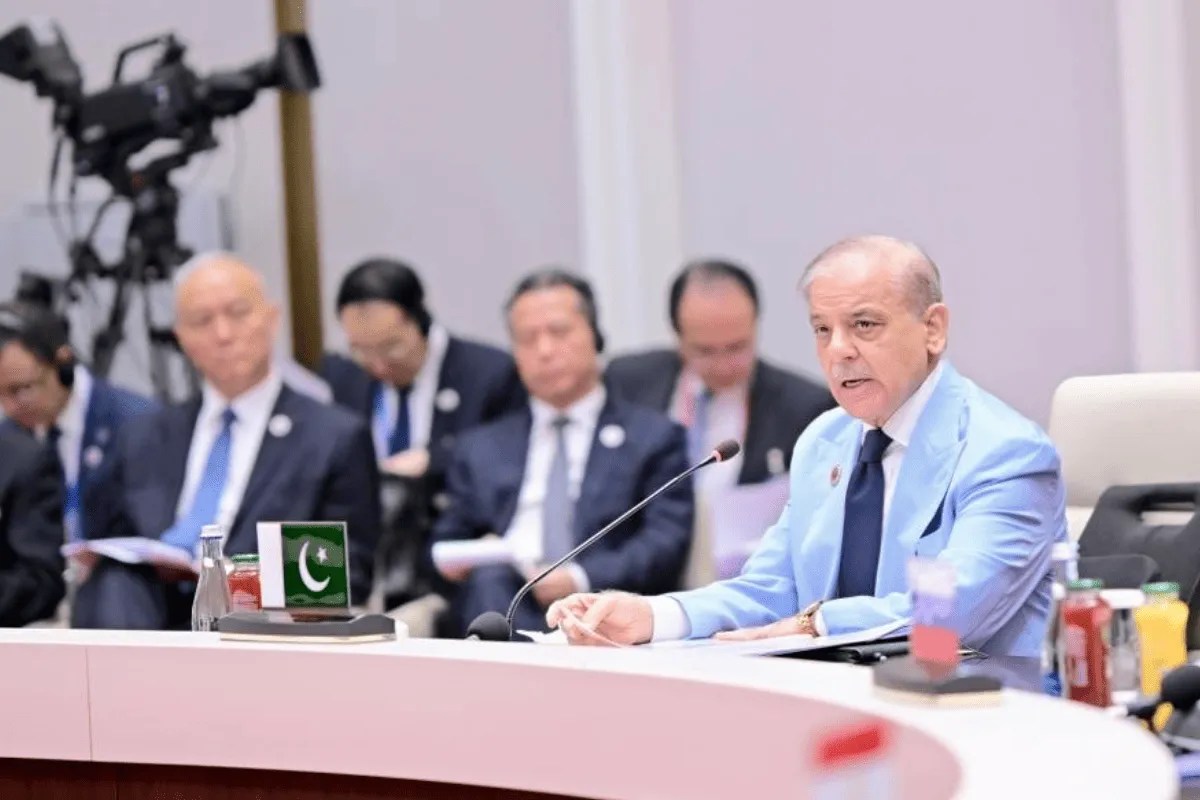
Thousands of miles away from Tariq’s dusty fields, under the vaulted, gilded ceilings of the United Nations General Assembly in New York, another man stood at a polished podium. Prime Minister Shehbaz Sharif adjusted his microphone. The air-conditioned chamber smelled of quiet wealth and diplomatic exhaustion. But the words he unleashed into that room were humid with menace.
He spoke of the Indus. He spoke of a lifeline shared by two nuclear-armed neighbors whose history is written in partition blood. And then, standing before the gathered representatives of the globe, he drew a red line in the current. Any attempt by India to choke the flow, to restrict the waters that rightfully spill across the border, would not be viewed as a mere policy dispute. It would be treated as an act of war.
Casus belli.
The phrase hung in the interpreters' booths. It echoed against the walnut panels. It drifted across oceans to land squarely on the desks of strategists in Islamabad and New Delhi.
To understand why a river can drive two nations to the brink of mutual annihilation, one must strip away the modern politics and look at the geography. The Indus River Basin is not just a drainage system. It is an economic lung. Six major rivers—the Indus, the Jhelum, the Chenab, the Ravi, the Beas, and the Sutlej—weave a hydrological tapestry across the plains of South Asia. More than three hundred million people depend directly on this water for drinking, for sanitation, and above all, for agriculture.
For decades, the Indus Waters Treaty held. It was a remarkable piece of bureaucratic engineering, dividing the rivers cleanly. The western rivers were largely assigned to Pakistan, while the eastern rivers fell to India. Disputes were meant to be settled by neutral experts and arbitration courts, not by the barrels of guns.
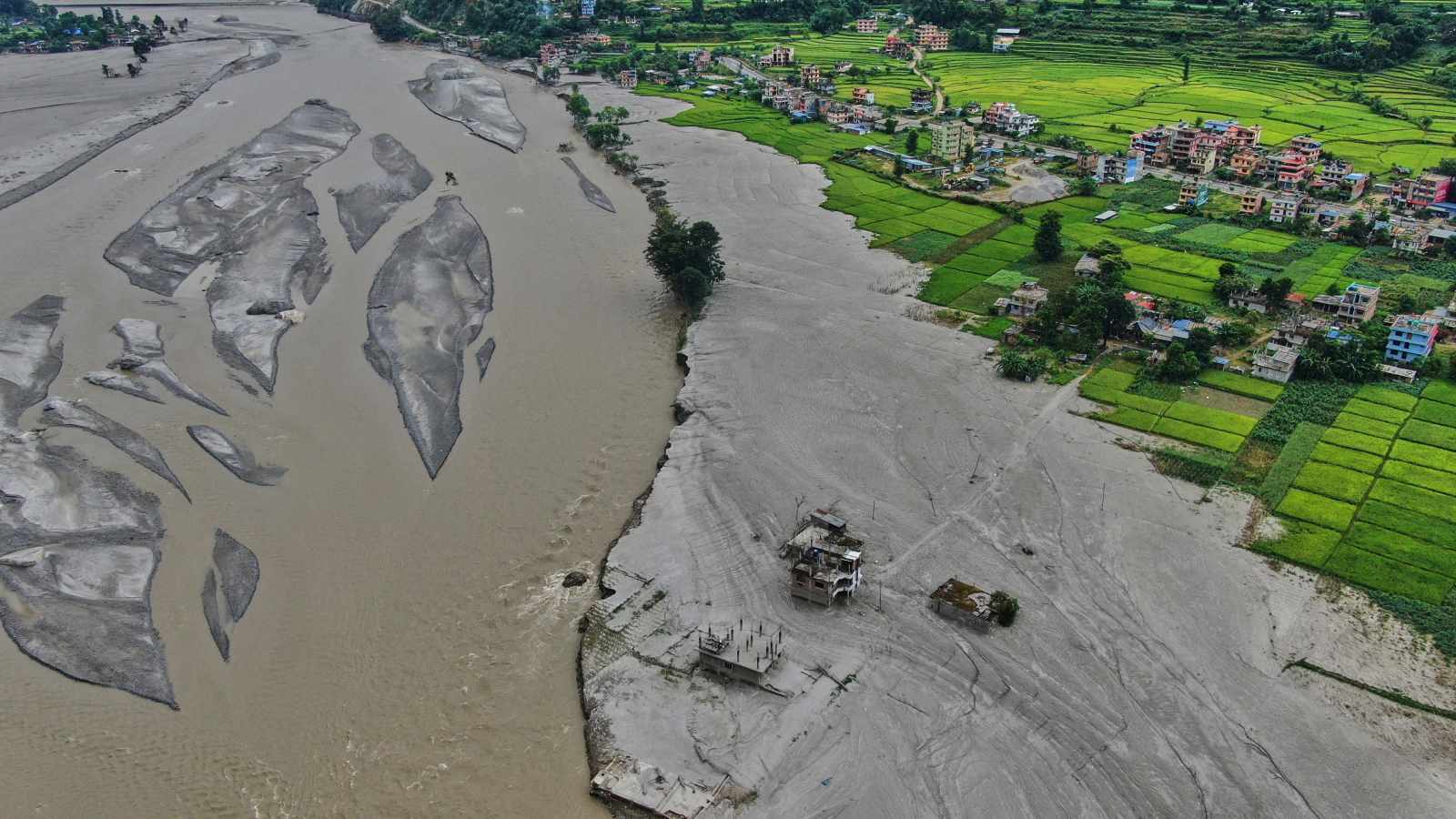
Yet treaties are written on paper, and paper is fragile. Climate change is rewriting the rules faster than diplomats can schedule meetings. The glaciers feeding the Indus system are retreating at alarming rates. Initially, this glacial melt causes floods—violent, displaced walls of water that wash away villages, roads, and livestock. But every cubic foot of ice that melts today is a cubic foot missing tomorrow. Scientists project that within decades, the perennial rivers that sustain this massive basin could transition into seasonal streams, rushing in monsoon fury and drying to cracked dust for the rest of the year.
When water becomes scarce, cooperation curdles into paranoia.
Consider what happens next in the boardrooms of power. Upstream nations hold all the physical cards. Gravity works for them. Every dam built, every diversion canal dug, every hydroelectric project initiated near the headwaters sends a shiver of anxiety downstream. In New Delhi, policymakers look at their own soaring populations and expanding industrial needs, arguing that the treaty is outdated, that every drop of water that flows unused into the sea is a wasted resource. They push forward with infrastructure. They design run-of-the-river hydroelectric plants.
In Islamabad, every concrete pour upstream is viewed not as energy development, but as a slow-motion strangulation.
This is the invisible architecture of modern conflict. Wars of the twenty-first century will rarely start over ideology or territorial conquest alone. They will start because throats are dry. They will start because a state realizes its breadbasket is turning into a desert while its neighbor holds the valve.
When Shehbaz Sharif stepped up to the UNGA podium and issued his stark warning, he was not just speaking to New Delhi. He was channeling the existential dread of millions of Tariqs. He was drawing a line in the mud of the Punjab, signaling that water security is national security, plain and simple. Nuclear deterrence has kept a fragile peace between these nations for decades, a terrifying balance known as mutually assured destruction. But what happens when the destruction is no longer measured in megatons of warheads, but in cubic meters of water?
You cannot stockpile water forever. You cannot drink uranium.
The international community listens to these speeches with polite concern, passing resolutions, offering technical assessments, urging bilateral talks. But committees do not melt glaciers. Diplomats cannot summon rainclouds over the Thar Desert. The structural crisis remains untouched, ticking forward like a geological clock.
Back in his field, Tariq looks up at a cloudless, blinding sky. He dips his bare hand into the trickle of water moving past his boots. It is warm. It is too shallow. He shakes his head, wipes his brow with a dusty forearm, and turns back to his shovel. He does not know about the UNGA. He does not know about the complex legal arbitration over the Kishanganga or Ratle hydroelectric plants. He only knows that the water is lower this year than it was last year.
And somewhere downstream, the storm is gathering.