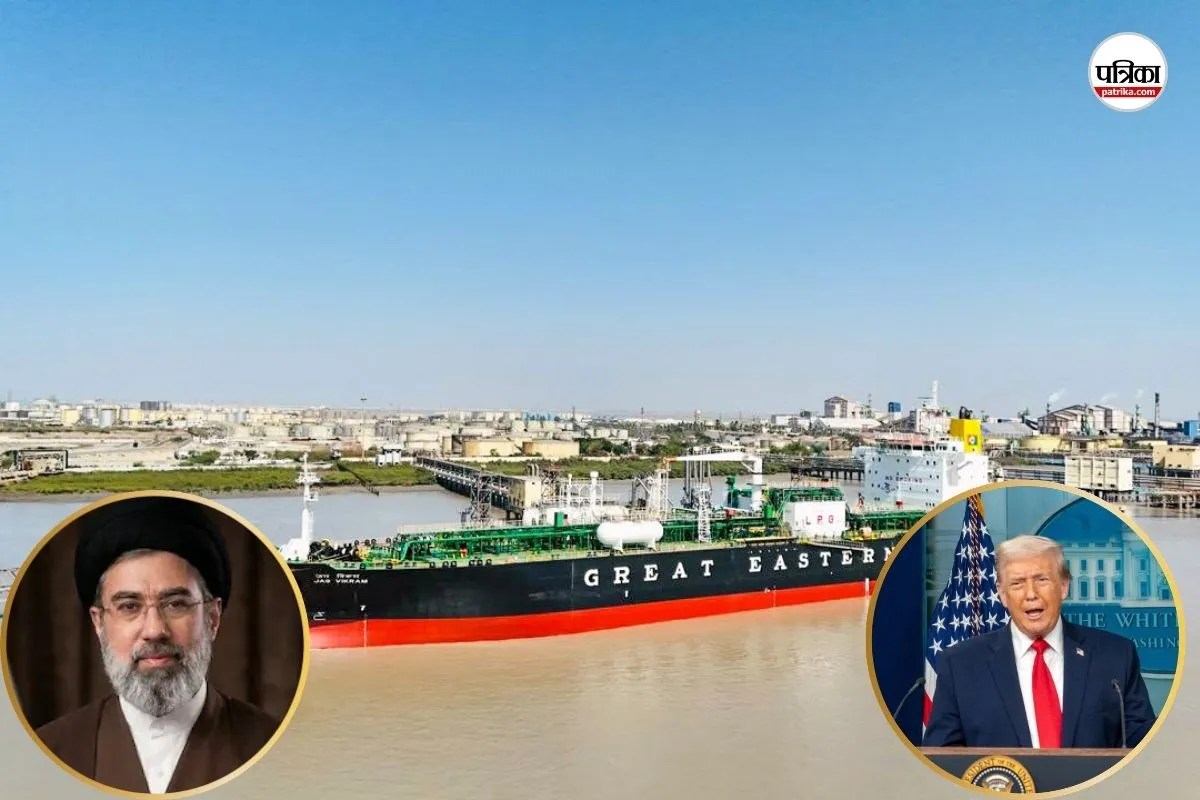
The Strait of Hormuz is not just a body of water. To the sailors who navigate it, the stretch feels like a throat—narrow, pulsing, and dangerously easy to squeeze. Through this thin blue artery flows a staggering amount of the world’s energy, but on a Tuesday that began with a deceptively calm tide, it became the stage for a high-stakes standoff that reminds us how thin the veneer of global order really is.
Steel met steel.
An Iranian-flagged cargo vessel, heavy with goods from Chinese ports, cut through the swells. It was a lumbering giant, a physical manifestation of the deepening economic bond between Beijing and Tehran. But the horizon shifted when the gray hulls of the U.S. Navy appeared. In a move that sent tremors from the trading floors of New York to the command centers in Isfahan, American forces boarded and took control of the ship.
This was no routine inspection. It was a cold, calculated assertion of power in a region where a single misstep can ignite a decade of fire.
The Human Cost of a Chess Move
Imagine standing on that deck. You are a merchant sailor, perhaps thinking of a daughter’s birthday or the heat of the galley. Suddenly, the air vibrates with the rhythmic thrum of military helicopters. Men in tactical gear, faces obscured, boots hitting the metal with the finality of a gavel. In that moment, you are no longer a person. You are a pawn in a geopolitical game you did not design.
The U.S. Navy’s justification usually rests on the pillars of international sanctions or maritime security. They look for illicit cargo—missile components, sanctioned oil, or drone parts—that fuel the proxy wars currently bleeding the Middle East dry. To the Pentagon, this is a surgical strike against a regime that ignores global rules. To the Iranian government, this is "maritime piracy" dressed in a uniform.
The tension doesn't stay on the water. It travels. It moves through the fiber-optic cables of the global economy.
When a ship is seized, the cost of insurance for every other vessel in the vicinity spikes. The price of a barrel of oil begins a slow, upward crawl. These are not abstract numbers. They are the extra few cents a commuter in a different hemisphere pays at the pump, and the mounting anxiety of a factory owner who relies on affordable energy to keep their lights on.
The Invisible Tripwire
The Strait of Hormuz is barely 21 miles wide at its narrowest point. That is a terrifyingly small space for two of the world’s most sophisticated militaries to play a game of chicken.
Iran’s response was swift and predictable. Their leadership promised a "crushing reply." This isn't just rhetoric; it’s a blueprint. Over the last several years, we have seen this cycle play out with rhythmic brutality. The U.S. seizes a tanker; Iran retaliates by harassing a drone or detaining a commercial ship of a Western ally.
What makes this specific seizure different is the China factor.
The ship was arriving from Chinese waters. This adds a layer of complexity that feels like navigating a minefield in the dark. Beijing has been Tehran’s primary economic lifeline, purchasing the oil that the West has tried to block. By intercepting this vessel, the U.S. isn't just poking the Iranian bear—it’s stepping on the toes of the Chinese dragon.
Why We Should Care Beyond the Headlines
It is easy to scroll past a headline about a ship seizure in a distant sea. It feels like a repeat of a story we’ve heard a hundred times before. But we should look closer at the mechanics of the "Shadow War."
This is how modern conflict is fought. Not with declarations of war or massive invasions, but with the quiet seizure of assets, the freezing of bank accounts, and the disruption of supply chains. It is a war of friction. Each incident grinds down the possibility of diplomacy. Each boarded ship makes the "tripwire" a little more sensitive.
The tragedy of the situation lies in its circular nature. The U.S. aims to choke off the resources that Iran uses to fund regional instability. Iran responds by creating the very instability the U.S. is trying to prevent. It is a feedback loop of escalating aggression where the only certain outcome is a higher probability of an accident that neither side can walk back.
The Weight of the Response
When Tehran speaks of a "response," they are thinking about the geography of the Strait. They possess thousands of fast-attack boats and sea mines. They know they cannot win a conventional blue-water naval battle against a carrier strike group, but they don't have to. They only need to make the passage of ships too risky or too expensive for the rest of the world to tolerate.
The U.S. Navy, meanwhile, operates under the crushing weight of being the world's policeman. They are tasked with keeping the lanes open, yet every time they intervene, they risk being the spark that blows up the entire neighborhood.
There is a specific kind of silence that follows these events. A silence where diplomats scramble behind closed doors and intelligence officers analyze satellite imagery for signs of Iranian mobilization. It is the silence before a storm.
We live in a world that assumes the lights will stay on and the ships will keep moving. We treat the global supply chain like a natural law, as reliable as gravity. But on that Tuesday, as American sailors stood on the deck of an Iranian vessel under a hot sun, the world was reminded that our comfort is built on a foundation of fragile agreements and pointed guns.
The sea doesn't care about borders or sanctions. It only carries what we put on it. Right now, it is carrying an immense amount of anger and a very short fuse.
As the sun sets over the Persian Gulf, the seized ship sits under new management. But the ripples it created are moving outward, crossing oceans, and heading toward shores where people still think this is someone else’s problem. It never is. The ocean connects us all, and when the throat of the world begins to close, everyone eventually feels the struggle for breath.