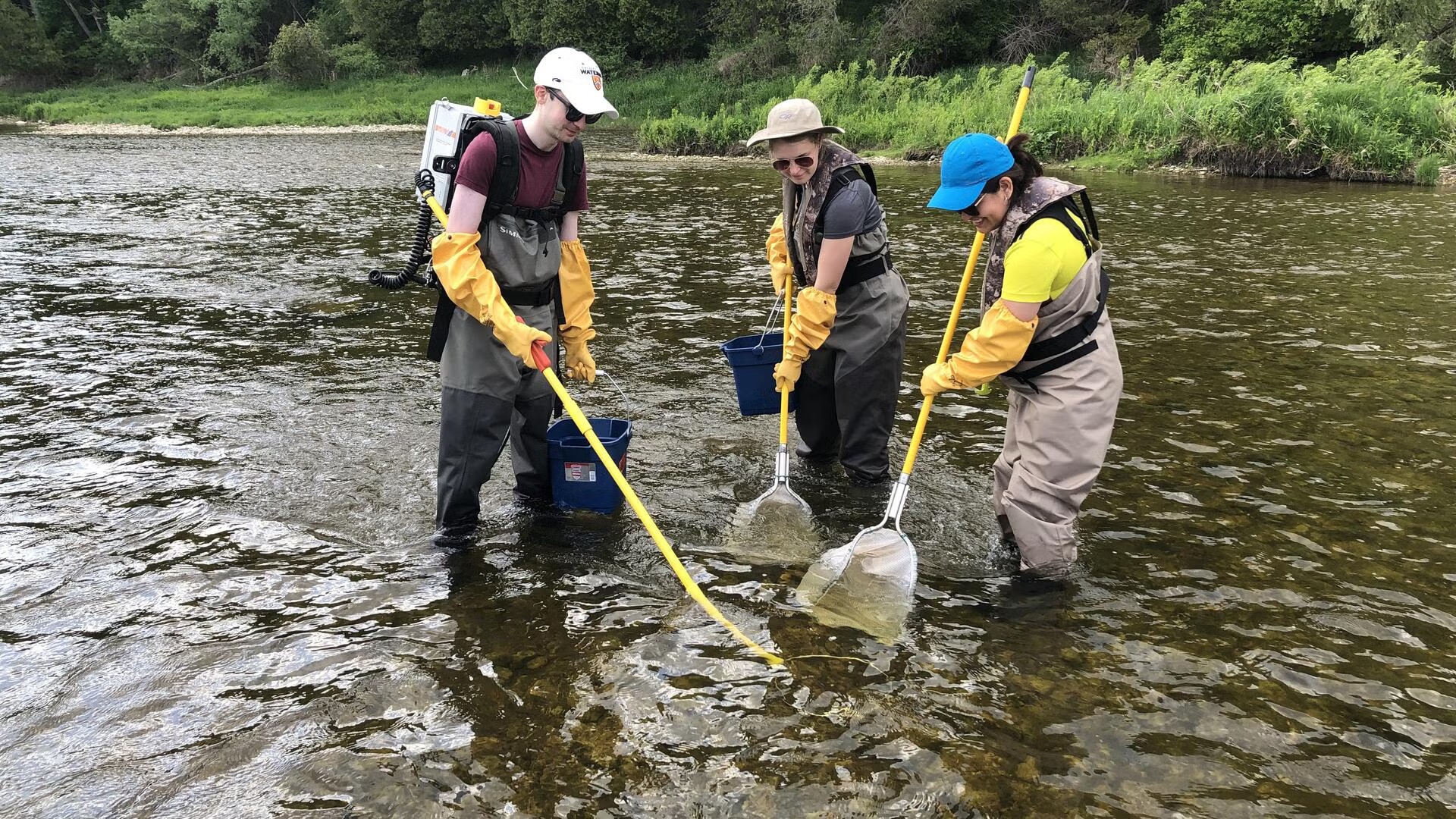
The Grand River looks like a postcard, but beneath the surface, the greenside darter is living a chemical nightmare. A landmark study from the University of Waterloo has confirmed what many veteran researchers long feared: synthetic opioids, including fentanyl and methadone, are accumulating in the bodies of wild fish throughout Ontario. This is not a hypothetical scenario or a laboratory simulation. It is a biological reality occurring in the rivers that receive treated municipal wastewater.
For decades, we have focused on the visible scars of pollution—oil slicks, plastic islands, and toxic sludge. But the presence of high-potency narcotics in aquatic life represents a more insidious frontier. These drugs are not the result of a single spill or a negligent factory. They are the chemical signature of our society, a byproduct of the opioid crisis that our current infrastructure is physically incapable of scrubbing away.
The Failure of Modern Infrastructure
The hard truth is that our wastewater treatment plants were never designed for this. Most facilities in Ontario were built to handle organic waste, suspended solids, and common nutrients like nitrogen and phosphorus. They are remarkably efficient at processing what we traditionally consider "sewage." However, they act as an open door for synthetic pharmaceuticals.
Fentanyl and its analogs are engineered to be metabolically resilient. They are designed to survive the human body’s internal chemistry, which makes them equally resistant to the biological and chemical processes used in water treatment. When a person uses these substances, or flushes them, the drugs travel to the plant, pass through the filters, and exit via the effluent pipes directly into the habitat of local fish.
Recent findings by Dr. Mark Servos and his team at the University of Waterloo have documented these substances in wild fish for the first time in Canada. The research detected not just fentanyl, but antidepressants like venlafaxine and the addiction-treatment drug methadone. This isn't just "traces" in the water; it is bioaccumulation within the tissue of the organisms.
A Biological Alteration
What does it do to a fish to be permanently bathed in a cocktail of antidepressants and opioids? The implications are devastating for the ecosystem. While a darter isn't going to "overdose" in the way a human might, these chemicals target the central nervous system.
Studies on similar pharmaceutical contamination show that fish exposed to these drugs exhibit altered behaviors. They become less social. They lose their natural fear of predators. In some cases, their foraging patterns change, causing them to wander into open water where they are easily picked off by larger hunters. This "chemical courage" isn't a benefit; it is a death sentence for the individual and a destabilizing force for the population.
Interestingly, the Waterloo study found that male fish accumulated higher concentrations of certain substances than females. This suggests that the physiological differences between sexes play a role in how these toxins are stored and processed. If the males of a species are disproportionately affected by neuroactive drugs, the reproductive success of the entire colony is at risk.
The Urban Recycling Loop
The problem doesn't end with the fish. Many Ontario municipalities pull their drinking water from the same rivers where upstream cities discharge their wastewater. While drinking water treatment is more rigorous than wastewater processing, the existence of these compounds in the source water creates a cycle that is difficult to break.
We are essentially living in a closed loop. The drugs used in our cities are flowing into our rivers, entering the food chain, and then being drawn back toward our taps. While the concentrations in drinking water are currently considered below the threshold for immediate human health concerns, we have no long-term data on the cumulative effects of lifetime exposure to multi-drug mixtures at trace levels.
The "cocktail effect" is the great unknown of modern toxicology. We understand how fentanyl works on its own. We understand how venlafaxine works. We do not understand what happens when a living organism is exposed to a dozen different psychiatric and analgesic drugs simultaneously for its entire life cycle.
The Cost of a Real Solution
Fixing this requires more than just "awareness." It requires a massive, multi-billion dollar overhaul of Ontario’s water infrastructure. Technologies like ozonation, advanced oxidation processes, and activated carbon filtration can strip these molecules from the water, but they are expensive to install and energy-intensive to operate.
Currently, there is no regulatory requirement for Ontario municipalities to monitor or remove pharmaceuticals from their effluent. Without a mandate, most cities will continue to let these chemicals flow downstream. It is a classic case of an externalized cost: the convenience of our current waste system is being paid for by the health of the Grand River and the species that call it home.
The presence of fentanyl in Ontario fish is a wake-up call that the opioid crisis is no longer just a public health issue or a criminal justice challenge. It is an environmental catastrophe. We have successfully exported our most destructive social problems into the very water that sustains us.
The darter in the Grand River is the canary in the coal mine, and right now, that canary is drugged.