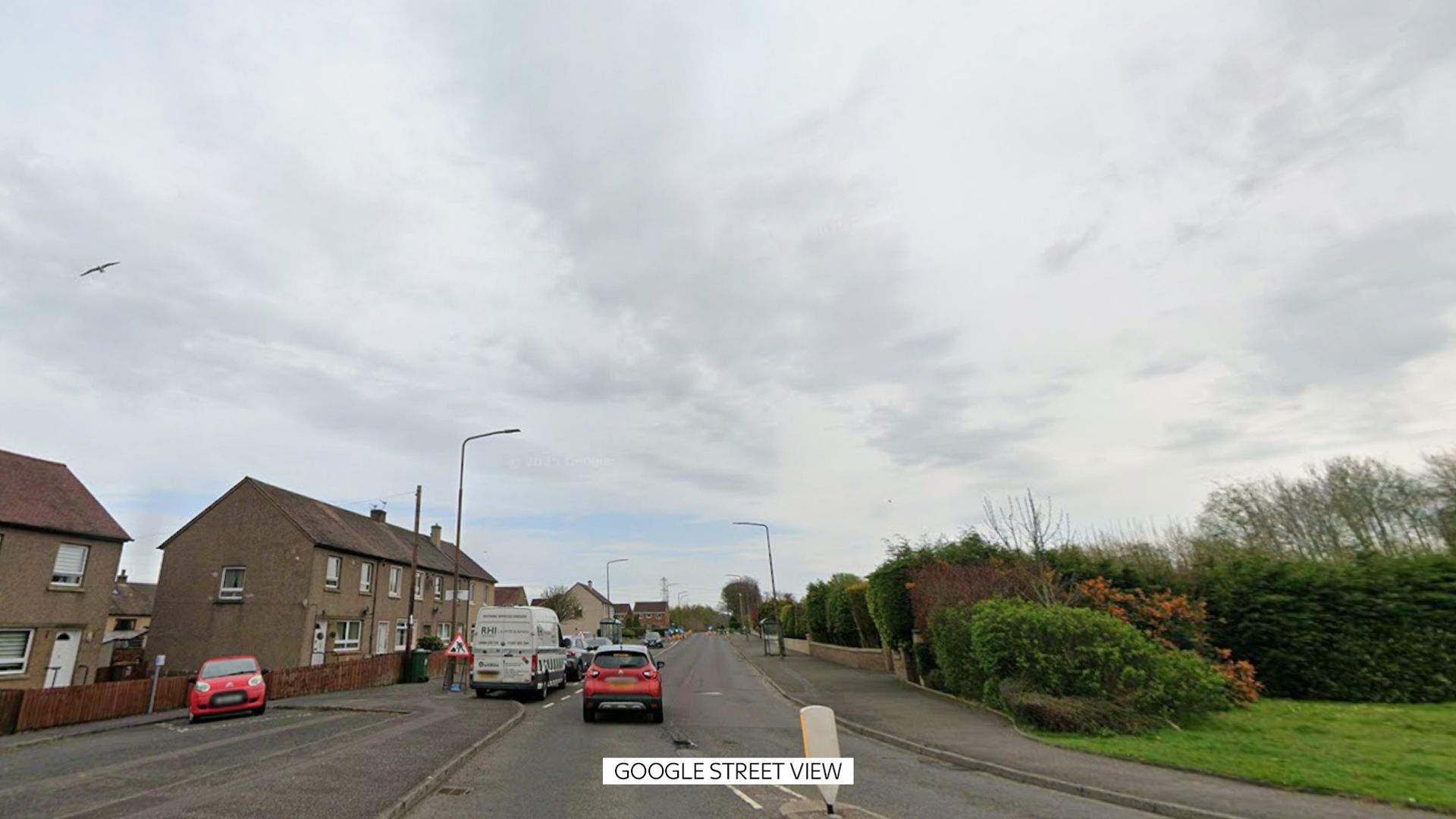
Two men killed in a multi-vehicle crash. You've seen that exact headline dozens of times, maybe even this week, tucked into a three-paragraph local news blurb that gives you the intersection, the time of day, and a boilerplate quote from a state trooper saying the investigation is ongoing.
And then nothing. No follow-up. No explanation of how a routine morning commute turned into a pileup that ended two lives. For a closer look into this area, we recommend: this related article.
Honestly, standard traffic reporting fails readers because it treats multi-vehicle crashes like random acts of weather rather than predictable, preventable chain reactions. When you look closely at how these collisions actually unfold—and what happens in the hours, weeks, and months after the tow trucks clear the asphalt—the story is far more complex than a ten-second radio spot will ever tell you.
Why Multi-Vehicle Crashes Are Deadlier Than Single-Car Wrecks
Physics doesn't negotiate. In a single-vehicle crash, energy transfers once—usually into a guardrail, a tree, or a ditch—and modern crumple zones do a remarkably good job absorbing that impact. Multi-vehicle crashes rewrite the rules because your car gets hit from angles it wasn't primarily designed to withstand, often multiple times within three seconds. For broader background on this topic, extensive coverage can also be found on NBC News.
Think about what happens during a high-speed chain reaction on an interstate. Your front airbags deploy on the initial impact, immediately deflating within milliseconds to keep you from suffocating against the fabric. If a third vehicle slams into your rear quarter-panel two seconds later, those front bags are already flat, your seatbelt pretensioners have already fired, and your body is thrown violently out of position.
According to data from the National Highway Traffic Safety Administration (NHTSA), multi-vehicle collisions account for more than half of all passenger vehicle occupant fatalities in the United States. While single-vehicle run-off-road crashes get plenty of attention for drunk or drowsy driving, pileups involving three or more vehicles introduce a brutal combination of secondary impacts, fuel leaks, and trapped occupants.
Here's the part most drivers don't realize until it's too late. Survival rates drop dramatically when commercial trucks are mixed into the equation. A fully loaded tractor-trailer weighs up to 80,000 pounds, while the average sedan hovers around 3,500 pounds. When a heavy truck fails to stop in time behind slowing traffic, the kinetic energy involved doesn't just crumple metal—it overrides the safety cages of smaller cars entirely.
The Anatomy of a Chain-Reaction Pileup
Most multi-vehicle crashes start with a single, seemingly minor mistake that cascades down the line because everyone behind the initial driver is following too closely.
It rarely starts with someone driving 110 miles per hour. Usually, it begins with a sudden lane change without a blinker, a driver glancing down at a text message for four seconds, or a patch of black ice on an overpass that stays shaded while the rest of the highway looks completely dry.
Let's look at a standard illustrative example of how a typical four-car fatal crash plays out on a divided highway:
- Second zero. Driver A hits the brakes hard to avoid debris in the center lane, dropping from 70 mph to 25 mph in under three seconds.
- Second two. Driver B, following at a one-second gap instead of the recommended three-to-four seconds, slams into Driver A's rear bumper. Both cars spin sideways, blocking two lanes of live traffic.
- Second four. Driver C swerves left to avoid the wreckage, clipping the concrete median and bouncing back into the right lane directly into the path of Driver D.
- Second six. Driver D, driving a heavy pickup or commercial van with a longer stopping distance, broadsides Driver B's disabled vehicle at nearly full highway speed.
That entire sequence takes less time than it takes to read this paragraph. The people killed in these wrecks frequently aren't the ones who made the initial mistake—they're the ones who survived the first bump only to be struck broadside while sitting helplessly in a disabled car.
Why Highway Design Sometimes Makes Things Worse
You can't blame everything on bad driving, even though human error plays a role in roughly 94% of serious crashes according to NHTSA studies. Road geometry matters.
Narrow shoulders give drivers nowhere to bail out when traffic ahead suddenly stops. Poorly timed merge lanes force drivers entering at 45 mph directly into traffic moving at 75 mph. And in construction zones, temporary concrete barriers—often called Jersey barriers—eliminate escape routes completely, turning a minor fender-bender into an unavoidable bottleneck where approaching cars have zero room to swerve.
What Actually Happens During a Fatal Crash Investigation
When a headline says two men were killed in a multi-vehicle crash and "the investigation remains active," readers often assume police are just filling out paperwork. In reality, a fatal crash reconstruction takes weeks or months, and it looks a lot like a homicide investigation.
State police crash reconstruction teams use laser scanners—known as total stations or 3D LiDAR—to map every skid mark, gouge in the pavement, fluid trail, and piece of shattered headlight down to the millimeter. They measure the exact coefficient of friction on the asphalt that day, factoring in road temperature, tire tread depth, and weather conditions.
Then they pull the black boxes.
Almost every passenger vehicle built since 2014 carries an Event Data Recorder (EDR). It's not constantly recording like a dashcam, despite what people think. Instead, it continuously overwrites a five-second loop of telemetry—vehicle speed, throttle position, brake pedal application, steering angle, and seatbelt status—freezing that data permanently the instant the airbag control module detects a crash event.
Investigators obtain search warrants to download those EDR modules from every vehicle involved. By comparing the timestamps and speed drops across four or five different cars, reconstructionists can prove who braked first, who never touched the brake pedal at all, and which impact actually caused the fatal injuries.
Toxicology and Phone Records Take Time
Another reason news outlets rarely publish updates? Delays in lab results and subpoenas.
Post-mortem toxicology panels on deceased drivers are standard procedure in nearly every jurisdiction, and state crime labs routinely take six to twelve weeks to return full blood screens. At the same time, detectives subpoena cell phone carrier records to check whether any surviving drivers were actively transmitting data—sending a message, scrolling social media, or streaming video—at the exact minute the first 911 call hit dispatch.
Local reporters move on to the next day's news cycle long before those warrants come back. That leaves the public with an incomplete story, and it leaves families waiting in agonizing silence for answers about why their loved ones didn't come home.
The Legal and Financial Aftermath Nobody Prepares For
Surviving a multi-vehicle crash—or losing a family member in one—triggers a bureaucratic nightmare that catches almost everyone off guard. When three, four, or five drivers are involved, insurance companies immediately go to war over liability percentages.
In states that follow comparative negligence rules, an insurer doesn't have to prove their driver was 100% innocent; they just have to argue that someone else was more at fault. If five insurance adjusters spend six months pointing fingers at each other, medical bills pile up in collections and funeral costs go unreimbursed while liability remains disputed.
Worse still is the problem of minimum policy limits. Many states still allow drivers to carry as little as $25,000 or $50,000 in bodily injury liability coverage per accident. If one underinsured driver triggers a multi-vehicle pileup that kills two men and hospitalizes three others, that tiny policy limit gets split among every victim—covering a fraction of a single emergency room visit, let alone wrongful death damages.
This is why experienced personal injury attorneys and insurance brokers constantly harp on Underinsured Motorist (UIM) coverage. You cannot control whether the person weaving through traffic behind you carries real insurance or a bare-bones state minimum policy. Your own UIM policy is the only thing standing between your family and financial ruin if an underinsured driver causes a catastrophic wreck.
What to Do If You're Caught in a Multi-Vehicle Crash
Most safety advice focuses on preventing the crash in the first place, which is great until you're already sitting in crumpled metal with smoke coming out of your dashboard. What you do in the first sixty seconds after the initial impact can literally save your life.
Keep your seatbelt buckled until you confirm traffic has stopped. Panic makes people unbuckle immediately and try to scramble out of the car. Don't do it. If you're still in an active travel lane and another car hits you while you're unbuckled or half-way out the door, the results are almost always fatal.
Check your mirrors before opening any door. If your vehicle is still drivable and you can safely steer it onto the shoulder or off an exit ramp, move it out of the travel lanes immediately. Leaving a disabled car in the middle of a highway is one of the highest-risk situations in traffic safety.
Get behind a barrier if you exit the vehicle. If your car won't move and you have to get out, exit away from oncoming traffic, move well off the roadway, and get behind a guardrail or up an embankment. Never stand between two stopped cars to exchange insurance information—secondary collisions frequently crush people standing on the shoulder.
How to Reduce Your Odds of Being in the Next Headline
You can't eliminate risk on public roads, especially when other drivers are distracted, impaired, or driving aggressively. You can, however, tilt the odds heavily in your favor by changing a few ingrained habits.
- Double your following distance. Leave at least four full seconds between your front bumper and the car ahead at highway speeds, and push that to six seconds in rain or heavy traffic. Space gives you time to brake smoothly instead of slamming the pedal and getting rear-ended.
- Watch three cars ahead, not just the bumper in front of you. Looking through the windshield of the vehicle ahead lets you spot brake lights, swerving cars, and road debris seconds before the driver directly in front of you reacts.
- Never box yourself in next to tractor-trailers. Pass commercial trucks briskly on the left and avoid lingering in their blind spots or riding alongside them in multi-lane traffic where you have no escape lane.
- Install a front-and-rear dashcam today. In a multi-vehicle crash where three drivers tell three different stories to police, high-definition video is the single cleanest way to prove what actually happened without waiting six months for an EDR download.
- Audit your auto insurance policy this week. Check your Underinsured Motorist coverage limits right now—if they're below $250,000 per person, call your insurer and bump them up before you get back on the highway.
Traffic headlines reduce human tragedies to brief, forgettable paragraphs, so treat every drive like your escape route matters and verify your coverage before you need it.