Look at a standard high school history textbook. Feel the weight of it. Three pounds of glossy paper, ink, and binding, smelling faintly of industrial glue and dry-erase markers. Open it to the index and run your finger down the columns. You will find battles, treaties, tariffs, and presidents. You will find a meticulous accounting of men who signed documents in rooms where women were not allowed to enter.
Now, look for the women.
You will find a sidebar here. A boxed profile there. Maybe a paragraph on Susan B. Anthony tucked beside the Reconstruction era, or a brief nod to Rosie the Riveter before the chapter rushes back to the Normandy landings. In the architecture of standard American education, women are not the foundation of the building. They are the wallpaper—decorative, optional, easily peeled away when the school year runs short in May and teachers have to cram for standardized tests.
For decades, we accepted this editorial choice as an unavoidable reality of curriculum design. There is only so much time in a semester, after all. You have to cover the wars. You have to cover the economy.
But what happens to a seventeen-year-old girl sitting in the third row of a fluorescent-lit classroom when the story of her country teaches her, quietly and relentlessly, that people who look like her were merely bystanders to history? And what happens to the boy sitting next to her when he learns the exact same lesson?
In New York City, two high school educators looked at that three-pound textbook, recognized the silent damage it was doing, and decided to break the mold. Their names are Serene Williams and Pamela Sinkler-Todd. They did not set out to become national activists or rub shoulders with Hollywood royalty. They just wanted an Advanced Placement course in Women’s History.
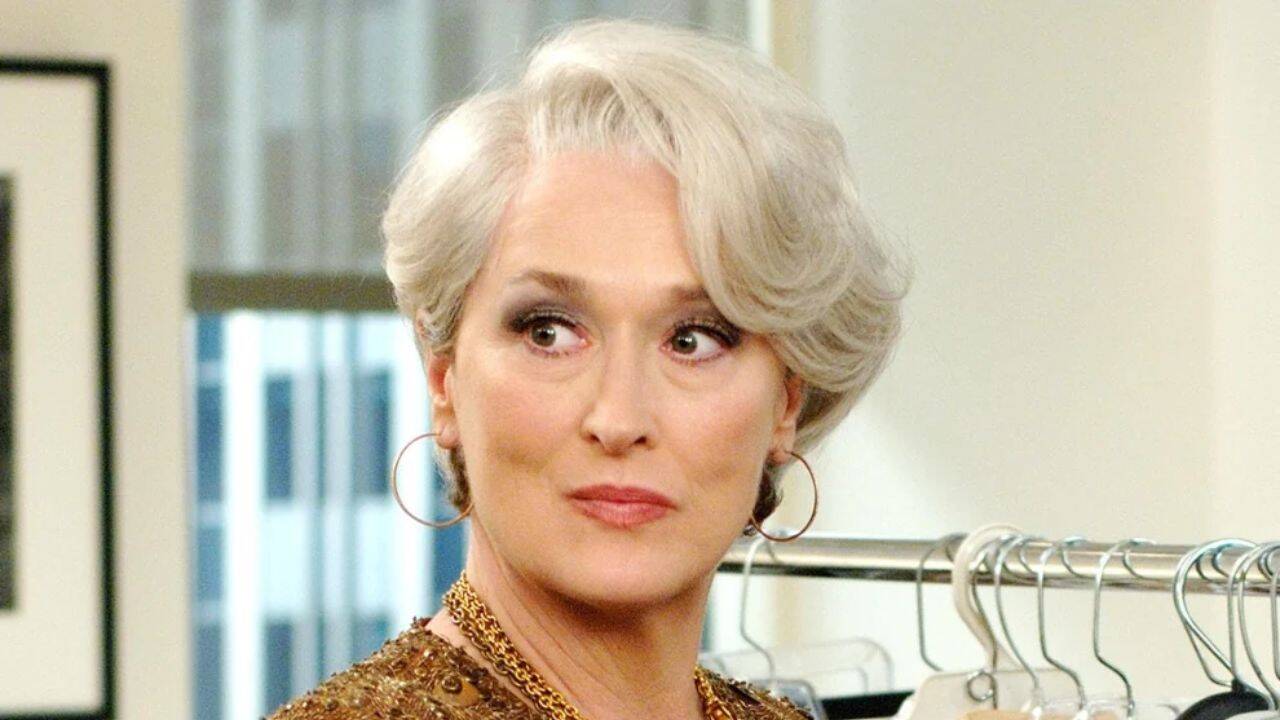
What they sparked instead was a grassroots campaign that caught the attention of the National Women's History Museum and drew the fierce, public backing of Meryl Streep—an artist who has spent half a century fighting to put complex, unvarnished women onto the cultural record.
The Ghost in the Curriculum
To understand why an AP course matters so much, you have to understand the economy of prestige in American high schools.
Advanced Placement courses, administered by the College Board, are the gold standard of secondary education. They carry weighted GPAs. They earn college credit. They signal to admissions officers that a subject is rigorous, legitimate, and essential. Right now, a student can take AP European History, AP United States History, AP World History, and—following a massive, high-profile push—AP African American Studies.
There is no AP Women’s History.
Think about that omission for a second. Women make up more than half the population. They have built economies, led labor movements, engineered technological breakthroughs, and survived systemic erasure at every turn. Yet, in the hierarchy of high school academics, their collective history has never been granted the standalone, college-level rigor of an AP designation.
Consider a hypothetical student—let’s call her Maya—sitting in an eleventh-grade classroom in Ohio. Maya loves history. She devours books about the labor strikes of the early twentieth century. Yet when she opens her assigned reading, she learns about the Triangle Shirtwaist Factory fire primarily as a footnote to municipal safety regulations. She doesn't learn about Clara Lemlich, the twenty-three-year-old Ukrainian immigrant who stood up at a Cooper Union meeting in 1909, interrupted the male union leaders who were preaching caution, and called for a general strike in Yiddish—a speech that ignited the "Uprising of the 20,000" and changed American labor law forever.
When you strip Clara Lemlich out of the main narrative and relegate her to a Trivia Tuesday factoid, you aren't just editing a textbook. You are teaching Maya that history happens to women, not because of them.
I remember my own high school history classes with a strange mix of nostalgia and frustration. I loved the smell of old paper and the rhythm of dates, yet I walked away from four years of honor-roll classes believing that women had essentially sat in parlors waiting for the nineteenth century to end so they could finally ask for the vote. It wasn't until my twenties, reading primary sources on my own time, that I realized how thoroughly I had been misled. The realization didn't just make me angry; it made me feel robbed. You cannot build a sturdy sense of agency on a foundation of missing bricks.
Two Teachers and a Stubborn Question
Serene Williams and Pamela Sinkler-Todd refused to let their students graduate with that same hollow feeling.
Teaching at the High School for Environmental Studies in Manhattan, Williams and Sinkler-Todd saw firsthand how hungry students were for the full story. When you introduce teenagers to the real, unvarnished lives of historical women—not sanitized saints, but flawed, brilliant, strategic human beings—the room changes. The posture of the students shifts. Suddenly, history stops being a dead list of dates and becomes a mirror.
So the two educators asked a deceptively simple question: Why isn't there an AP Women’s History course?
When they didn't get a satisfactory answer, they started building the demand themselves. They launched a campaign, rallying students, fellow educators, historians, and advocates to petition the College Board. They weren't asking for a favor. They were demanding academic parity.
The logistics of creating an AP course are notoriously brutal. The College Board typically requires proof of widespread demand from both high schools and universities—colleges must agree to grant credit for the exam, and high schools must commit to offering the class. It is a classic chicken-and-egg trap. High schools hesitate to build a course without an AP exam attached to it, and the College Board hesitates to build an exam without thousands of high schools already teaching the course.
Williams and Sinkler-Todd decided to break the stalemate from the ground up. They mobilized their classrooms, organized petitions, and turned a bureaucratic oversight into a moral imperative. Their persistence caught the eye of the National Women’s History Museum, an institution that has spent years fighting its own uphill battle to secure a physical building on the National Mall in Washington, D.C.
The museum recognized that what Williams and Sinkler-Todd were doing in Manhattan was the exact frontline work needed to shift the culture. You cannot just build a museum at the end of the road; you have to fix the textbooks at the beginning of it.
Enter Meryl Streep
When Meryl Streep lends her voice to a cause, people listen—not merely because she holds twenty-one Academy Award nominations, though that certainly clears a room, but because her entire career has been an exercise in historical excavation.
Think about the women Streep has brought to life on screen. Karen Silkwood, the chemical technician who blew the whistle on nuclear plant safety violations before dying in a mysterious car crash. Margaret Thatcher. Emmeline Pankhurst, the militant British suffragette who famously declared, "Deeds, not words." Katharine Graham, the Washington Post publisher who risked her family's legacy and her own freedom to publish the Pentagon Papers.
Streep knows what it takes to dig a woman out of the footnotes and put her center stage. She knows the research required, the nuances that get flattened by lazy storytelling, and the visceral shock audiences experience when they realize how much they didn't know.
So when the National Women's History Museum honored Serene Williams and Pamela Sinkler-Todd with the prestigious "Making History" award—specifically recognizing their relentless campaign for an AP Women’s History course—Streep stepped up to champion their work.
Her involvement wasn't a drive-by celebrity endorsement. It was a passing of the torch. In backing Williams and Sinkler-Todd, Streep highlighted a truth that often gets lost in loud political debates over school curricula: the erasure of women’s history is rarely loud. It doesn't always look like book burnings or angry school board meetings. More often, it looks like a quiet shrug. It looks like a budget cut. It looks like an administrator saying, "We just don't have room in the schedule this year."
Streep’s advocacy amplified the teachers' message beyond the five boroughs of New York, forcing a national conversation about what we deem worthy of rigorous study. When a cultural icon stands beside two public school teachers and says, Their fight is our fight, the excuse that "there isn't enough demand" suddenly rings very hollow.
Why the Resistance Is So Quiet—and So Stubborn
If the case for AP Women’s History is so obvious, why hasn't it happened already?
To answer that, we have to look closely at the invisible friction inside American education. Right now, curriculum battles are a political minefield. Any attempt to introduce a new history course—especially one centered on identity, race, or gender—is immediately scrutinized through a partisan lens. Critics often accuse such courses of being divisive, ideological, or redundant. "Why do we need a separate class?" the argument goes. "Women are already part of U.S. History."
This argument sounds reasonable on the surface, like saying you don't need a separate chapter on economics because money is already mentioned in the chapters on war.
In practice, integration without dedicated focus almost always leads to dilution. Let’s use a simple analogy. Imagine trying to understand the architecture of a suspension bridge by only studying the cars that drive across it. You might notice the cables occasionally in the background of your photographs, and you might acknowledge that something is holding the road up, but you will never understand the tension, the engineering, or the sheer load-bearing weight keeping the entire structure from collapsing into the river.
Women’s history is the suspension cable of human civilization. When you only mention women when they intersect with male-dominated political events—a queen ascending a throne, a first lady hosting a dinner, a protestor marching outside a male legislature—you miss the entire infrastructure of society. You miss how unpaid domestic labor subsidized the Industrial Revolution. You miss how women’s benevolent societies invented modern social work and public health systems decades before the federal government stepped in. You miss the legal battles over coverture, property rights, and bodily autonomy that quietly reshaped constitutional law.
I'll admit, there is a part of this push that feels daunting, even overwhelming, to educators already stretched thin. Teachers are underpaid, exhausted, and navigating a landscape of constant scrutiny. Asking school districts to adopt a brand-new AP course requires money, teacher training, new textbooks, and administrative courage. It is completely understandable why a principal in a cash-strapped district might hesitate.
Yet hesitation has a cost. Every year we delay, another graduating class walks across a stage with an incomplete map of the world.
The Ripple Effect of a Single Classroom
What happens when a school actually takes the leap and offers a dedicated, rigorous Women’s History course?
Educators who already teach elective versions of the class report a fascinating phenomenon. First, the enrollment isn't just female students. Young men sign up, often initially out of curiosity or to fill an elective slot, and walk out radically transformed. One male student in a pilot program famously remarked that he had spent his entire life thinking he knew his own family's history, until a class assignment forced him to interview his grandmother about her work life in the 1960s. He discovered she had been fired from a banking job the day she announced her pregnancy—a completely legal practice before the Pregnancy Discrimination Act of 1978.
History stopped being an abstract concept in a library. It became the reason his grandmother never got her pension.
This is the true power of what Serene Williams and Pamela Sinkler-Todd are fighting for. An AP course isn't just about memorizing names for a May exam; it is about teaching students how to interrogate the silence in the room. It trains young minds to look at any institution, any law, any cultural norm, and ask: Who was left out of the room when this was decided? And how did they survive anyway?
When the National Women’s History Museum placed that award in the hands of Williams and Sinkler-Todd, and when Meryl Streep stood behind them to validate their urgency, they were sending a flare into the sky for every teacher who has ever stayed up past midnight photocopying primary sources because the school textbook didn't include them.
What Comes Next in the Fight for the Record
The campaign for AP Women’s History is far from over. The College Board moves slowly, weighed down by bureaucracy, pilot testing, and the political sensitivities of state education boards across the country. Securing official AP status can take years of committee reviews, framework drafting, and institutional lobbying.
Yet the momentum has shifted irreversibly. What started in a Manhattan high school classroom has become a national benchmark. Schools across the country are now using the framework championed by Williams and Sinkler-Todd to build their own honors electives, proving that the student demand is real, fierce, and growing.
Think back to that three-pound history textbook sitting on a student’s desk.
Imagine a fall morning a few years from now. A seventeen-year-old girl walks into her third-period classroom, drops her backpack onto the floor, and pulls out a heavy, brand-new volume stamped with two simple letters on the spine: AP. She opens it not to an appendix, not to a colorful sidebar tucked into the margins, and not to a footnote at the bottom of the page. She opens it to Chapter One, Page One, where the women who built her world are finally standing right where they have always belonged—at the center of the story.