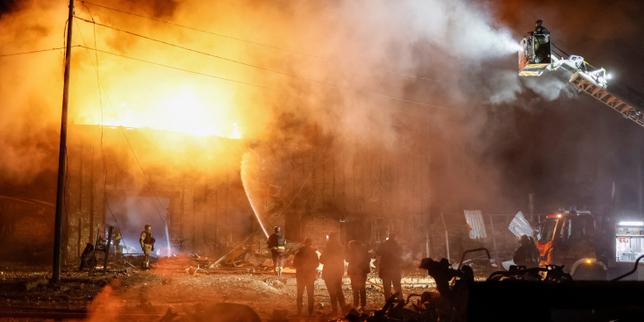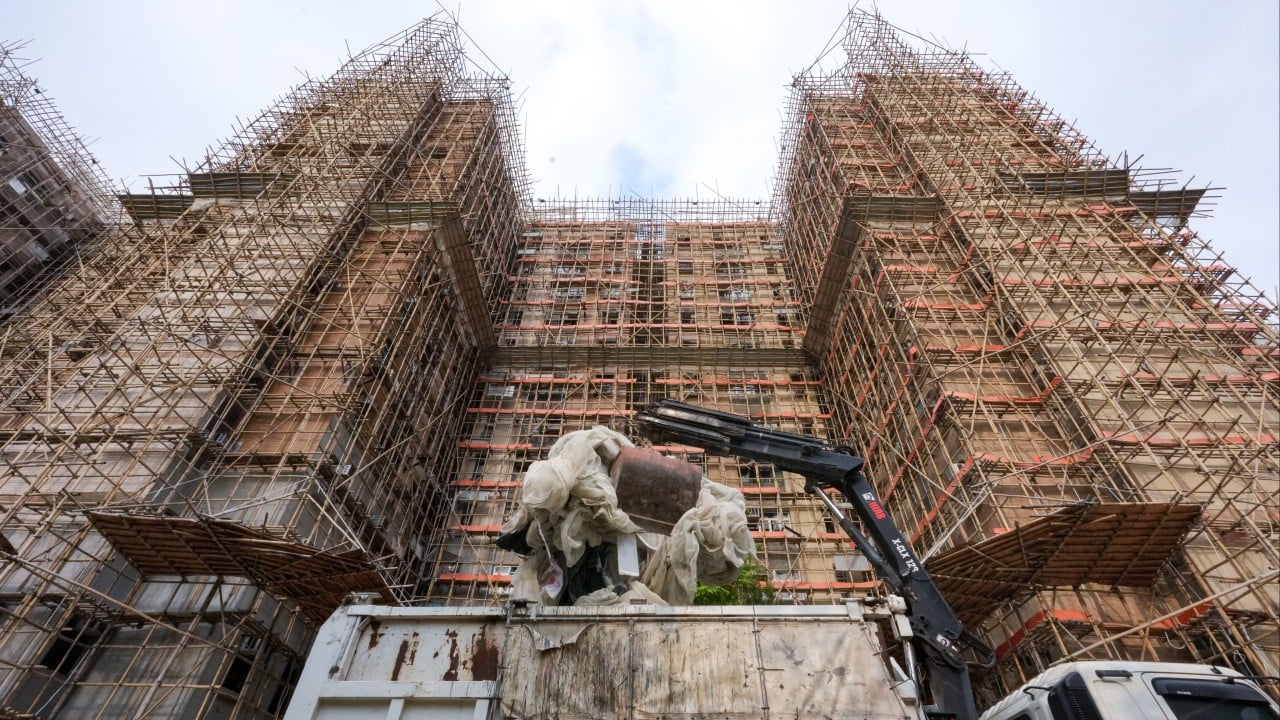
Hong Kong’s newly established housing inspection unit faces an immediate, existential test of public trust following the blaze at Wang Fuk Court in Tai Po. Designed to streamline safety audits and crack down on chronic maintenance failures across aging residential estates, the unit must now prove it can enforce compliance in a city where fragmented building ownership, entrenched contractor monopolies, and years of regulatory inertia have repeatedly stalled life-saving repairs. Without visible, independent enforcement powers and transparent audit timelines, residents across Hong Kong’s thousands of aging high-rises risk viewing the new oversight body as little more than a bureaucratic reshuffle.
The fire at Wang Fuk Court did not happen in a vacuum. Anyone who has spent decades covering urban infrastructure and housing policy in Hong Kong recognizes the exact anatomy of this crisis. When smoke billowed out of the Tai Po Home Ownership Scheme (HOS) estate, it exposed a structural vulnerability that plagues hundreds of mid-century and 1980s-era residential blocks across the New Territories and Kowloon. These buildings sit in an awkward regulatory gray zone. They are neither fully managed by the Housing Authority like public rental estates, nor do they command the deep financial reserves and professional property management teams of luxury private developments on Hong Kong Island. If you liked this article, you should look at: this related article.
The Anatomy of a Predictable Disaster
To understand why a fire at an estate like Wang Fuk Court instantly triggers citywide anxiety, you have to look at how Hong Kong builds, sells, and maintains subsidized housing. Wang Fuk Court, completed in the early 1980s, represents a classic generation of HOS developments. At over four decades old, its electrical risers, fire service installations, common corridors, and exterior facades are well past their original design lifespans.
In theory, Hong Kong possesses some of the strictest building and fire safety codes in Asia. The Fire Services Ordinance and the Buildings Ordinance grant authorities broad statutory powers to issue Fire Hazard Abatement Notices and Mandatory Building Inspection Scheme (MBIS) orders. On paper, the system is airtight. For another perspective on this development, see the recent update from Associated Press.
In practice, enforcement breaks down at the point of execution.
When an inspection reveals compromised fire doors, obstructed smoke lobbies, or deteriorating electrical wiring in a multi-story tower, the government does not simply send in a crew to fix it. Instead, the burden falls on the Incorporated Owners (IO)—a volunteer committee of everyday residents elected to manage a complex multimillion-dollar infrastructure asset. These committees must navigate a labyrinth of tendering rules, technical specifications, and fractious owner meetings just to approve a single repair contract.
Meanwhile, the hazards remain active. A propped-open fire door on the 18th floor or an unsealed utility shaft turns a localized apartment fire into a vertical chimney within minutes. Residents know this. They walk past the frayed wires and broken exit signs every morning. When a blaze finally breaks out, the public anger is directed not just at the immediate cause of the fire, but at the government departments that allowed known compliance gaps to linger for years.
Why the New Housing Checks Unit Starts at a Deficit
The establishment of a dedicated housing checks unit was supposed to break this cycle of reactive governance. By consolidating inspection protocols and increasing the frequency of spot checks on aging estates, officials hoped to catch lethal hazards before they sparked headlines.
Yet launching this unit in the shadow of the Wang Fuk Court fire puts it at an immediate structural disadvantage. Public skepticism in Hong Kong regarding building oversight is earned, not imagined. Over the past decade, residents have watched a recurring pattern play out after major fires—from the deadly subdivided flat blazes in Jordan and Sham Shui Po to industrial building infernos in Ngau Tau Kok. Each tragedy produces a task force, a round of heightened inspections, and a flurry of statutory notices. Six months later, the media spotlight moves on, and the backlog of unfulfilled safety orders quietly grows again.
The Enforcement Bottleneck
The core problem is not a lack of inspections. Inspectors already know where the worst violations are. The bottleneck is compliance enforcement.
Consider what happens when a building fails an audit. If the Incorporated Owners lack the consensus or the funds to execute the repairs, the government faces an unenviable choice. Prosecuting a volunteer committee of elderly homeowners in court is politically unpopular and rarely speeds up physical repairs. Alternatively, the Buildings Department or Fire Services Department can step in, execute the works themselves, and recover the costs from the owners later.
Government departments hate exercising this default power. It ties up public funds, exposes civil servants to litigation over contractor pricing, and creates administrative headaches that can drag on for years. As a result, thousands of statutory fire safety directions across Hong Kong sit in an administrative limbo—issued, acknowledged, and entirely uncompleted.
If the new housing checks unit operates under these exact same statutory constraints, its creation will change very little on the ground. Counting violations faster does not make a building safer if nobody is forced to fix them.
The Hidden Economics of Estate Maintenance
Any serious analysis of Hong Kong’s housing safety deficit must confront the money. Maintenance in aging estates is not merely a technical issue; it is an economic battlefield.
For residents living in 40-year-old HOS estates like Wang Fuk Court, a mandatory building overhaul is often the single largest financial shock of their retirement. Major refurbishment projects—covering structural concrete repairs, fire service upgrades, and plumbing replacements—routinely run into the tens of millions of Hong Kong dollars. Divided among individual flat owners, a single household can be hit with a levy ranging from HK$50,000 to over HK$150,000.
For asset-rich, cash-poor retirees, finding that kind of liquidity is nearly impossible. Naturally, owners resist. They vote down repair budgets at annual general meetings. They demand cheaper quotes. They delay decisions for years, hoping to push the financial pain further down the road.
The Shadow of Bid-Rigging
Compounding this financial resistance is a deep-seated distrust of the renovation industry itself. Hong Kong’s building maintenance sector has a notorious history of bid-rigging syndicates. Over the past fifteen years, investigations by the Independent Commission Against Corruption (ICAC) and the Competition Commission have exposed elaborate cartels where consultants and contractors collude to inflate renovation tenders by 30 to 50 percent.
When residents suspect that a mandatory fire safety upgrade is being used as a vehicle to fleece them, cooperation evaporates. Every inspection notice from the government is viewed with suspicion. Owners question whether the required upgrades are genuinely necessary or merely a windfall for connected contractors.
The new housing checks unit cannot afford to treat this dynamic as someone else’s problem. If its inspectors issue sweeping upgrade orders without providing standardized cost benchmarks or vetted contractor frameworks, they will inadvertently feed the very paralysis they were created to solve.
Three Fault Lines That Will Determine the Unit's Survival
For the new housing checks unit to establish genuine credibility after the Wang Fuk Court fire, it must avoid the traps that neutralized previous regulatory initiatives. Industry observers and building surveyors point to three decisive battlegrounds.
1. Radical Transparency in Audit Results
Historically, building inspection records in Hong Kong have been opaque. A prospective buyer or current tenant often has no easy way of knowing whether their block has outstanding fire safety directions unless they conduct a complex land registry search or decode dense government databases.
If the new unit keeps its findings locked behind internal departmental portals, trust will erode immediately. True accountability requires a public, easily searchable dashboard detailing every inspected estate, the specific hazards identified, the deadline for rectification, and whether that deadline was met. Public visibility creates immediate market and social pressure. Property values and rental demand react far faster to public safety ratings than building committees react to bureaucratic warning letters.
2. Decoupling Inspection from Committee Paralysis
When an inspection uncovers critical life-safety failures—such as non-functional fire hydrants, compromised compartmentation, or blocked escape routes—the timeline for repair cannot be held hostage by owner politics.
The new unit needs a clear triage protocol. Cosmetic and long-term structural issues can go through standard committee tendering. Critical fire hazards must trigger a fast-track intervention mechanism. If an estate fails to appoint a contractor within a strict 60-day window, the government must automatically step in, execute the emergency works, and attach the cost as a statutory charge on the property titles. Until owners know that inaction carries an automatic, non-negotiable financial consequence, stalling will remain the default strategy.
3. Auditing the Auditors
The Wang Fuk Court incident raises uncomfortable questions about prior oversight. Had the estate been inspected recently? If violations existed, why were they not flagged or resolved? If the estate had passed previous checks, why did a fire still expose vulnerabilities?
A new oversight body cannot ask the public for blind faith while shielding its own methodologies from scrutiny. The unit must publish its inspection criteria and allow independent third-party engineering bodies to review its audit protocols. Furthermore, it must establish clear channels for frontline residents and estate security guards to report hazards directly, bypassing property management companies that may have a financial incentive to downplay maintenance defects.
The Illusion of the Quick Fix
There is a tempting political narrative that accompanies the launch of any new regulatory unit. It suggests that the problem was simply a matter of organizational structure—that by drawing new lines on a government chart and assigning fresh badges to inspectors, the underlying risks will subside.
That narrative is dangerous. Hong Kong’s aging building stock is a massive, compounding demographic reality. Over 9,000 private and subsidized buildings in the city are already more than 50 years old, and thousands more built during the 1980s boom are entering their fifth decade. Concrete degrades. Wiring insulation becomes brittle. Population density in older estates continues to strain infrastructure never designed for modern electrical loads.
A hypothetical scenario illustrates the scale of the challenge. Suppose the new housing checks unit conducts 500 comprehensive estate audits in its first year of operation and identifies critical fire safety deficiencies in 60 percent of them. That immediately generates 300 major infrastructure repair projects that must compete for the same limited pool of licensed fire service contractors, registered structural engineers, and municipal funding grants. Without a coordinated industrial strategy to expand technical labor capacity and streamline material approvals, the unit’s success at finding problems will simply create a massive bottleneck in fixing them.
What Residents Are Actually Watching For
In the wake of the Wang Fuk Court blaze, residents in Tai Po and across Hong Kong are not listening to press releases about administrative synergy or enhanced departmental coordination. Their metrics for trust are far more concrete.
They are watching to see whether the propped-open smoke doors in their own staircases finally get self-closing hinges installed. They are watching to see whether the cluttered corridors in neighboring blocks are cleared and kept clear, not just for a week after a fire, but six months later. They are watching to see whether an estate that ignores a mandatory safety order actually faces swift, decisive intervention from the authorities.
Building trust after a crisis is never achieved through announcements; it is built through predictable, visible, and uncompromising follow-through. Hong Kong’s new housing checks unit has been handed a clear mandate at a moment of acute public sensitivity. If it uses its authority to force rapid, transparent action on aging estates, it can become a genuine bulwark against urban tragedy. If it settles into the familiar rhythm of issuing paper notices while hazards remain untouched, the next fire will not just burn through concrete and wiring—it will incinerate whatever credibility remains.