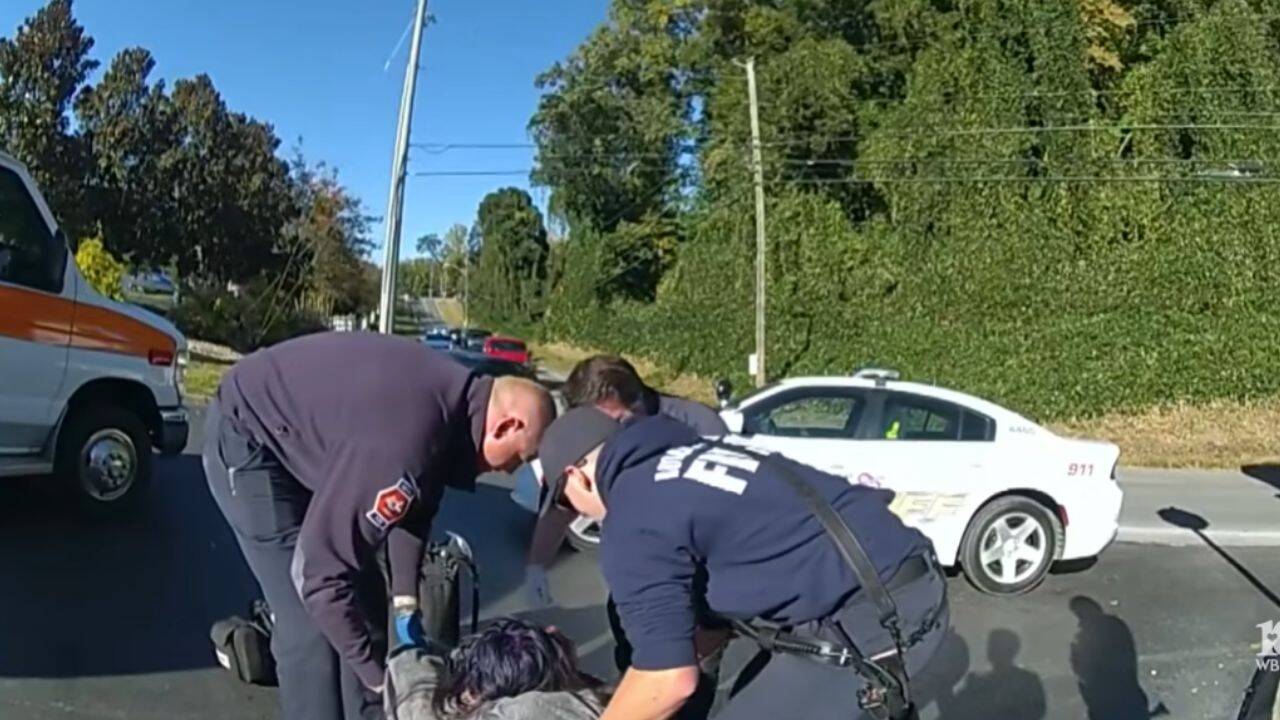
Fifty thousand volts. That is the invisible wall standing between a quiet Tuesday afternoon in rural Tennessee and a seven-figure check signed by taxpayers who never pulled a trigger.
Silence.
Then comes the high-pitched electrical crackle that sounds less like a weapon and more like a bug zapper working overtime on a humid July night. For most people reading a headline about a local government payout, the numbers blur together into municipal white noise. A county settles a lawsuit. A veteran gets paid. Everyone moves on to the next scroll.
Look closer at the ledger, though, and the cold ink starts to bleed. When a Tennessee county agrees to pay one million dollars to a military veteran who was Tasered by a sheriff’s deputy in 2022, that money does not materialize out of thin air. It comes out of road repair budgets, school supply funds, and the pockets of working families who believed the badge meant restraint. More importantly, it marks the final, expensive receipt for a moment when fear replaced judgment on a roadside or a front porch, turning a man who survived service to his country into a casualty in his own community.
The Anatomy of Five Seconds
To understand why a single deployment of a conducted electrical weapon carries a million-dollar price tag, you have to step inside the neurology of the event itself. Imagine, for a moment, a hypothetical afternoon on a two-lane stretch of asphalt lined with scrub pine and red clay. Call the man standing by the gravel shoulder Marcus. He served two tours overseas, carries a stiff left knee from an improvised explosive device, and prefers to keep his hands visible because decades of muscle memory taught him that sudden movements get people killed.
A cruiser lights him up. Maybe it is a tail light. Maybe it is a misunderstanding over a welfare check called in by a well-meaning neighbor who noticed Marcus pacing his yard during a rough bout of insomnia.
In that hypothetical space between the squad car door swinging open and the deputy shouting commands, two entirely different nervous systems collide. Marcus is operating on hypervigilance, trying to process overlapping orders while his ears ring from old blast trauma. The deputy, conditioned by hours of worst-case-scenario academy videos, sees hesitation not as confusion or physical pain, but as imminent threat.
Five seconds.
One squeeze of the index finger sends two barbed probes flying at roughly one hundred and eighty feet per second. They punch through cotton and skin. Instantly, neuromuscular incapacitation takes over. Think of your body’s nervous system as a finely tuned symphony orchestra where the brain conducts every muscle fiber with microscopic electrical whispers. A Taser is a lightning strike hitting the conductor’s podium. Every skeletal muscle locks simultaneously in agonizing tetany. You do not fall because you choose to surrender; you collapse like a felled oak because your brain has been severed from your limbs.
When that happens to a veteran—someone who already knows the intimate geography of trauma—the physical shock is only the opening act. The deeper wound is the betrayal. You wear the uniform to protect the rules of a civilized society, only to discover that back home, those rules can evaporate in the span of a single breath.
Why Counties Pay When Deputies Miss the Mark
People often ask why municipalities hand over seven figures without dragging a case through years of jury selection. From the outside, a million-dollar settlement looks like an admission of total guilt, or worse, an easy payday. Having watched the machinery of civil rights litigation grind through rural courthouses for years, I can tell you the truth is far less cinematic and much more calculating.
Insurance carriers and county attorneys do not write checks out of sudden moral awakening. They run math.
Under federal law—specifically Section 1983 of the Civil Rights Act—citizens have the right to sue government officials who violate their constitutional protections, including the Fourth Amendment right against unreasonable seizures and excessive force. For decades, law enforcement officers enjoyed an almost impenetrable shield known as qualified immunity. Unless a plaintiff could point to a nearly identical prior court case proving the officer’s exact behavior was unconstitutional, judges routinely tossed lawsuits out before a jury ever heard a single witness.
Consider what happens next when video enters the equation.
Body-worn cameras and dashboard lenses changed the courtroom calculus forever. You cannot argue about tone of voice or "furtive movements" when high-definition footage shows a man standing still, hands empty, compliant or confused, seconds before the probes hit his chest. When a county attorney looks at footage from a 2022 incident and realizes twelve local citizens sitting in a jury box are going to watch a military veteran convulse on the pavement while posing zero lethal threat, the defense strategy shifts from fighting to survival.
If a case goes to trial and a jury finds reckless disregard for constitutional rights, the damages do not stop at compensatory payouts for medical bills and pain. Juries can award punitive damages, and federal law forces the losing municipality to pay the plaintiff’s legal fees—costs that easily balloon past half a million dollars on their own. Settling for one million dollars is rarely an act of generosity. It is a tourniquet applied by county commissioners trying to stop a financial hemorrhage before a jury decides to bankrupt the general fund.
The Myth of the "Non-Lethal" Magic Wand
Part of the tragedy woven through the 2022 Tennessee Taser incident lies in how law enforcement culture has come to view the device itself. Manufacturers originally marketed stun guns as "non-lethal" alternatives to firearms—a humane bridge between a verbal command and a nine-millimeter bullet. Over the last twenty years, industry terminology quietly shifted to "less-lethal," a subtle linguistic retreat born from hundreds of fatalities linked to cardiac arrest, secondary head injuries from uncontrolled falls, and respiratory failure.
Yet out on patrol, the psychological trap remains intact. Because a Taser is not a firearm, officers frequently reach for it not as a last resort to stop an active attack, but as a compliance tool to speed up a slow conversation.
Think about that distinction. It is the difference between a brake pedal and a cattle prod.
When a deputy treats a fifty-thousand-volt weapon as a shortcut around patience, de-escalation dies on the spot. De-escalation is messy, slow, and bruised-ego work. It requires standing ten feet back in the rain, lowering your voice when someone else is raising theirs, and giving a confused or hurting human being thirty extra seconds to process what you are asking them to do. You cannot put a badge on a stopwatch and expect human beings—especially veterans carrying invisible scars—to respond like robots.
I remember speaking years ago with a retired patrol sergeant who trained rookies in a small Southern department before retirement. He kept a tarnished brass whistle on his keychain and told every new hire the same thing: if you cannot talk a stubborn man out of his boots without reaching for your belt, you have no business wearing the star. Today, too many departments invert that wisdom. They spend forty hours teaching recruits how to draw, aim, and deploy electronic weaponry, and barely four hours teaching them how to read signs of post-traumatic stress, hearing loss, or cognitive distress.
The Invisible Ledger of a Small Town
Step back from the legal briefs and walk down the main street of a rural Tennessee county seat, and the ripple effects of a million-dollar settlement become painfully tangible. Big cities like New York or Chicago absorb multi-million-dollar misconduct payouts into colossal municipal budgets like raindrops falling into a reservoir. Taxpayers barely feel the splash.
In a rural county, a million dollars is an earthquake.
Even when a county carries liability insurance through a municipal risk pool, a payout of that magnitude triggers immediate consequences. Deductibles are paid directly from local tax revenue. Annual premiums spike for years afterward, draining money that could have funded volunteer fire station upgrades, rural ambulance staffing, or overdue raises for county road crews. Every resident ends up co-signing the deputy’s mistake every time they pay property taxes or buy groceries at the local market.
Worse still is the quiet corrosion of trust between neighbors. Rural communities depend on an unspoken social contract. Unlike sprawling metropolises where police and residents remain strangers, small-town deputies shop at the same hardware stores, sit in the same church pews, and cheer at the same Friday night high school football games as the people they patrol. When a deputy uses excessive force against a veteran—a figure traditionally revered in the rural South—it fractures the community’s sense of itself. People stop calling for help when a loved one is in crisis because they are terrified the rescue squad will arrive with handcuffs and high voltage instead of a steady hand.
What Accountability Actually Costs
There is a comforting illusion that once the wire transfer clears and the settlement agreement is signed, justice has been served. The veteran gets resources for physical therapy, counseling, and rebuilding a life knocked off its axis in 2022. The county closes the file folder, issues a sterile statement noting that the settlement admits no wrongdoing, and turns the page.
Do not confuse a financial transaction with structural repair.
True accountability cannot be bought with taxpayer money, especially when the individual officer faces little more than a letter in a personnel file—or quietly resigns to take a job two counties over. Until law enforcement agencies tie promotion, retention, and training standards directly to restraint, the million-dollar payouts will keep coming.
Consider what real change looks like on the ground. It looks like mandatory scenario training built around veterans, elderly residents, and people experiencing mental health emergencies, led not by tactical gear salesmen, but by clinicians and former service members who understand how trauma rewires human reactions. It looks like strict departmental policies prohibiting Taser deployment against anyone who is merely passively resisting or verbally confused rather than actively violent. And it looks like county leaders having the courage to demand transparency before a lawsuit forces their hand.
Look back at that two-lane road in Tennessee where a veteran took fifty thousand volts in 2022. The electricity lasted five seconds. The litigation stretched across years. The bill came due at one million dollars.
Somewhere in a county courthouse vault, a thick manila folder is finally stamped closed, resting neatly beside a canceled check—while a man who once stood watch for his country still flinches every time he hears the sudden buzz of a porch light flickering in the dark.