Power inside any White House rarely shifts in public view. It happens through paper trails, staffing charts, and the quiet redistribution of who gets to sign off on the big calls.
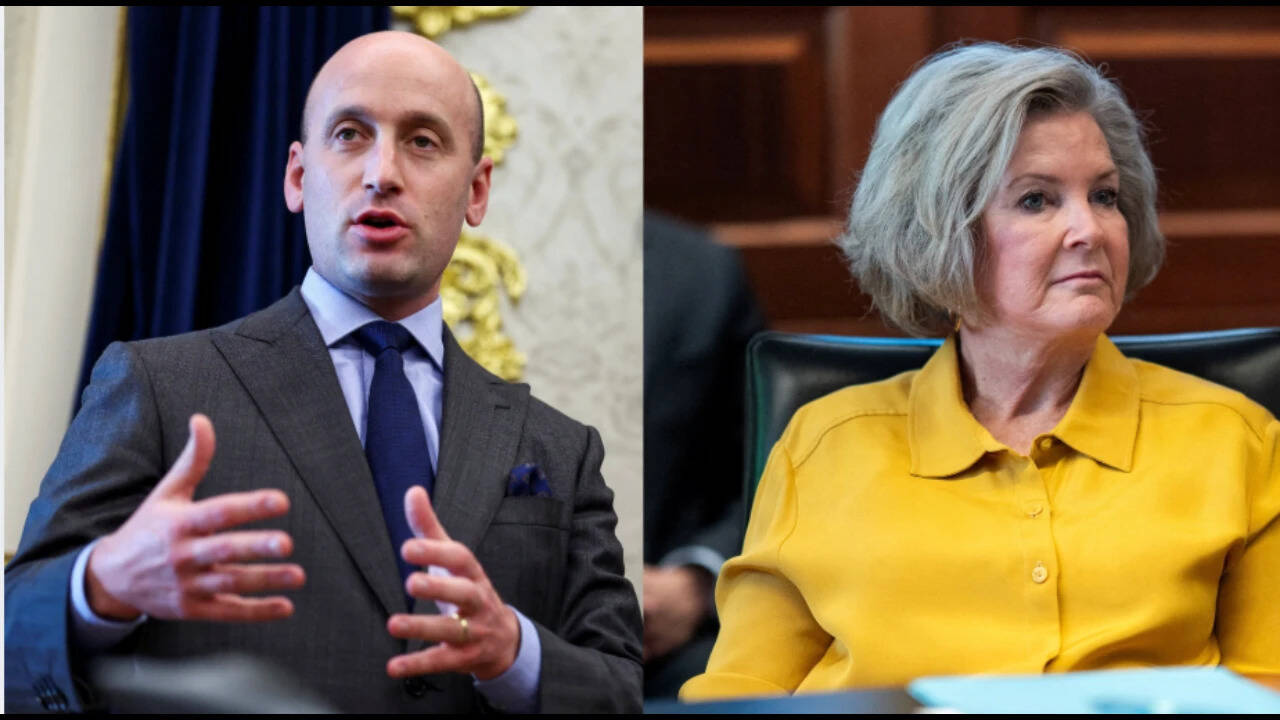
Recent reporting around an internal White House memo involving Stephen Miller and Susie Wiles highlights exactly how those internal dynamics play out when major policy and operational decisions hit the West Wing. You have two very different operators at the center of this story. One is a longtime political strategist known for tight discipline, message control, and keeping the trains running on time. The other is an ideological architect who measures success by how aggressively a policy agenda gets pushed through the federal bureaucracy. Also making news lately: When Children Are Punished for Following the Rules, All Families Learn Is Fear.
When a report surfaces claiming that Miller made a major decision documented in an internal memo—and that Wiles would never have signed off on it—you're looking at a classic West Wing tension. It's the friction between political management and ideological execution.
Note that the competitor URL provided in the prompt (undefined) couldn't be accessed, and live web search is restricted here, so this breakdown focuses strictly on the known public roles, documented governance styles, and established reporting context surrounding Stephen Miller, Susie Wiles, and White House memo dynamics—without inventing unverified quotes or fabricated memo text. Additional details into this topic are detailed by Reuters.
Why the contrast between Stephen Miller and Susie Wiles matters
To understand why an internal memo involving these two figures draws so much attention, you have to look at how they operate. They aren't interchangeable.
Susie Wiles built her reputation over decades in Florida and national politics as a disciplined, low-ego manager. During the 2024 presidential campaign, observers across the political spectrum credited her with bringing rare organizational order to Donald Trump's political operation. Her playbook relies on clear lines of authority, vetting decisions before they blow up in the press, and protecting the principal from unforced errors. When she runs a shop, surprises are treated as failures.
Stephen Miller operates from a completely different playbook. Since his time as a senior advisor in the first Trump administration—and continuing into his role as White House Deputy Chief of Staff for Policy—Miller has focused intensely on rapid, uncompromising policy implementation, particularly on immigration, regulatory rollbacks, and executive orders. He isn't worried about smoothing ruffled feathers in Washington. He wants results on paper, fast.
Put those two approaches in the same building, and friction is almost guaranteed.
Management discipline versus ideological speed
In almost every modern presidency, the Chief of Staff's office acts as a gatekeeper. That's the job. Every major directive, personnel move, or policy rollout is supposed to pass through a central filter so the administration speaks with one voice and avoids legal or political traps.
Here's where things get complicated:
- Gatekeeping slows things down. Thorough legal review, communications prep, and stakeholder outreach take days or weeks.
- Policy hardliners hate waiting. From the perspective of someone like Miller, every day spent debating optics is a day wasted when executive power could already be moving the needle.
- Memos create permanent facts. Once an internal memo is drafted, circulated, or signed, it changes the baseline inside the building. Undoing a decision already put in motion costs far more political capital than blocking it before it starts.
If a senior policy official moves forward on a major directive without the Chief of Staff's traditional sign-off—or pushes through a call that runs counter to the Chief of Staff's risk tolerance—it signals something bigger than a simple policy disagreement. It shows who feels empowered to act first and ask for forgiveness later.
How internal White House memos actually work
People outside Washington often picture an internal memo as a dramatic, secret letter hidden in a locked drawer. The reality is much more practical, and honestly, much more revealing.
In the West Wing, memos are the plumbing of government. Nothing big happens without one. Whether it's a staffing directive, an agency instruction, or a shift in enforcement priorities, a memo turns a verbal conversation into an operational order that cabinet departments and agency heads have to follow.
What happens when a decision bypasses the usual filter
When reports describe an internal memo as something a Chief of Staff "would have never approved," they're usually pointing to one of three specific breakdowns in standard White House process:
- Process shortcuts. Standard White House protocol routes major memos through the Staff Secretary's office so legal counsel, policy teams, and the Chief of Staff can review them. Bypassing or compressing that routing lets a decision land before opponents inside the administration can organize against it.
- Optics and political blowback. A Chief of Staff looks at the whole board—congressional reaction, upcoming elections, swing-state polling, and media fallout. A policy deputy focuses on the base and the specific policy goal. What looks like a bold win to one looks like an unnecessary headache to the other.
- Jurisdictional turf. Who actually owns the call? When lines of authority overlap between political management and policy execution, whoever puts ink on paper first often wins the argument by default.
It's a dynamic we've seen in nearly every administration, Republican and Democrat alike. During the Obama years, friction frequently flared between Rahm Emanuel's political shop and senior policy advisors over the timing and scope of major initiatives. In the first Trump term, Chiefs of Staff like Reince Priebus and John Kelly constantly struggled to enforce paper flow rules against senior advisors who had direct access to the Oval Office.
What political observers get wrong about West Wing power struggles
Whenever a headline breaks about an internal memo or a divide between two top aides, cable news and social media immediately jump to the same conclusion. They assume someone is about to get fired.
That's usually the wrong read.
In Washington, competing centers of power aren't always a sign of collapse. Sometimes they're intentional. Presidents frequently keep aides with clashing instincts around them because each serves a distinct purpose. You want a Chief of Staff who keeps the operation from flying off the rails, and you want policy drivers who push the boundaries of what the executive branch can do.
Reading between the lines of anonymous reporting
When you read coverage about leaked memos or internal disagreements, keep a few practical realities in mind:
- Leaks have agendas. Internal memos don't leak by accident. Either someone inside the building wants to embarrass the official who wrote it, or allies of the official want to show supporters that they're fighting hard behind closed doors.
- Disagreement doesn't equal mutiny. Two senior officials can clash sharply over a specific decision while remaining completely aligned on the broader administration goals.
- The principal sets the rules. Ultimately, senior aides only exercise the authority the President lets them keep. If a policy deputy makes a bold call and it sticks, it's because the top boss wanted that outcome—or didn't mind the process shortcut.
How to evaluate political reporting on internal White House memos
If you follow Washington news closely, you're going to see plenty more headlines built around leaked documents and West Wing rivalries. Separating real structural shifts from routine political noise comes down to asking the right questions every time a story drops.
First, look at whether the document itself is published. There is a massive difference between a news outlet publishing the full text of a verified memo and a report summarizing what anonymous sources claim a memo says. When the actual text isn't public, the framing depends entirely on the spin of whoever talked to the reporter.
Second, watch what happens on the ground over the next two weeks. Words in a memo only matter if agencies actually change their behavior. Check whether federal departments issue new guidance, shift budgets, or announce personnel moves that match the reported decision. If nothing changes operationally, the memo may have been stalled or quietly walked back.
Third, pay attention to who gets the credit or blame publicly. Watch how the White House press office responds and whether the officials named in the report appear alongside the President at subsequent events. In Washington, physical proximity and public assignments tell you far more about who holds real leverage than any anonymous quote ever will.