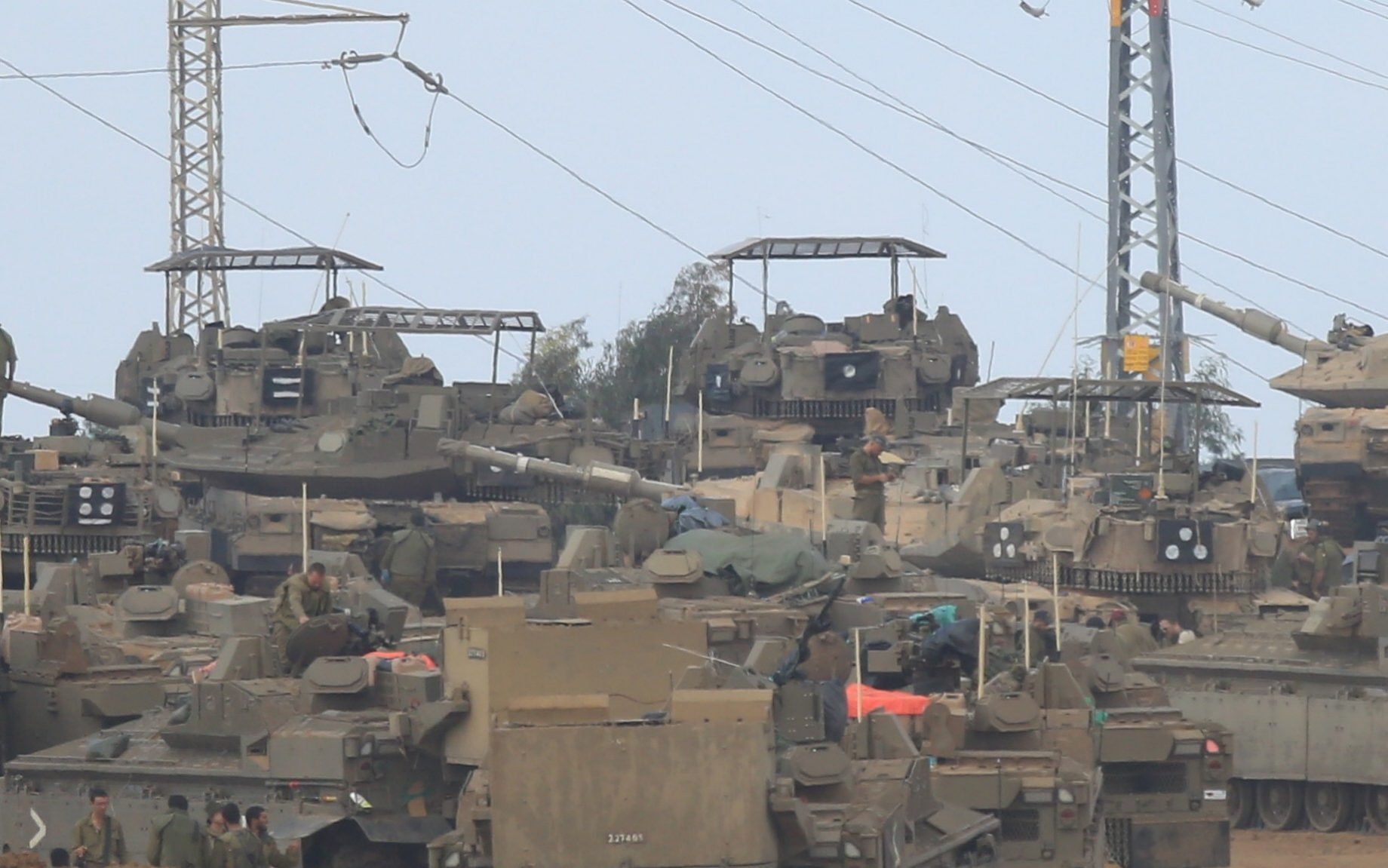
Counting charred hulls is a rookie mistake. If you’re reading headlines about "tank graveyards" in Southern Lebanon and assuming it marks the end of armored maneuver warfare, you’ve fallen for the most seductive trap in modern defense analysis. The narrative being pushed—that cheap anti-tank guided missiles (ATGMs) have rendered the main battle tank obsolete—is not just wrong; it’s a fundamental misunderstanding of how high-intensity conflict functions in the 21st century.
Hezbollah isn't "breaking records" in a vacuum. They are reacting to a shift in Israeli operational doctrine that prioritizes crew survivability over hardware preservation. We need to stop looking at a damaged Merkava IV as a tactical failure and start looking at it as a successful exchange of metal for human life.
The Survivability Paradox
Traditional military pundits love a good "David vs. Goliath" story. A $10 million tank disabled by a $30,000 Kornet missile makes for a great infographic. But here is the reality I’ve seen on the ground from decade-long observations of armored doctrine: A tank is a mobile insurance policy.
When a Merkava is hit, the Trophy active protection system (APS) or the tank’s modular armor isn't necessarily designed to keep the tank in the fight for the next hour. It is designed to ensure the four humans inside walk away. In the 2006 Lebanon War, the ratio of tank hits to crew fatalities was a wake-up call. In the current friction, the data suggests that even when a tank is "mobility killed"—meaning it’s stuck in the mud or has a blown track—the crew is often back in a fresh hull within 48 hours.
Hezbollah is winning the YouTube war. They are losing the industrial war. You can produce a hundred propaganda videos of a missile hitting a tank, but if that tank was empty, or if the crew survived to call in a localized airstrike on the launch site, the "victory" is a statistical ghost.
The Logistics of the "Graveyard"
Let’s dismantle the "graveyard" imagery. To create a graveyard, you need permanent carcasses. Israel’s recovery capabilities are among the most aggressive in the world. They don't leave hulls to rot; they drag them back, strip them, and refit them.
The "record-breaking daily operations" cited by various outlets are actually a symptom of Hezbollah’s desperation to stall a slow-grind enclosure. When an insurgency increases its operational tempo, it isn't always a sign of strength. Frequently, it is a sign that their defensive lines are being compressed and they are "burning" their inventory of high-end ATGMs at a rate that is unsustainable for a multi-year conflict.
Why the ATGM Hype is Fading
- Signature Management: Launching a Kornet is loud, hot, and bright. Modern thermal suites and automated "slue-to-cue" systems mean the moment a missile is fired, the launch team has a lifespan measured in seconds.
- The Drone Factor: Everyone is obsessed with FPV drones. Yes, they are annoying. No, they are not a strategic substitute for heavy armor. You cannot hold ground with a quadcopter. You cannot clear a fortified bunker with a 1-pound explosive charge.
- Urban Saturation: Lebanon’s geography is a nightmare for tanks, but it’s a death trap for infantry without them. Take the tanks away, and the casualty rates for the IDF would jump by 400%.
The False Comparison to Ukraine
Observers keep trying to map the Russo-Ukrainian war onto Southern Lebanon. It’s a lazy intellectual shortcut. In Ukraine, we see massive, open-field artillery duels where tanks are caught in "kill boxes." Southern Lebanon is a vertical, subterranean, and urbanized mess.
In this environment, the tank functions as a massive, armored sensor. The Merkava IV isn't just a gun; it’s a node in a digital battlefield network. It baits the enemy into revealing their positions. When Hezbollah fires on a tank, they reveal a tunnel entrance, a hidden basement, or a camouflaged ridge line that was previously invisible to satellite imagery.
I’ve watched Western militaries try to pivot toward "light and fast" formations for twenty years. Every single time the shooting starts, they end up begging for more armor. Why? Because "light and fast" usually just means "vulnerable and dead" when the first RPG-29 streaks across the street.
Stop Asking if the Tank is Dead
The question "Is the tank obsolete?" is the wrong question. It’s the kind of question people ask when they want a simple answer to a complex engineering problem.
The real question is: Can your industrial base outproduce the enemy’s interceptors?
Hezbollah is reliant on external supply lines—mainly through Syria—to replenish their ATGM stocks. Israel is a domestic producer of the world’s most advanced armor. If this is a war of attrition, the "graveyard" won't be filled with Israeli steel; it will be filled with the spent tubes of a militia that ran out of expensive toys while the tanks kept coming.
The Hidden Cost of the "Success"
There is a dark side to the contrarian view. By relying so heavily on the Merkava’s survivability, the IDF risks becoming tactically predictable. They have developed a "bunker mentality" inside their hulls.
- Over-reliance on APS: If the Trophy system fails or is overwhelmed by "swarming" tactics, the psychological blow to the crew is massive.
- The Maintenance Debt: You can repair a tank five times, but the mechanical fatigue eventually makes it a liability.
- Infantry Atrophy: When you rely on armor to do the heavy lifting, your dismounted infantry skills can sharpen or dull. If the tanks are forced to retreat due to a breakthrough in ATGM technology, the infantry might find themselves incapable of clearing the brush manually.
The Intelligence Gap
The competitor article claims Hezbollah has "shattered" the myth of Israeli invincibility. This assumes the myth still existed. No professional military since 1973 has believed in invincibility. They believe in probability.
The probability of a tank surviving a hit in 2024 is significantly higher than it was in 1994, despite the missiles being better. This is the "Red Queen’s Race"—running as fast as you can just to stay in the same place. Hezbollah’s "record operations" are just their attempt to keep pace with the sheer volume of sensor-fused theater intelligence they are facing.
If you want to know who is actually winning in Southern Lebanon, stop looking at the burning tanks. Look at the topographical maps. Look at which ridges are being held and which villages have been turned into forward operating bases. Armor is a tool for taking ground. If the ground is being taken, the tool is working, regardless of how many times it needs a new coat of paint and a replaced radiator.
The "graveyard" is a PR stunt. Real war is a balance sheet, and right now, the insurgents are spending their capital much faster than the state.
Get used to the sight of smoke. It doesn't mean what you think it means.