Border closures implemented during public health emergencies frequently fail because they mistake a geographic boundary for an epidemiological barrier. When Uganda restricts movement across its frontier with the Democratic Republic of the Congo (DRC) during an Ebola virus disease outbreak, the intervention alters the vector dynamics without necessarily eliminating the transmission risk. The core problem is that border closures do not stop movement; they formalize informal crossings or drive movement into unmonitored channels, accelerating clandestine transmission networks. Containing a highly lethal pathogen like Ebola requires an operational shift from physical interdiction to localized containment and biometric surveillance.
The strategy behind border management during a hemorrhagic fever outbreak rests on three structural pillars: transmission velocity reduction, surveillance capacity preservation, and supply chain integrity. When an administration disrupts these pillars through abrupt closures, the structural stability of the regional health response degrades.
The Transmission Velocity Function
Pathogen spillover across international borders depends on a specific set of variables. The probability of an outbreak spreading into a neighboring territory can be modeled by analyzing the volume of cross-border traffic, the incubation period of the pathogen, and the diagnostic lag time at points of entry.
Transmission Risk = (Traffic Volume × Incubation Window) / (Detection Efficiency × Local Immunity)
Ebola virus variants feature an incubation period ranging from 2 to 21 days. This long window creates a profound structural vulnerability for border security. An individual can contract the virus in North Kivu or Ituri province, clear a thermal scanning checkpoint at a major crossing like Mpondwe without showing a fever, and travel deep into the Ugandan interior before becoming symptomatic and infectious.
When formal checkpoints close, traffic volume does not drop to zero. Instead, the population shifts to informal crossings, known locally as panya routes. This shift alters the variables in the transmission risk equation:
- Detection Efficiency Drops to Zero: Informal routes lack thermal cameras, visual screening protocols, and isolation tents.
- Contact Tracing Becomes Untraceable: Because individuals crossing informally actively evade authority, they disappear from epidemiological tracking databases.
- Local Immunity Remains Low: Unlike pathogens with high baseline population immunity, Ebola relies entirely on active containment (vaccination rings and behavioral interventions) to stop transmission.
By forcing movement underground, the border closure increases the probability of an undetected, multi-node outbreak inside the host country.
The Economic Liquidity and Compliance Bottleneck
Epidemiological models often overlook local economic realities. The frontier economy between western Uganda and eastern DRC thrives on daily, small-scale trade. Agricultural goods, charcoal, and minerals move continuously across the border to sustain basic livelihoods.
A hard border closure creates an immediate economic shock, presenting populations with a choice between compliance-induced destitution or non-compliant survival.
The economic pressure creates a predictable pattern of behavioral resistance:
Bribery and Enforcement Degradation
As the financial premium on crossing increases, corruption at remaining security checkpoints rises. Security personnel, underpaid and facing high volumes of desperate travelers, become monetization points. A bribed border guard bypasses health screening protocols entirely, introducing a human failure point into the containment protocol.
Alternative Logistics Networks
Traders establish decentralized, nocturnal supply networks. These networks utilize water transport across Lake Albert or footpaths through dense terrain. From a public health perspective, tracking a pathogen through decentralized, clandestine networks requires exponentially more resources than monitoring a centralized highway.
Hostility Toward Health Workers
When communities associate public health interventions with economic ruin, they stop cooperating with medical teams. Community health workers face resistance during contact tracing, cases are hidden within homes, and unsafe traditional burial practices resume in secret. This breakdown in trust directly extends the duration and geographic footprint of the outbreak.
Surveillance Capacity Disruption
Effective epidemic response requires precise data. Closing a border blinds epidemiological intelligence systems by severing the data collection nodes established at official Points of Entry (POEs).
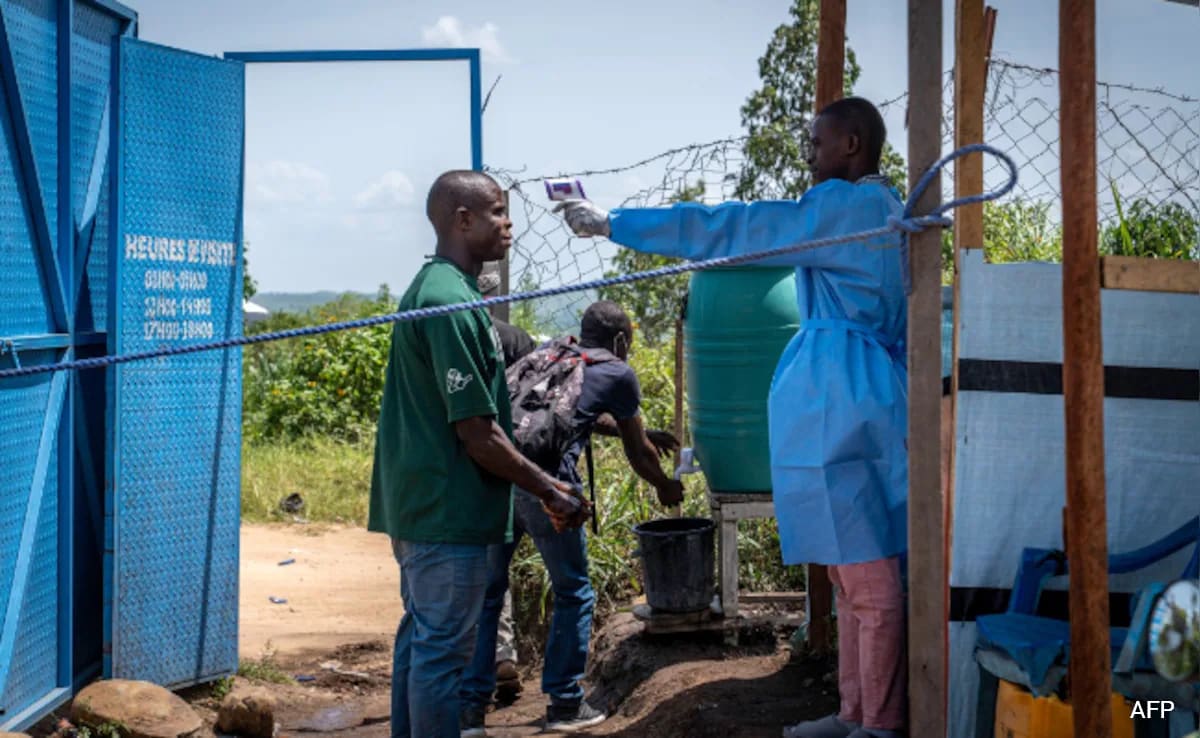
A fully operational POE serves as a multi-tiered diagnostic filter. The first tier uses non-contact infrared thermometers to flag febrile individuals. The second tier involves clinical interviews to assess exposure history, focusing on whether the individual attended a funeral or visited a health facility in an affected zone. The third tier deploys rapid diagnostic tests or isolates suspected cases for reverse transcription-polymerase chain reaction (RT-PCR) analysis.
Decommissioning or bypassing these filters creates specific systemic vulnerabilities.
Loss of the Denominator
Without formal POE tracking, epidemiologists lose the denominator data—the total number of people moving from a high-risk zone to a low-risk zone. Without this baseline metric, calculating the real-time incidence rate and forecasting resource needs becomes impossible.
Disruption of Regional Laboratory Networks
Specimen transport systems frequently rely on cross-border logistics. Samples collected in border regions often need to travel to centralized reference laboratories, such as the Uganda Virus Research Institute (UVRI) in Entebbe. Border closures interrupt the chain of custody and transport permissions for these hazardous biological materials, increasing diagnostic turnaround times from hours to days.
Misallocation of Ring Vaccination Resources
The deployment of the rVSV-ZEBOV vaccine or Ervebo relies on mapping a clear ring of contacts around a confirmed case. When the index case enters a country via an unmonitored route and exposes an unknown group of people, the ring cannot be defined. Public health teams must then pivot to imprecise, wide-area vaccination campaigns, which strains global vaccine stockpiles and inflates operational budgets.
The Humanitarian Supply Chain Counter-Effect
The Democratic Republic of the Congo’s eastern provinces depend heavily on logistics corridors originating in East African ports like Mombasa and Dar es Salaam, routing directly through Uganda. A border closure aimed at stopping people inadvertently chokes the movement of critical medical infrastructure.
The logistics bottleneck delays the arrival of personal protective equipment (PPE), specialized isolation tents, rehydration fluids, and viral transport media into the epicenter of the outbreak. When frontline clinics in the DRC run out of gloves and respirators, nosocomial (healthcare-acquired) transmission skyrockets. Doctors and nurses become vectors, clinics close down, and infected patients flee into the community, accelerating the very exodus Uganda seeks to prevent.
Furthermore, international response agencies face administrative delays moving personnel across the frontier. Epidemiologists, logisticians, and anthropologists lose rapid deployment capabilities, allowing the pathogen to outpace the administrative response.
A Structural Alternative to Border Interdiction
Total border closure is a blunt tool that creates a false sense of security while introducing severe operational blind spots. A data-driven, risk-mitigated containment strategy replaces physical blockades with a managed-flow architecture.
+---------------------------------------------------------------------------------------+
|                               MANAGED-FLOW ARCHITECTURE                               |
+---------------------------------------------------------------------------------------+
                                           │
                                           ▼
                      ┌─────────────────────────────────────────┐
                      │    1. Geofenced Biometric Checkpoints   │
                      └─────────────────────────────────────────┘
                                           │
                                           ▼
                      ┌─────────────────────────────────────────┐
                      │    2. Hyper-Localized Trade Corridors   │
                      └─────────────────────────────────────────┘
                                           │
                                           ▼
                      ┌─────────────────────────────────────────┐
                      │   3. Decentralized Isolation Networks   │
                      └─────────────────────────────────────────┘
The execution blueprint requires three distinct operational phases:
1. Geofenced Biometric Checkpoints
Instead of closing entry points, keep select major crossings open 24 hours a day while subsidizing informal crossing points to formalize them. Deploy rapid biometric enrollment (fingerprint or iris scanning) tied to mobile phone tracking. This allows epidemiologists to send automated SMS health alerts, monitor movement trajectories, and trace contacts digitally if a traveler subsequently tests positive.
2. Hyper-Localized Trade Corridors
Establish sterilized, day-use-only market zones directly on the border. Traders from the DRC enter a designated, sanitised zone, exchange goods with Ugandan merchants across physical barriers, and return without entering the interior of the host nation. This preserves economic liquidity, mitigates the incentive to use panya routes, and maintains community compliance with health authorities.
3. Decentralized Isolation Networks
Shift response assets away from distant capital cities and build high-grade isolation and treatment units directly at the border crossings. If an individual tests positive or presents with symptoms, they are immediately moved laterally into a localized treatment facility rather than being turned away to wander back into the interior or attempt an unmonitored crossing elsewhere.
The strategic play for regional health ministries is clear: reject the political theater of total border isolation. Allocate capital toward building a high-throughput, biometrically tracked screening corridor that treats the border not as a wall, but as an open-air diagnostic filter. This approach stabilizes local economies, protects the humanitarian supply chain, and gives epidemiologists the precise tracking data required to hunt, isolate, and neutralize the pathogen before it achieves regional velocity.