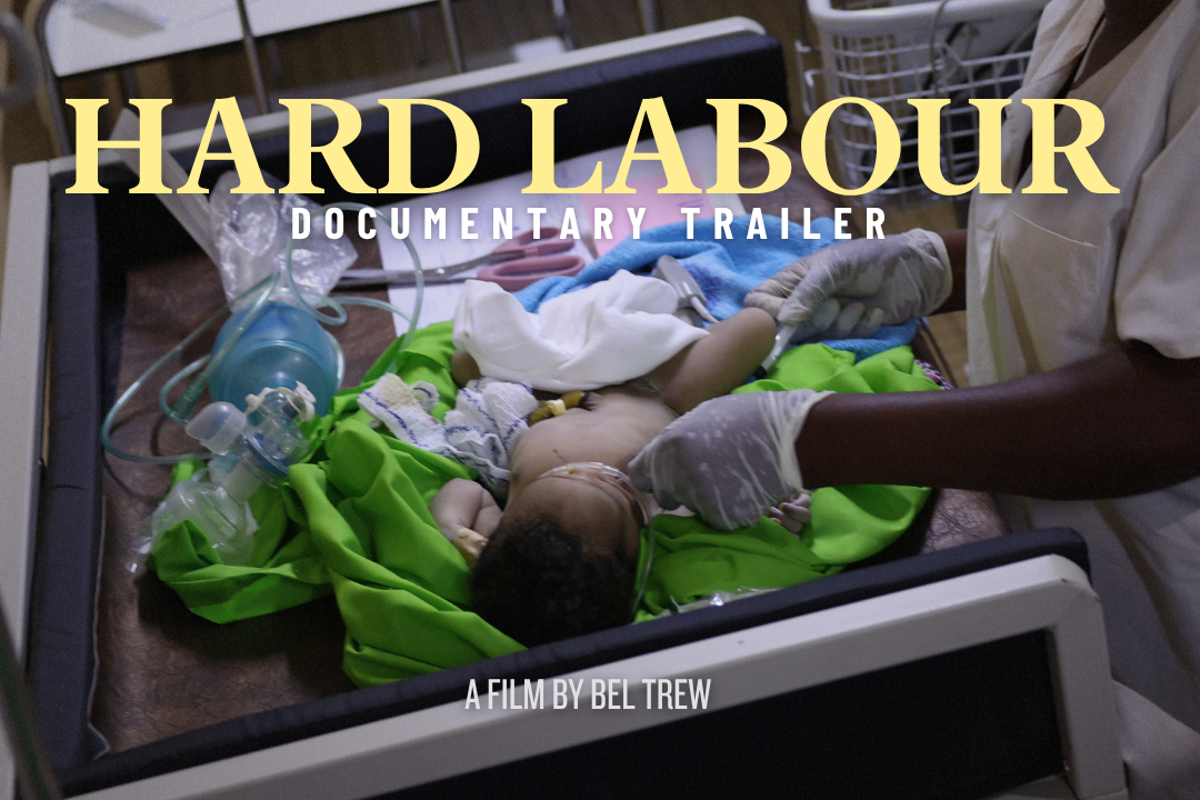
The global health establishment is addicted to a single, comfortable narrative: maternal mortality is rising because we aren't spending enough money. It’s a clean story. It’s an easy sell for donors. It is also a dangerous lie that ignores the structural rot in how we deliver care.
The "lazy consensus" pushed by NGOs and international bodies suggests that progress has stalled because of a lack of political will or funding gaps. They point to the grim statistics—a woman dying every two minutes from pregnancy-related causes—and demand more of the same interventions that have already failed to move the needle for a decade. We are throwing billions into a machine that is broken at the gear level, then acting shocked when the output doesn't change.
The truth is more uncomfortable. We don’t have a resource problem. We have a centralization and over-medicalization problem that turns a natural biological process into a high-stakes clinical gamble.
The Myth of the "Clinical Fix"
The standard response to rising maternal death rates is to build more clinics and buy more high-tech equipment. We've been conditioned to believe that if every birth happened in a sterile room with a ventilator nearby, the problem would vanish.
I have spent years looking at health systems across three continents. I have seen multi-million dollar maternity wards sitting empty because they were built five miles too far from a dirt road, while women continued to die in their homes. I’ve seen state-of-the-art surgical suites in urban centers that suck up 80% of a nation’s health budget while the primary care outposts—the ones that actually catch pre-eclampsia before it becomes a seizure—have no working blood pressure cuffs.
We are obsessed with tertiary care (treating the crisis) and we’ve completely abandoned primary prevention (stopping the crisis from starting).
In the United States, we spend more on childbirth than any other nation on earth. Yet, our outcomes are worse than many "developing" nations. Why? Because our system is designed for billable interventions, not for the patient. We prioritize C-sections because they are predictable for hospital schedules and profitable for insurance billing, despite the fact that major surgery inherently increases the risk of hemorrhage and infection.
The Deadly Convenience of Over-Intervention
Let’s dismantle the idea that "more medicine equals more safety."
In many high-income settings, the cascade of intervention is the primary driver of morbidity. It starts with elective induction for "convenience," which leads to stronger, artificial contractions, which leads to fetal distress, which leads to an emergency C-section. Each step in that chain increases the risk of a catastrophic event.
When we export this model to lower-income regions, we aren't exporting safety; we’re exporting a high-maintenance, fragile system. When a C-section goes wrong in a rural hospital with an intermittent power supply and a shortage of banked blood, that woman dies. Had she been supported by a highly skilled community midwife in a model that prioritized physiological birth and early risk screening, she might never have needed the knife in the first place.
The data supports this, but the data is ignored because it doesn't fit the "modernization" agenda. The Lancet Series on Midwifery has repeatedly shown that midwifery-led care can prevent over 80% of maternal and newborn deaths. Yet, global funding still flows toward "centers of excellence" rather than community-based midwife autonomy.
Why "Access" is a Fake Metric
When health officials brag about "increased access to care," they are usually talking about the number of women who gave birth in a facility. This is a vanity metric.
If a woman walks four hours to a facility only to find there is no one on duty, no clean water, and no oxytocin to stop a bleed, she has "accessed" the system. She might also die there. We have spent twenty years focusing on coverage while ignoring quality.
Imagine a scenario where a tech company measures its success by how many people open its app, regardless of whether the app actually works or crashes immediately. That’s how we measure maternal health. We track "institutional births" as if the building itself has healing powers.
The reality is that "Disrespectful and Abusive Care" (DAC) is a leading reason women stay home. If a woman knows she will be slapped, shamed, or ignored in a government hospital, she will choose the traditional birth attendant she trusts. The global health community calls this "ignorance." I call it a rational choice based on a failed service.
The Data Gap: We Are Measuring the Wrong Things
We are obsessed with the Maternal Mortality Ratio (MMR). It’s the ultimate KPI for the UN's Sustainable Development Goals. But the MMR is a lagging indicator. It tells you who died last year. It doesn't tell you who is suffering today.
For every woman who dies, 20 to 30 more suffer from "near-misses"—catastrophic injuries like obstetric fistula, uterine rupture, or lifelong incontinence. These women are the "invisible wounded." Because they survived, they aren't counted in the "failed" column of the ledger.
By focusing solely on stopping death, we have lowered the bar for what "success" looks like. We have accepted a world where a woman survives but is left broken, simply because it doesn't hurt the country's MMR ranking.
The Decolonization of Birth
We need to stop pretending that Western medical structures are the pinnacle of safety for everyone, everywhere.
For centuries, indigenous and traditional systems of care managed birth with a focus on nutrition, community support, and physiological patience. Modern medicine swept in, labeled these practices "primitive," and replaced them with a cold, assembly-line approach.
Now, we see the results. In the US, Black mothers are three to four times more likely to die than white mothers, regardless of income or education. This isn't a biological failing; it’s a systemic one. It’s the result of a "weathering" effect caused by systemic stress and a medical system that systematically underestimates the pain and concerns of women of color.
If we want to reverse the trend, we have to stop looking for a new pill or a new machine. We have to look at the power dynamics.
The Actionable Pivot: Demedicalize and Decentralize
If you actually want to stop women from dying, stop building hospitals.
- Fund Autonomy, Not Buildings: Shift resources to independent midwifery practices. Give midwives the right to prescribe, the right to admit, and the right to lead the care team. Doctors should be the "emergency backup," not the gatekeepers of a normal biological event.
- The "Last Mile" Logistics: Maternal mortality is often a logistics problem. Instead of high-tech incubators, invest in motorcycle ambulances and reliable cellular networks for rural birth attendants to consult with specialists.
- Radical Transparency on Near-Misses: Hospitals should be required to publish their "near-miss" rates alongside their mortality rates. We need to see where the system is buckling before the body count rises.
- Kill the "Convenience" Induction: Stop treating pregnancy like an illness that needs to be "managed" for the comfort of the provider.
The "progress" we’re losing isn't being stolen by a lack of money. It’s being eroded by a stubborn refusal to admit that our high-intervention, centralized model is fundamentally incompatible with the reality of human biology and global logistics.
We don't need more "awareness." We don't need another "urgent call to action" from a celebrity at a gala. We need to dismantle the industrial birth complex and return the power to the community.
Until we stop treating birth as a medical crisis waiting to happen, we will keep creating the very crises we claim to be fighting. The system isn't failing; it's doing exactly what it was designed to do: prioritize the institution over the individual.
Change the design, or keep burying the mothers.