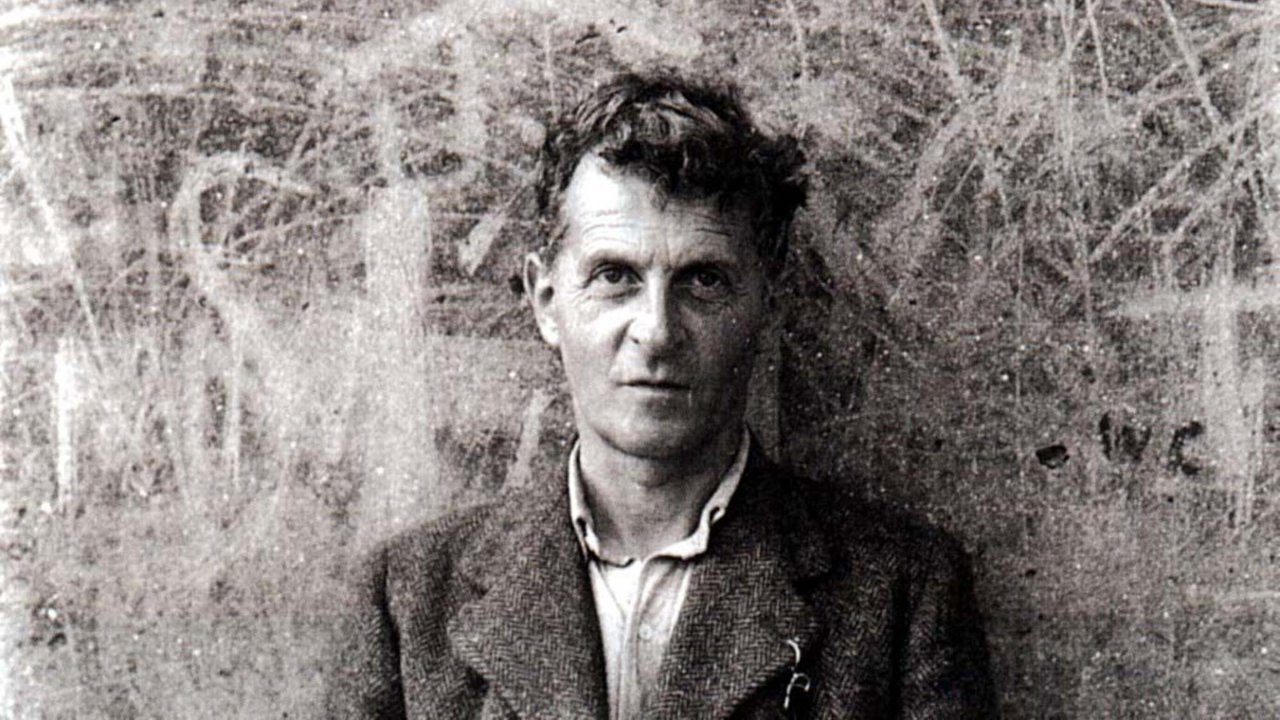
Ludwig Wittgenstein famously claimed that death is not an event in life and that we do not experience it. Generations of philosophy students have nodded along, hypnotized by the Viennese master's linguistic gymnastics. It sounds profound over a midnight beer. It falls apart the second you look at how human beings actually operate.
Wittgenstein argued that because death lies outside our experience, it cannot be a constituent of life. He treated human consciousness like a movie screen that simply turns off, assuming the projector operator does not care because the projection has ended. This is intellectual cowardice masquerading as rigorous logic. Death is not merely a full stop at the end of a sentence; it is the ink that defines every word written on the page.
The Lazy Consensus of the Undead
The dominant philosophical consensus treats mortality as a theoretical abstraction. We talk about the finality of existence as if it were a math problem to be solved or a linguistic category error to be bypassed. This is nonsense.
I have watched brilliant founders burn their companies to the ground because they pretended time was infinite. I have seen creative directors freeze for months because they viewed their careers through the lens of permanent preservation rather than inevitable decay. The consensus view says we should ignore mortality because we cannot empirically study the void. That is like telling a driver to ignore the cliff because they cannot see the bottom yet.
Mortality is the ultimate performance metric. Strip it away, and urgency evaporates. Value collapses. If everything lasts forever, nothing matters.
The Physics of Urgency
Let us look at actual mechanics. Human motivation is bound to biological scarcity. Behavioral economists call this hyperbolic discounting, but it goes deeper than financial choices. We discount the future because the future is a speculative asset, while death is a fixed liability.
When Wittgenstein dismissed death as a non-event, he ignored the psychological mechanism of anticipatory terror. We do not need to experience the state of being dead to be profoundly affected by the process of dying and the truncation of our timeline. The fear of non-existence is not a linguistic confusion. It is the operating system warning us that the battery is draining.
Imagine a scenario where humans possessed infinite biological lifespans. Innovation would flatline. Why cure a disease today when you have four centuries to think about it? Why launch a disruptive startup when you can wait fifty years for the market conditions to improve? Urgency is the engine of human achievement. Death provides that urgency. Pretending otherwise is intellectual dishonesty designed to make us feel better about our own expiration dates.
Dismantling the Eternity Myth
People love to ask whether legacy matters. People love to ask if we survive through our works, our children, or our digital footprints. These are coping mechanisms. They are elaborate stories we tell ourselves to soften the blow of biological reality.
Ernest Becker won a Pulitzer Prize for explaining this exact phenomenon in The Denial of Death. He argued that human civilization is largely a defense mechanism against our awareness of mortality. We build skyscrapers, write code, and accumulate capital to carve our names into a universe that does not care.
Wittgenstein wanted us to detach language from this terror, to treat death as a boundary condition that we have no business discussing because we cannot step outside of it. But we do not need to step outside the fishbowl to know the water is finite.
The contrarian truth is this: You should obsess over your mortality. Not in a morbid, depressive spiral, but as a strategic weapon. When you accept that your cognitive window is narrow and shrinking every second, trivial arguments lose their grip. Bad meetings become intolerable. Mediocre projects get scrapped. You stop wasting finite bandwidth on people who drain your focus.
The Cost of Denial
The price of pretending death does not matter in the daily calculus of life is paralysis. Modern corporate culture is infested with this paralysis. We build processes for eternity. We write policies as if organizations will outlast the stars. We optimize for risk aversion instead of asymmetric upside.
I have sat in boardrooms where executives spent six months debating a rebrand that customers will forget in three years, all while ignoring the structural obsolescence eating their core business. They are acting like Wittgenstein's immortal observer—detached, theoretical, and entirely divorced from the reality of the clock.
If you want to build something that pierces the noise, you have to design for decay. You have to recognize that your window to execute is brutally short.
Stop treating mortality as a philosophical footnote. It is the only metric that matters. The clock is running, and nobody is coming to fix it.