The marble of the Palace of the Parliament in Bucharest does not retain heat. Even in late spring, the chill clings to the corridors, a heavy, monumental cold inherited from the dictatorship that built it. Inside the plenary chamber, the air smells faintly of stale coffee and cheap ozone from the television cameras.
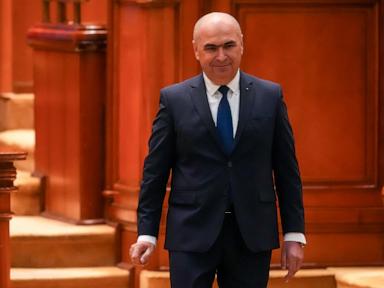
A man stands at the podium. His tie is straight, but his collar feels tight. To his left, the opposition benches are a wall of crossed arms and cold stares. To his right, his allies are whispering, their eyes darting to their phones, checking the live tallies, calculating the exact market value of their loyalty.
This is the anatomy of a no-confidence motion. To the outside world, it is a headline about political instability in Eastern Europe. A dry tally of votes. A paragraph on a financial ticker about market fluctuations. But on the floor of the parliament, it is a blood sport played in whispers and committee rooms. It is about survival.
Every prime minister facing a vote of no-confidence eventually confronts the same realization: power is an illusion held together by the shifting promises of people who want your job.
The Calculus of the Corridor
The mechanics of bringing down a government are deceptively simple. A text is drafted. Signatures are gathered. A date is set on the legislative calendar. But the real work happens in the dark, in the two weeks leading up to the debate.
Think of a coalition government like a makeshift scaffolding erected during a storm. It isn't built for permanence; it is built to weather the immediate crisis. The prime minister is the foreman, constantly tightening bolts that are trying to shake themselves loose. When an opposition party files a motion of no-confidence, they aren't just challenging policy. They are kicking the scaffolding to see which joints are rusted.
In the hallways outside the chamber, the air is thick with negotiation. A junior coalition partner needs a highway expansion in their district to secure re-election. A disgruntled backbencher wants a committee chairmanship. A faction leader wants a promise that a specific tax reform will be quietly buried in sub-committee.
The currency here is not money. It is leverage.
Consider a hypothetical member of parliament from a rural county in Transylvania. Let us call him Stefan. Stefan does not care deeply about the macroeconomic projections debated by the cabinet in Bucharest. Stefan cares about the forestry permits in his home district and the fact that the local hospital has been waiting two years for a new roof. For Stefan, the prime minister’s survival is entirely transactional. If the opposition promises him the hospital roof by Friday, his hand will rise to vote "yes" on the motion. If the prime minister matches the offer, Stefan stays loyal.
Multiply Stefan by two hundred, and you begin to understand the immense, crushing weight of maintaining a parliamentary majority.
The Ghost in the Palace
To understand why a political crisis in Romania matters beyond its borders, one must look at the geography of the room. This parliament building is the second-largest administrative building in the world, surpassed only by the Pentagon. It was conceived by Nicolae Ceaușescu as a monument to total, unbreakable control. It required the destruction of historic neighborhoods, the displacement of forty thousand people, and the sweat of countless citizens who labored under a regime that starved them to feed the concrete.
There is a profound irony in the fact that within these same walls, power is now fractured, fragile, and utterly dependent on the whims of democratic consensus.
When a prime minister walks down these halls toward a survival vote, they are walking through history. Romania’s democracy is young, loud, and frequently chaotic. Since the revolution of 1989, the country has cycled through prime ministers at a rate that leaves Western observers dizzy. To some, this looks like chronic instability. To those who live it, it is a fierce, almost desperate exercise in accountability.
The stakes are invisible but massive. When a government hangs in the balance, international lenders pause. Foreign direct investment hesitates. The national currency, the leu, experiences a subtle, nervous tremor against the euro. For the average citizen waiting at a tram stop in Sector 4, this political theater translates directly into the price of milk, the interest rate on a mortgage, and the reliability of the heating system during the next winter.
The opposition stands up to speak. The rhetoric is predictable. They speak of incompetence, of missed opportunities, of betrayal. They use large, sweeping words meant for the evening news broadcasts. The prime minister listens, taking notes on a yellow pad, his face a mask of practiced indifference. He has heard it all before. Every leader who came before him sat in that exact chair and listened to the exact same speeches before the tally began.
The Human Cost of the Tally
We often view politics as a chess match, a game played by grandmasters who see ten moves ahead. This is a comforting myth. It suggests that someone, somewhere, is in control.
The reality is much closer to a high-speed collision in slow motion. Most political decisions are made under conditions of extreme sleep deprivation, flawed data, and immense personal pressure. A prime minister fighting for survival isn't thinking about their place in history. They are thinking about the three phone calls they need to make before noon to stop a defection within their own party.
The human cost of this existence is hidden behind the tailored suits and the security details. It is found in the lines around the eyes, the graying hair that appears over the course of a single legislative session, and the permanent state of hyper-vigilance. Trust becomes an unaffordable luxury. Every handshake is scrutinized for the warmth of its grip; every glance is parsed for hidden meaning.
As the debate drags into its third hour, the gallery fills with journalists. Their laptops are open, their fingers hovering over the keys. They are waiting for the moment the voting begins, the moment when the abstract arguments about fiscal policy condense into a single, unyielding number.
To pass, the motion requires a strict absolute majority of the total number of deputies and senators. It is a binary world. You are either in power, or you are a footnote. There is no middle ground, no room for nuance, no prize for coming close.
The bells begin to ring through the corridors, summoning the lawmakers from the offices, the cafeterias, and the smoky balconies. This is the moment of maximum tension. The noise in the chamber dies down to a low, anxious hum. The electronic voting system is prepared.
The Weight of the Plastic Card
Every member of parliament holds a small plastic card. When inserted into the slot on their desk, that card transmits their choice directly to the giant digital boards mounted above the presidium.
Green means stay. Red means go.
The prime minister watches the board. He knows the math by heart. He knows exactly how many green lights he needs to cross the threshold of safety. He spot-checks the desks of the doubtful members, the ones who gave ambiguous answers during the midnight negotiations.
The voting starts. The seconds stretch.
In this moment, the grand theories of political science evaporate. It does not matter what Machiavelli wrote, or what the constitutional scholars argue. All that matters is the pressure of a human index finger pressing a button on a desk in Bucharest.
The lights blink into existence across the board, a constellation of red and green that changes by the millisecond. It is a visual representation of a nation’s direction being decided in real-time. For three minutes, the future of the government hangs in suspense, caught between the desire for continuity and the hunger for change.
The final tally appears. The numbers lock into place.
A sharp intake of breath ripples through the press gallery. On the floor, there are no cheers, no sudden outbursts of joy or grief. There is only a collective, audible release of tension, the sound of two hundred people simultaneously deciding what their next move will be.
The prime minister rises from his seat. He straightens his jacket. His government has survived, but the victory is bitter. The margin was thin, a handful of votes that could easily evaporate before the next legislative session. The concessions he made to secure this day will come due tomorrow. The highway expansion must be funded; the forestry permits must be reviewed; the local hospital roof must be built.
He walks out of the chamber, surrounded by a phalanx of cameras and microphones. He gives a brief, disciplined statement about stability, duty, and the work ahead. His voice is firm, but his eyes are already scanning the crowd, looking past the reporters, searching the faces of his colleagues to see who among them is already planning the next motion.
Behind him, the plenary chamber begins to empty. The technicians turn off the television lights, plunging the marble back into its natural, indifferent dimness. The cold returns, settling over the empty desks and the silent voting buttons, waiting for the next time the scaffolding begins to shake.