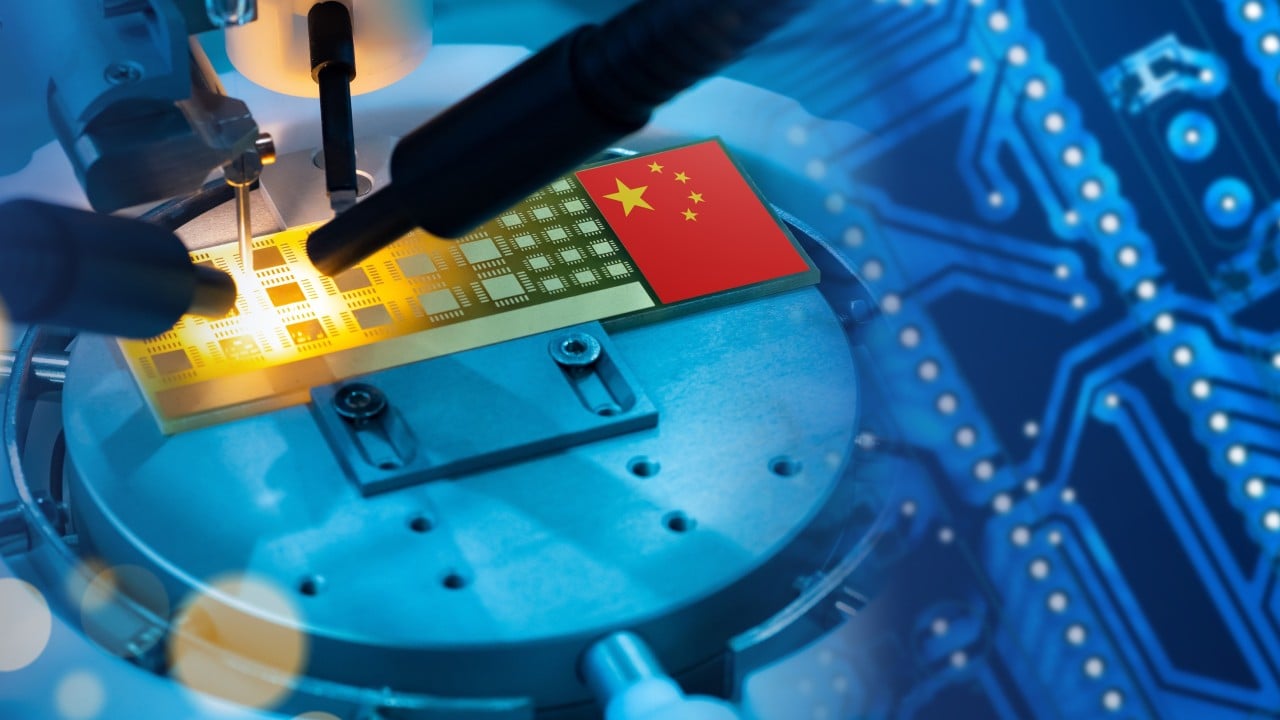
We measure everything now. We count steps on our wrists, sleep cycles on our nightstands, and the thickness of silicon gates in factories thousands of miles away.
Consider a cleanroom in Shenzhen or Shanghai. The air is scrubbed of dust motes that would look like boulders to a virus. Inside this sterile quiet, a machine shoots extreme ultraviolet light at a disc of silicon. It is trying to carve pathways three nanometers wide. Three billionths of a meter. To put that in perspective, a single strand of human DNA is roughly two and a half nanometers across. We are building highways for electrons inside a space smaller than the genetic code of life itself. Meanwhile, you can find similar stories here: The Night the Machine Blinked First.
Why does this matter to the person sitting at their kitchen table, drinking lukewarm coffee on a Sunday morning? Because every major shift in human capability begins with a lonely engineer staring at a monitor, trying to beat physics into submission. When semiconductor fabrication reaches the three-nanometer threshold, the physics of electricity start to break down. Electrons get confused. They leak. They tunnel through barriers they have no business crossing. Solving that problem requires a monumental expenditure of intellectual capital and state-backed capital, pushing the boundaries of what global supply chains can endure.
Yet, while engineers fight the quantum decay of silicon, the rest of us are wrestling with a completely different kind of metric. To explore the full picture, check out the detailed analysis by MIT Technology Review.
Far away from the cleanrooms, in bedrooms lit by the glow of smartphones, another conversation happens. It rarely makes the front page of a technical journal, but it dominates search engines and private anxieties. How often are other people intimate? What is the normal baseline for human connection?
We live in an age of quantified intimacy. Couples look at population studies and relationship surveys the way traders look at stock tickers, searching for a benchmark to validate their private lives. Data from public health agencies and sociological surveys frequently attempt to map the frequency of sexual intimacy across age groups and demographics. The averages are published, digested, and turned into anxieties. Am I normal? Are we doing enough?
There is a strange, jarring poetry in the juxtaposition of these two obsessions. On one end of the spectrum, we engineer the atomic architecture of our machines to be faster, denser, more powerful. On the other end, we try to quantify the most analog, unpredictable, and vulnerable aspect of human experience.
We want formulas for both.
Silicon does not care about your feelings, but it demands absolute precision. Human relationships do not care about precision, but they demand everything else.
Imagine a hypothetical software developer named Elena. She spends her days staring at code optimized for three-nanometer processors, ensuring that every transistor fires with merciless efficiency. Her mind is trained to spot inefficiencies, to eliminate bottlenecks, to demand performance. Then she comes home to a partner she hasn't deeply talked to in three days because both of them were too tired from feeding the great machine of modern productivity.
They sit on the couch. The glowing rectangle of the television illuminates their faces. Between them lies the silent weight of unsaid things. They aren't thinking about semiconductor lithography. They are wondering why the spark feels a bit dimmer than it used to, wondering if the monthly averages reported by lifestyle magazines apply to them, wondering if they are falling behind in yet another category of modern life.
We have built a world that excels at optimization while starving the soil where intimacy actually grows.
The three-nanometer chip isn't just a piece of hardware; it is a monument to human ambition. It represents our refusal to accept the physical limits of our universe. We look at a barrier and we spend billions of dollars to smash through it.
We should apply that same stubborn, creative courage to our inner lives.
When people search for statistics on relationship frequency or chip fabrication milestones, they are looking for the same thing: a sense of orientation. They want a map in a world that changes too fast to chart. But maps cannot replace the journey. A spreadsheet telling you the average frequency of intimacy or the transistor density of a cutting-edge processor will not keep you warm at night, nor will it write a line of code that changes a life.
The real story of our time is not found in the raw numbers. It is found in the tension between what we can measure and what we can only feel.
Behind every microscopic circuit is a human mind that spent decades learning how to trick sand into thinking. Behind every quiet moment in a living room is a universe of unspoken history, fatigue, tenderness, and hope.
The future is not being decided solely by the factories that print the smallest gates on silicon wafers. It is being shaped in the quiet spaces where we decide whether to look at a screen or look into the eyes of the person sitting right beside us.