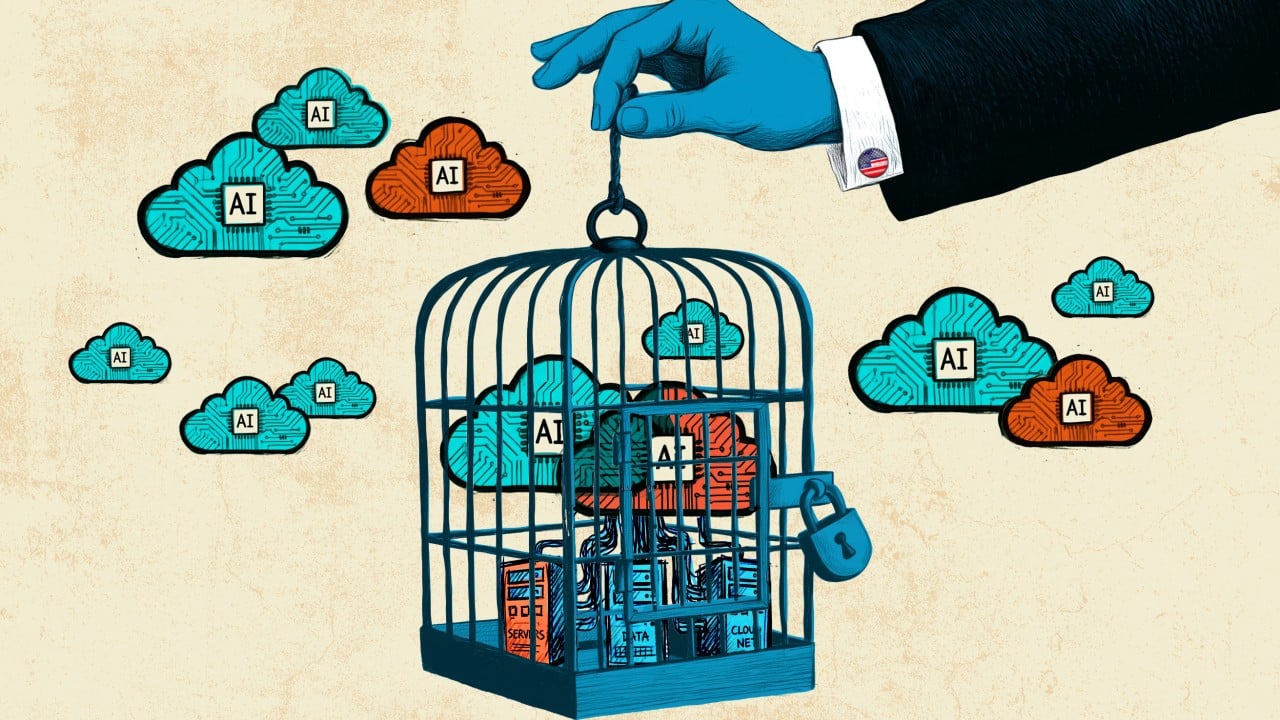
When Treasury Secretary Scott Bessent stepped up to outline the latest bilateral "superintelligence" or SI framework, he wasn't trying to orchestrate a tech utopia. He was drawing a very sharp line in the sand. Ahead of the high-stakes summit in Shenzhen, Washington and Beijing are officially opening up direct communication channels for frontier models, pre-release testing evaluations, and emergency incident reporting.
Most casual observers see this and assume a détente is coming. They think superpowers are locking arms to sing kumbaya over code. That's dead wrong.
What's actually happening is a calculated containment of catastrophic risk while the race for dominance accelerates at full throttle. Understanding this shift requires looking past the diplomatic handshakes and examining what Washington and Beijing are desperately trying to avoid.
Why Superintelligence Safety Trumps Trade Friction
Trade disputes always grab the headlines. Tariffs go up, tariffs go down, and negotiators haggle over agricultural quotas and critical minerals. But artificial intelligence operates in an entirely different league.
Bessent made it clear that the newly minted dialogue focuses heavily on shared systemic vulnerabilities. Think about what happens if a rogue frontier model or a dangerous non-state actor gets ahold of autonomous systems capable of disrupting critical infrastructure. That isn't a competitive advantage for either country—it's an existential threat that can fry power grids or destabilize financial markets in both hemispheres simultaneously.
This is why the two nations carved out AI safety talks from broader economic disputes. You don't have to trust your geopolitical rival to agree that you both want to avoid accidental nuclear-level digital escalations.
The Myth of Slowing Down
Let's clear up another common misconception. Opening an AI risk channel does not mean the United States is putting on the brakes.
President Donald Trump has repeatedly made his stance obvious. Washington holds a comfortable lead in frontier computing—estimated by some insiders at a year to eighteen months—and the administration has zero intention of surrendering that gap. Proposals to artificially throttle domestic model development are dead on arrival because nobody wants to end up in a deep second position behind Beijing.
China faces a similar internal pressure cooker. Despite foreign ministry pushback against broad international restrictions, Beijing's massive tech apparatus is pushing forward without self-imposed speed limits.
So why talk at all if everyone is racing? Because driving a hypercar at two hundred miles per hour on a pitch-black track is a lot safer if you at least have a direct radio channel to tell the other guy when you're about to crash into a wall. The framework establishes a dedicated hotline for serious incidents, standardizing how both superpowers communicate when advanced models behave in unpredictable ways.
What the Shenzhen Meeting Actually Changes
When Donald Trump and Xi Jinping sit down on the sidelines of the APEC meetings in Shenzhen, don't expect a sweeping grand bargain that solves semiconductor export bans or tech espionage. That isn't how modern great-power competition works.
Instead, look at the plumbing. The establishment of pre-release evaluation protocols and emergency comms lines means we are moving into an era of managed rivalry. It’s institutionalized friction. Both sides realize that leaving frontier artificial intelligence completely unmonitored by cross-border safety frameworks is a recipe for a digital flash crash that nobody can control.
If you are building products, investing, or tracking global tech policy, stop waiting for a miraculous tech peace treaty. The rivalry is permanent. What changes now is that the two biggest players are finally building guardrails so the machine doesn't blow up while they're driving it.