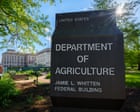
The United States Department of Agriculture has systematically dismantled two-thirds of its dedicated cyclospora research portfolio right in the middle of the largest foodborne parasite outbreak in modern American history. More than 17,000 confirmed cases of cyclosporiasis across 48 states have overwhelmed public health tracking systems this year. Yet, instead of mobilizing diagnostic resources, federal authorities have allowed congressional appropriations to lapse for two primary Beltsville Agricultural Research Center laboratories, while forcing a third surviving project into a disruptive geographic relocation that veteran agency scientists are flatly refusing to join.
Bureaucratic inertia rarely kills directly. This time, the administrative attrition is unfolding in real-time, stripping the federal food safety apparatus of the institutional knowledge required to trace microscopic pathogens through complex global supply chains.
The anatomy of institutional abandonment
The numbers tell an unvarnished story of policy failure masquerading as routine belt-tightening. For the 2026 fiscal year, Congress dropped appropriations for two critical research initiatives studying foodborne parasites at the sprawling Beltsville facility in Maryland. Rather than fighting for emergency supplemental funding or issuing public warnings, agency leadership absorbed the blow under the cover of a broader reorganization blueprint.
The third remaining project faced a different administrative weapon: forced migration. The USDA ordered the unit to pack up its containment hoods, reference libraries, and specimen repositories and move lock, stock, and barrel to Iowa.
Federal workers do not always follow arbitrary lines drawn on organizational charts. Every single scientist assigned to that specific program chose retirement or resignation over uprooting their lives.
Institutional memory cannot be boxed up in corrugated cardboard and loaded onto a moving van. When specialized microbiologists with decades of field experience walk out the door, the machinery of public protection stalls. The agency traded irreplaceable human capital for an empty facility shell in the Midwest.
Why cyclospora breaks the conventional safety model
Unlike bacteria such as E. coli or Salmonella, which grow rapidly on nutrient agar plates and yield straightforward diagnostic cultures within 24 hours, Cyclospora cayetanensis is a biological ghost. It is a single-celled protozoan parasite that requires a living host to complete its life cycle. It cannot be easily cultured in a standard food safety laboratory. Detecting it on imported raspberries, basil, or mesclun lettuce requires specialized molecular assays, meticulous microscopic examination, and reference materials that only a handful of senior researchers know how to produce and validate.
Private testing labs and state health departments do not possess these reference strains natively. They rely entirely on federal repositories managed by the Agricultural Research Service to benchmark their own diagnostic kits. By defunding the Beltsville teams and letting the remaining staff evaporate, the USDA has cut off the vital supply chain of physical specimens that commercial labs use to calibrate their detection tools.
The human cost of administrative blindness
Public health data collected by the Centers for Disease Control and Prevention paints a grim picture of seasonal vulnerability. Over 17,000 laboratory-confirmed infections have materialized since May, with nearly 12,000 additional probable cases pending clinical validation. Cyclosporiasis triggers severe, debilitating gastrointestinal distress, explosive watery diarrhea, cramping, low-grade fevers, and profound fatigue that can persist for months if untreated with specific antibiotic regimens like trimethoprim-sulfamethoxazole.
For elderly individuals or immunocompromised patients, the prolonged dehydration and malabsorption can lead to hospitalization. Outbreaks are notoriously difficult to trace because fresh produce travels through intricate multi-state distribution networks before landing on supermarket shelves. By the time epidemiological shoe-leather work links an outbreak to a specific farm in a foreign exporting nation, the contaminated food has long since rotted in consumer refrigerators.
Federal agencies are supposed to shorten that investigative window through advanced genomic tracking and rapid parasite isolation. Instead, the current administrative posture forces epidemiologists to work blind.
Official denials and the reality on the ground
Public relations handlers inside the executive branch insist that operations remain seamless. Agency statements released in the wake of the investigative reports claim that research continuity has not been compromised and that transitions are proceeding in an orderly fashion.
That optimistic spin collides violently with observable facts. State agricultural extensions and western grower syndicates have publicly voiced alarm, noting that specialized expertise takes decades to cultivate but only a few months of administrative chaos to annihilate. When laboratories sit vacant and veteran principal investigators are replaced by empty desks, the theoretical continuation of a program exists only on paper.
The structural breakdown exposes a dangerous disconnect between political priorities and biological reality. Pathogens do not alter their transmission cycles to accommodate budget reconciliation bills or administrative relocations. As long as fresh produce supply chains span tropical and subtropical growing regions without stringent border parasitological screening, the United States remains structurally exposed to recurring contamination events.
The laboratories are shuttered, the microscopes are dark, and the next seasonal wave is already incubating.