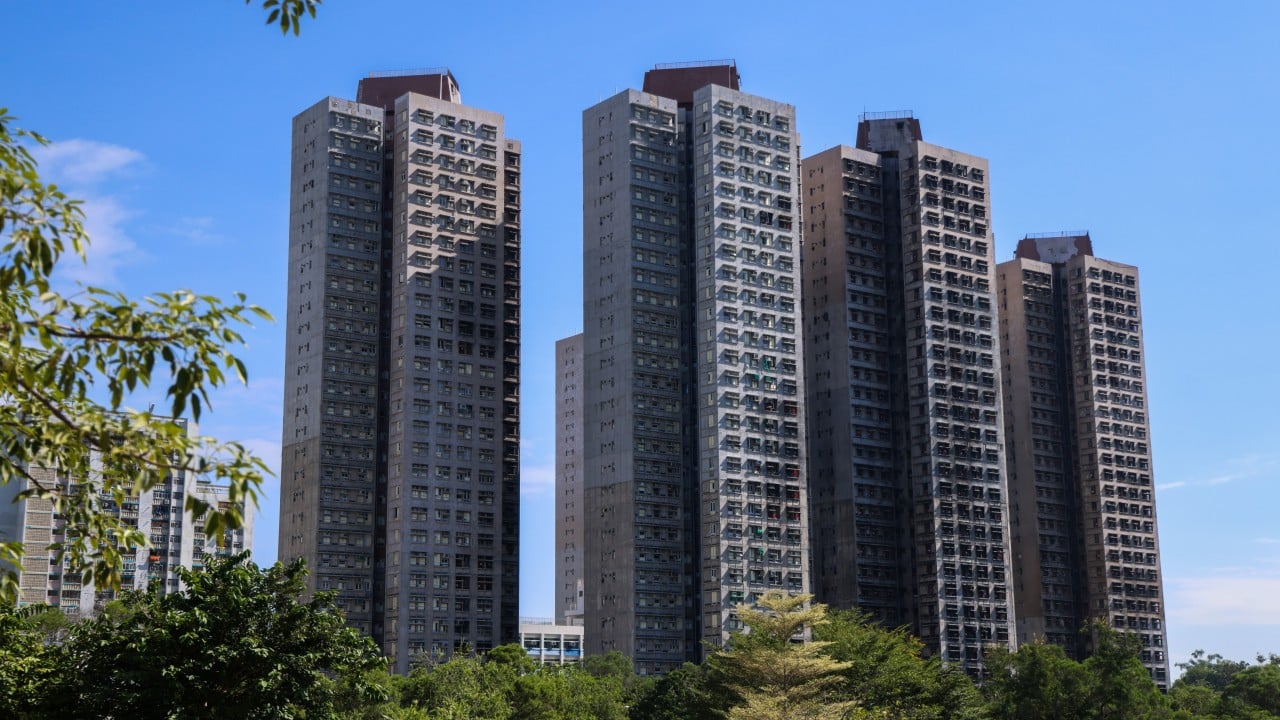
When fire sweeps through a neighborhood, the immediate aftermath belongs to emergency crews, municipal adjusters, and broadcast crews capturing smoke against a darkened skyline. The immediate focus rests on casualties, structural safety assessments, and emergency relief funds. But when the barricade tape finally comes down in older districts like Tai Po, a far longer, uncounted erosion begins. A catastrophic blaze does not merely destroy bricks, mortar, and inventory. It severs the unwritten social contract that keeps dense, working-class communities functioning, erasing the informal support networks, generational small businesses, and daily human connections that municipal planning can neither measure nor replace.
In the wake of recent commercial and residential fires across Hong Kong's New Territories, public discourse has naturally gravitated toward immediate safety protocols, building inspection backlogs, and sub-divided flat regulations. These are necessary debates. Yet they miss the core human mechanics of how old-line districts survive economic hardship. In places like Tai Po, small family-run storefronts—the neighborhood dry cleaner, the third-generation noodle shop, the corner newsstand—operate as decentralized community centers. They monitor elderly residents who live alone. They extend informal credit lines to struggling families during economic downturns. They provide eyes on the street that keep narrow alleyways safe. When a block burns, these invisible safety nets vanish overnight.
The tragedy in Tai Po highlights a structural vulnerability that extends across many aging urban sectors. Urban renewal models treat commercial districts as interchangeable collections of retail square footage. When disaster strikes, official recovery frameworks focus on insurance payouts, structural retrofitting, and tenant relocation to modern, high-rise commercial complexes. This approach fundamentally misunderstand how local micro-economies operate.
A neighborhood ecosystem depends on low overhead and established physical proximity. Take a hypothetical small business owner—a baker who has operated out of a ground-floor unit for thirty years. If a fire forces that baker out of their lease and into a newly constructed, private commercial mall, the math immediately fails. The rent per square foot doubles or triples. The open-front access that allowed passing neighbors to chat for five minutes while buying a bun disappears behind automatic glass doors. The customer base, composed largely of fixed-income seniors who cannot navigate multi-story retail hubs easily, scatters. The shop closes permanently within six months, not because of fire damage directly, but because modern commercial spaces cannot host low-margin, high-social-value enterprise.
This dynamic creates what urban sociologists term a community desertification process.
Displacement happens in three distinct phases. First comes the physical evacuation, where residents and shopkeepers are scattered across temporary housing units or short-term leases in adjacent districts. Second is the commercial consolidation, where corporate landlords and property developers buy out damaged titles, capitalizing on owner desperation to assemble larger parcels for high-density redevelopment. Third comes the demographic shift. The original working-class population, unable to afford the inflated rents of newly redeveloped structures, moves away entirely. The physical street remains, but its social architecture is permanently broken.
The loss hits elderly residents hardest. In dense historic blocks, daily routines act as a self-monitoring system. The shopkeeper notices when an eighty-year-old regular fails to show up for morning tea. The local hardware owner helps fix a broken door latch without charging a call-out fee. These tiny, unscripted interactions replace formal municipal social services in districts where government resources are stretched thin. When fire erases the storefronts, it isolates vulnerable populations inside their apartments, forcing heavy, expensive demands onto state-run social welfare agencies that were never designed to manage micro-level daily care.
Municipal policy actively exacerbates this problem through rigid zoning and disaster response frameworks.
Current relief measures focus almost entirely on individual cash handouts and basic emergency shelter. There is no existing framework in urban planning policy to preserve or reconstruct community infrastructure after a localized disaster. Insurance payouts cover inventory and structural damage based on market valuation, but market valuation explicitly assigns zero financial worth to social capital. A neighborhood joint that kept twenty families connected has the exact same insurable value as an empty warehouse of identical square footage.
To prevent the total erosion of neighborhoods following localized crises, city planners and policy makers must re-examine the rebuilding playbook.
Rethinking Post-Disaster Urban Recovery
First, emergency commercial preservation grants must be established alongside residential relief. Rather than leaving displaced small-business owners to navigate commercial lease markets alone, local governments should mandate temporary, low-cost commercial pop-up zones within the immediate neighborhood during the reconstruction phase. Keeping these businesses within a three-block radius preserves the social matrix while permanent repairs occur.
Second, historic commercial streetscapes require special preservation zoning that limits immediate corporate land assembly after major incidents. When developers move in immediately following a disaster, property values are artificially depressed by distress, accelerating gentrification and permanently pricing out original tenants. Instituting a mandatory planning cooling-off period gives property owners and small businesses time to assess genuine rebuilding options without predatory buyout pressure.
Third, municipal authorities must integrate community resilience metrics into disaster response planning. Urban survival isn't just about structural engineering and fire suppression systems; it relies on the density of local social networks. Rebuilding efforts should be measured not only by how quickly a building reopens, but by what percentage of original residents and small businesses return to the site.
The burned blocks in Tai Po will eventually be cleared. Concrete will be poured, new glass facades will reflect the sun, and officials will cut ribbons on modern, code-compliant structures. But unless urban policy begins to value the invisible social infrastructure built over decades of daily human contact, each reconstructed block will remain a sterile shell—safer from flame, perhaps, but stripped of the vital communal life that once made it a neighborhood.