Paper does not bleed.
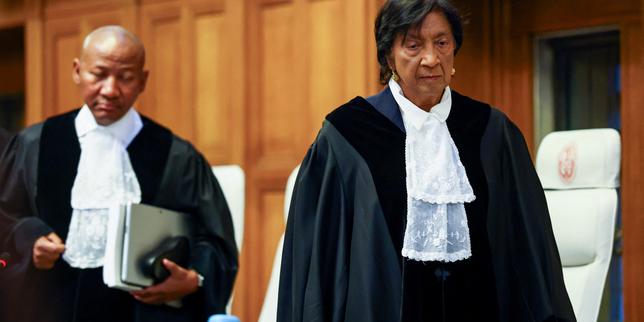
This is the first thing you learn when you watch international law try to catch up with catastrophe. You sit in a room in The Hague—a high-ceilinged hall where the light falls in long, pale rectangles across polished wood—and you listen to lawyers speak in measured cadences about intent, jurisdiction, and provisional measures. They use words like dolus specialis. They talk about state responsibility. They turn human suffering into exhibits, stamped, indexed, and filed in gray cardboard boxes.
Outside those tall windows, the world keeps spinning. But inside, an invisible architecture is being built. It is an attempt to draw a boundary around cruelty, to say to the perpetrators of genocide: There is a ledger, and every entry is being counted.
To understand what happened at the International Court of Justice regarding the Rohingya, you have to look past the legal briefs. You have to look at the dirt roads of Cox’s Bazar. You have to imagine a mother holding a child who remembers the sound of burning thatch better than the sound of a lullaby.
History is rarely made by lightning strikes. More often, it is ground down by small, deliberate choices. For decades, the Rohingya people of Myanmar lived in a state of quiet erasure. They were neighbors who were denied citizenship. They were doctors, teachers, and farmers who suddenly found themselves classified as outsiders in the only home they had ever known. Bureaucracy became a weapon. A stamp on a paper could strip a family of their land, their votes, their history.
Then came the escalation.
We all know the macro-statistics. Hundreds of thousands forced across the border in a matter of weeks. Villages reduced to ash. The United Nations called it a textbook example of ethnic cleansing. But statistics are an anesthetic. They dull the mind to the texture of reality.
Imagine walking for seven days through the mud of the monsoon season. Imagine carrying nothing except a cooking pot and a sleeping child. When you reach the border, the river is swollen, brown, and indifferent. You look back across the water, and the horizon is orange with the glow of your village burning.
That is where the law enters the story. Not with a rescue party, but with a question.
Can an international court, designed to arbitrate disputes between sovereign nations, reach inside a border and stop a government from destroying its own people? For a long time, the answer was a cynical no. International law was built on the principle of state sovereignty—the idea that what happens inside a house stays inside a house, no matter how loudly the screams echo through the walls.
Change happens slowly, then all at once.
When the tiny nation of The Gambia, backed by the Organisation of Islamic Cooperation, filed a case against Myanmar at the International Court of Justice, it felt like an improbable David facing an entrenched Goliath. What did a West African nation have to do with a persecuted Muslim minority in Southeast Asia?
Everything.
That lawsuit represented a shift in global consciousness. It declared that genocide is not a local dispute. It is a crime against all of humanity. When one part of the human family is targeted for annihilation, the contract binding the rest of us is breached. The court’s mandate began to stretch, bending away from dry territorial disputes and toward the protection of fundamental human rights on a global scale.
The proceedings were agonizingly slow. In a courtroom, time moves at the speed of due process. But in a refugee camp, time moves at the speed of hunger.
While legal scholars debated the nuances of state intent, families built shelters out of bamboo and plastic sheeting that whipped violently in the cyclone winds. Children were born who had never seen their ancestral hills. They grew up learning English and Bengali, playing football in dusty alleys, listening to stories of a place they could only picture in their minds.
Yet, something unprecedented was happening in the background. The judges at the ICJ issued provisional measures—legally binding orders demanding that Myanmar take all steps within its power to prevent acts of genocide and preserve evidence.
Skeptics scoffed. A piece of paper from The Hague cannot stop a bullet. An injunction cannot put out a fire.
They were right, and they were wrong.
An injunction cannot physically intervene, true. But law is also a mirror. It forces a regime to step onto a global stage and justify the unjustifiable. It strips away the comforting cover of deniability. Diplomats who once smiled and nodded at international summits found themselves summoned to answer for mass graves and systemic terror. The narrative shifted from a domestic security operation to a state-sponsored crime.
There is a profound vulnerability in seeking justice through legal channels. You are asking the very institutions built by powerful nations to hold power accountable. You are placing your trauma into the hands of strangers who wear robes and read documents in languages you do not speak.
I remember talking to a Rohingya activist who had spent years documenting atrocities. His phone was a grim archive of burnt credentials, satellite photos of flattened settlements, and audio clips of terrified voices.
"We do not expect the court to bring back the dead," he told me, his voice flat with exhaustion. "We know the graves will remain where they are. But we want the world to stop pretending we never existed. If we are erased in silence, it happens twice. Once by the sword, and second by the world's indifference."
That is the true weight of the ICJ's evolution. It is not just about punishment. It is about a permanent record. It is about ensuring that the history cannot be rewritten by the victors.
When future generations look back at this era, they will see a fractured world. They will see rising authoritarianism, paralyzed security councils, and cynical geopolitics. But they will also see a small group of lawyers, activists, and survivors who refused to let an entire people vanish into the administrative machine of a hostile state.
The court cases continue. The briefs grow thicker. The arguments become more esoteric. Back in the camps, the monsoon rains return, turning the footpaths into rivers of red mud. A grandmother boils rice over a small clay stove. A child chases a rolling plastic bottle.
The machinery of international justice is clumsy, slow, and often frustratingly toothless. But it is the only shield between the vulnerable and the absolute dark.
And sometimes, just holding the shield high enough to catch the light is the first step toward the dawn.