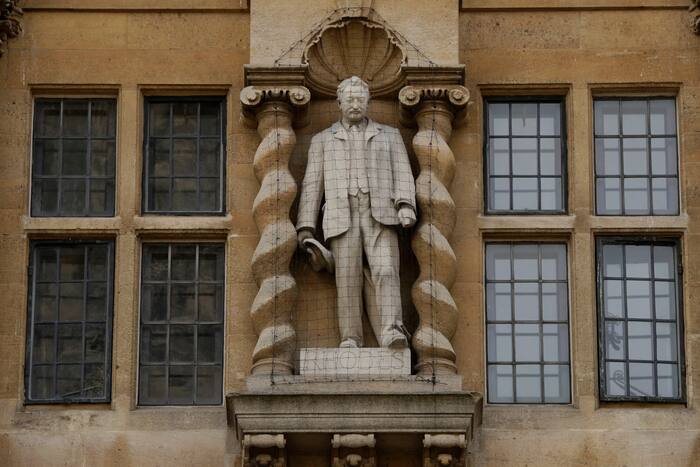
Anti-racism protesters gathered outside an Oxford college to oppose a scheduled event featuring Nathan Cofnas, a Cambridge-affiliated researcher whose writings on race, intelligence, and meritocracy have repeatedly ignited campus uproar across Britain. The demonstration underscores a deep, unresolved clash inside the United Kingdom's oldest universities over where academic freedom ends and institutional harm begins.
At the center of the dispute is a deceptively simple question. Can a university college lend its rooms, prestige, and security budget to a speaker whose views on racial disparities are rejected by mainstream genetics and sociology, without endorsing those views? For student activists and several faculty members, the answer is no. For free-speech advocates and university administrators bound by statutory duties, the answer is more complicated.
Who Nathan Cofnas Is and Why His Presence Sparked Protests
Nathan Cofnas is a philosopher of biology and early-career researcher who previously held a Leverhulme Early Career Fellowship at the University of Cambridge's Faculty of Philosophy, affiliated with Emmanuel College. Over several years, he published essays and blog posts arguing that genetic differences contribute to average group disparities in cognitive ability, and contending that modern diversity, equity, and inclusion policies rely on an ideological denial of human biodiversity.
Those arguments are not new. They sit squarely within a lineage of hereditarian claims that mainstream geneticists, anthropologists, and psychologists have critiqued for decades as methodologically flawed and socially destructive. What turned Cofnas from an obscure academic blogger into a national flashpoint in the United Kingdom was the intersection of his institutional affiliation at Cambridge and his willingness to state his conclusions in blunt, provocative terms.
In early 2024, a blog post by Cofnas examining how meritocracy would operate under what he termed "race realism" drew widespread condemnation from Cambridge students, alumni, and academics. Protests erupted outside Emmanuel College. The college subsequently ended its association with him, citing its commitment to an inclusive environment and stating that his writings were incompatible with its values, even as his university faculty post remained subject to separate employment procedures.
When an Oxford college host—whether an independent student society or a college-affiliated group—moved to invite Cofnas to speak, the reaction was immediate. Demonstrators assembled outside the college gates with placards condemning scientific racism and demanding that the event be canceled.
How the Collegiate System Complicates Campus Governance
To understand why these controversies keep recurring at Oxford and Cambridge, you have to understand how power actually works inside Oxbridge. Unlike most American or European universities, neither Oxford nor Cambridge is a single, top-down corporation. Each is a loose federation of a central university and dozens of self-governing, financially independent colleges.
This decentralization creates a structural vulnerability that activist groups and controversial speakers both know how to exploit.
- Independent student societies can book rooms inside individual colleges with minimal oversight from the central university administration.
- Individual colleges operate as private charities with their own governing bodies, fellows, and disciplinary rules, meaning one college can repudiate a speaker while another down the street hosts them.
- Security costs fall unevenly on whichever college happens to own the room where a controversial event is booked, creating quiet financial incentives to discourage high-risk invitations without issuing a formal ban.
When protesters target an Oxford college over a speaker like Cofnas, they are often protesting an institution that did not issue the invitation in the first place. A small student discussion group books a seminar room. Word leaks on social media. Within forty-eight hours, college porters are locking heavy wooden gates, Thames Valley Police are deploying liaison officers, and the college's master or principal is drafting an emergency statement explaining the difference between hosting an event and endorsing its speaker.
It is an exhausting, predictable cycle. And almost nobody inside the system believes it works well.
The Legal Vice Squeezing British Universities
University administrators in England are not making these decisions in a vacuum. They are operating inside a tightening legal framework that pulls them in opposite directions at the exact same time.
On one side sits the Higher Education (Freedom of Speech) Act 2023, alongside existing duties under the Education (No 2) Act 1986. Under British law, universities and their constituent colleges have an affirmative legal obligation to take reasonably practicable steps to secure freedom of speech within the law for staff, students, and visiting speakers. Canceling a lawful speaker because their ideas are offensive, discredited, or likely to provoke protest is not merely frowned upon; it exposes the institution to regulatory intervention and financial penalties.
On the other side sits the Equality Act 2010. Under the Public Sector Equality Duty, universities must have due regard to the need to eliminate unlawful discrimination, harassment, and victimization, and to foster good relations between people who share a protected characteristic—including race—and those who do not.
When a speaker argues that certain racial groups are inherently less suited for high-status academic or professional roles, Black and minority ethnic students argue that the university is failing its equality duty by creating a hostile educational environment. When administrators cancel the talk to protect those students, free-speech groups argue the university is violating its statutory free-speech duty.
The law offers no clean tie-breaker. Instead, it forces college bursars, deans, and legal counsel to make split-second judgments under intense public scrutiny.
What the Science Actually Says About Race and Intelligence
A major flaw in how mainstream media covers protests like the one at Oxford is framing the dispute as a clash between "courageous truth-tellers" and "emotional censors." That framing flatters the speaker while obscuring the scientific reality.
Modern population genetics does not support the claim that socially defined racial categories map neatly onto innate cognitive hierarchies. Geneticists who actually work with large-scale genomic data—such as David Reich, Adam Rutherford, and Kevin Mitchell—have repeatedly explained why extrapolating from within-group heritability to between-group genetic differences is a classic statistical error.
Consider a simple hypothetical example to see why this error happens. Imagine taking two identical handfuls of seeds from the same bag and planting one batch in rich, watered soil and the other in dry, depleted dirt. Within each plot, height differences between individual plants will be largely genetic, because every plant in that plot shares the same environment. Yet the massive difference in average height between the two plots is 100 percent environmental.
Human intelligence research faces an even steeper problem. Traits like cognitive test scores are influenced by thousands of genetic variants, each exerting a tiny effect, deeply entangled with nutrition, prenatal health, schooling quality, socioeconomic stress, and cultural familiarity with testing formats. Furthermore, polygenic scores developed primarily from European-ancestry cohorts lose predictive accuracy when applied to non-European populations, making cross-racial genetic comparisons scientifically unreliable.
Protesters outside the Oxford college were not objecting to a settled scientific consensus being aired. They were objecting to an academic platform being used to rehabilitate nineteenth-century racial essentialism dressed up in modern statistical jargon.
The Strategic Dilemma Facing Campus Protesters
Yet even among faculty members who view Cofnas's work as scientifically baseless, there is deep skepticism about whether street protests and cancellation campaigns achieve what activists want.
Every time demonstrators blockade an Oxford college gate, three things happen almost automatically.
First, an obscure talk that would have drawn twenty undergraduate attendees in a wood-paneled room becomes national news. A speaker whose arguments struggle to gain traction in peer-reviewed genetics journals suddenly receives sympathetic profiles in national newspapers and invitations onto high-profile podcasts. In the attention economy, outrage is the most efficient distribution engine ever invented.
Second, the debate shifts away from the substance of the speaker's claims. Instead of scrutinizing methodological flaws in hereditarian psychology, public discussion narrows to procedural questions about hecklers, venue security, and student resilience. The speaker gets to play the role of Galileo, regardless of how weak their actual evidence is.
Third, institutional administrators respond by tightening bureaucratic rules for all student events. Over the past decade across British universities, high-profile speaker protests have routinely been followed by stricter external-speaker vetting forms, longer notice periods, and higher security charges—measures that end up restricting radical left-wing, anti-war, and minority student societies just as often as right-wing provocateurs.
The Counter-Argument From Student Organizers
Student activists are not naive about these dynamics. When pressed on why they mobilize anyway, organizers point to two concrete priorities that media commentators routinely miss.
The first is signaling solidarity. For minority students navigating predominantly white, historically elite spaces like Oxford colleges, silence from the student body feels like complicity. Standing outside the gate sends an unmistakable message to fellow students that ideas portraying them as intellectually inferior will not pass unchallenged as normal academic discourse.
The second is raising the reputational cost for host societies. Student clubs invite controversial speakers partly for intellectual provocation and partly for clout. When a society knows that inviting a figure associated with racial essentialism will trigger public scrutiny, faculty pushback, and reputational damage, future committee members think twice before sending the email.
Why Oxbridge Remains the Epicenter of Britain's Culture Wars
Oxford and Cambridge occupy a disproportionate space in the British imagination. They educate a massive share of the country's judges, prime ministers, civil servants, and senior journalists. Because of that pipeline, every internal squabble over a seminar room or a college fellowship is immediately treated as a proxy war for the future of British public life.
This dynamic distorts reality on both sides.
Critics on the political right portray Oxbridge as overrun by authoritarian "woke" mobs who cannot tolerate a single dissenting thought. In reality, Oxford and Cambridge host hundreds of conservative, libertarian, religious, and contrarian speakers every single term without incident. The overwhelming majority of events proceed quietly.
Critics on the political left portray these institutions as bastions of entrenched bigotry actively promoting white supremacist pseudoscience. In reality, most Oxford colleges and departments invest heavily in widening-access programs, diversity fellowships, and anti-racism initiatives, and most fellows view figures like Cofnas as an embarrassment rather than an ally.
What actually happens inside these ancient quadrangles is far less cinematic and far more bureaucratic. A small group of students invites a provocative speaker to test boundaries. Another group of students organizes a protest to assert boundaries. Exhausted college administrators try to keep everyone physically safe while avoiding a lawsuit from either the free-speech regulator or an equality tribunal.
How Universities Can Handle Controversial Speakers Without Capitulating
There is no clean, painless way for a university to manage speakers whose ideas touch on racial hierarchy. Pretending otherwise ignores both the legal constraints on British institutions and the genuine distress these events cause within academic communities.
Still, institutions that handle these flashpoints best tend to follow a clear playbook rather than improvising in a panic.
- Separate venue access from institutional prestige. Colleges should enforce strict rules preventing student societies from marketing events in ways that imply college sponsorship, branding, or endorsement.
- Require academic rigor in format. Instead of giving controversial speakers an unchallenged monologue, host societies can be encouraged or required to pair them with domain experts—such as population geneticists or sociologists—who can dismantle flawed premises in real time.
- Protect peaceful protest alongside lawful speech. Clear physical boundaries allow demonstrators to make their voices heard visibly and loudly without physically obstructing attendees or endangering staff.
- Refuse to subsidize deliberate provocation. While universities must cover basic security to uphold statutory free-speech duties, student societies that repeatedly stage high-cost publicity stunts should face transparent limits on discretionary college funding.
The protests outside Oxford over Nathan Cofnas will fade from the headlines within days, just as the protests at Cambridge did before them. The underlying tension will remain. As long as Britain's elite universities serve as both sanctuaries for radical inquiry and symbols of national status, every contested invitation will force them to decide what kind of community they actually intend to be.