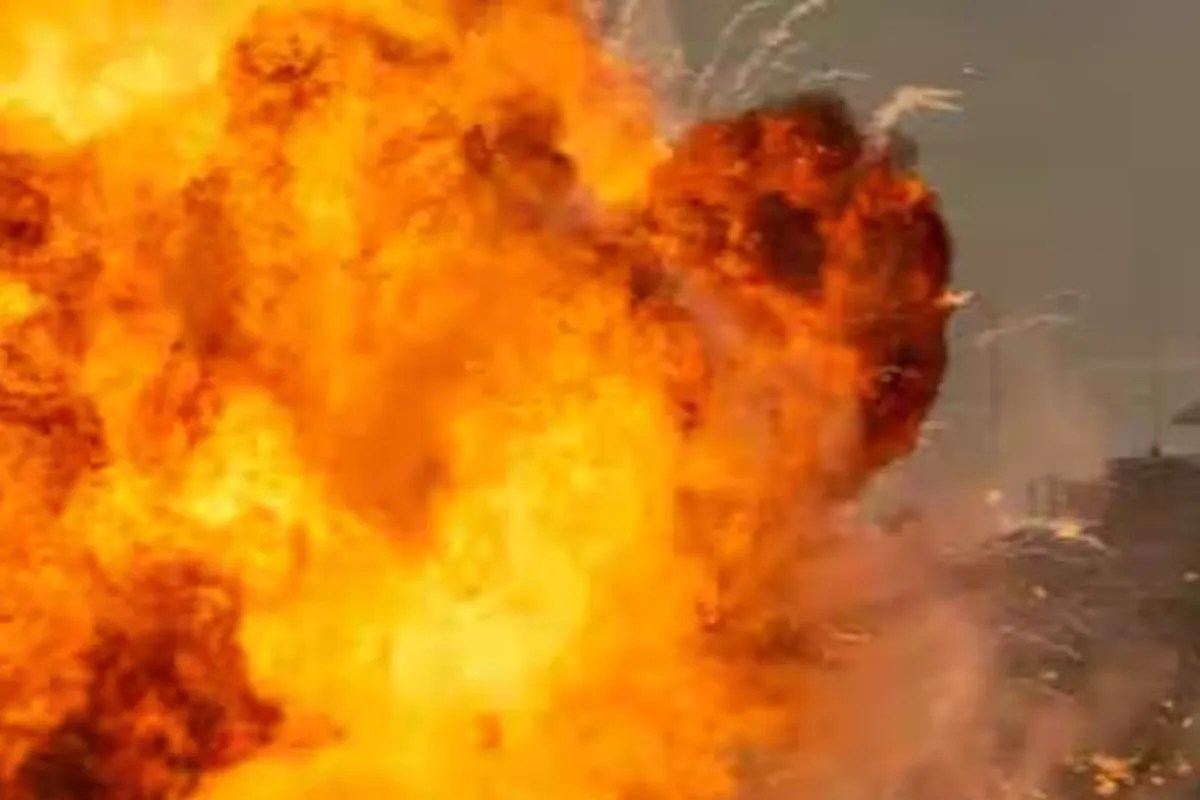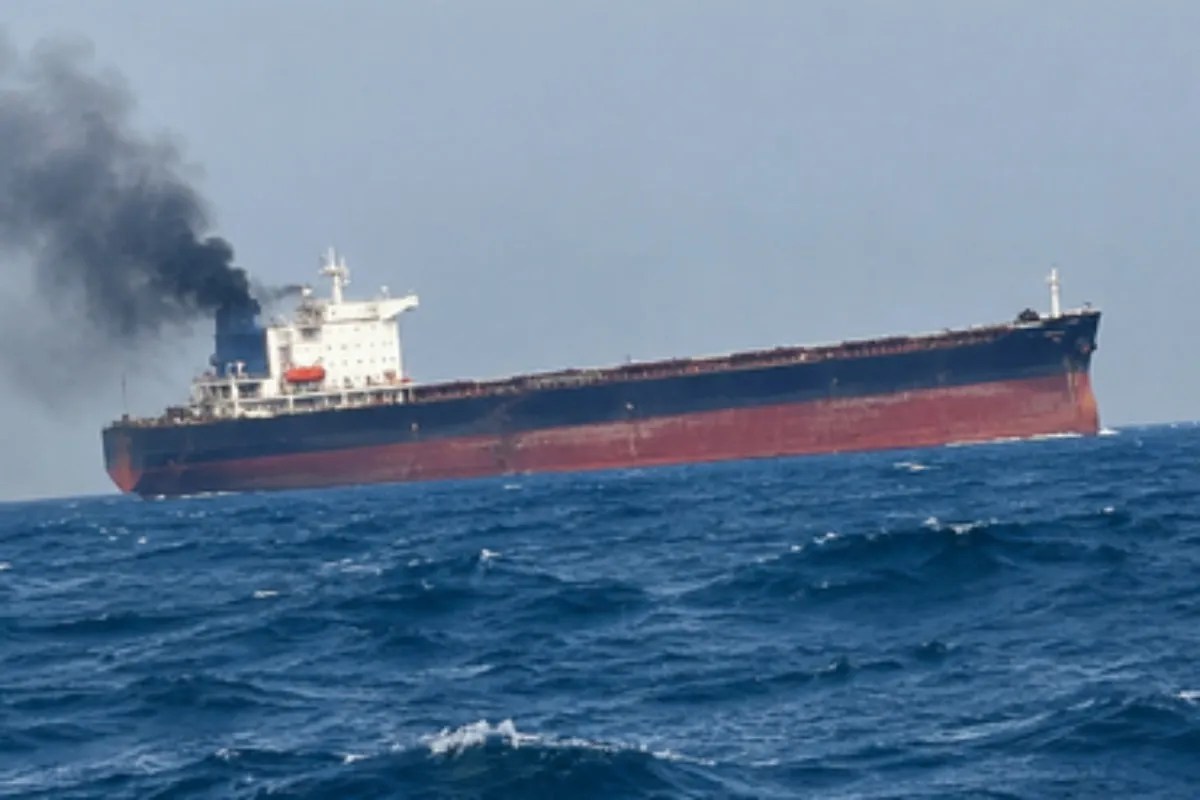
Two oil tankers burning in the Strait of Hormuz after striking naval mines is not an isolated maritime accident; it is the kinetic execution of asymmetric sea-denial economics. Surface-level reporting treats these detonations as sensational kinetic events—vessels catching fire, cargo lost, and competing military warnings issued over radio frequencies. In operational reality, the detonation of low-cost underwater ordnance against high-value crude carriers represents a systematic effort to impose prohibitive friction on global energy logistics without fighting a conventional fleet engagement. By weaponizing navigational ambiguity in a narrow geographic bottleneck, state actors alter the risk-adjusted cost of every barrel of oil transiting the Persian Gulf.
The Geopolitical Mechanism of Chokepoint Weaponization
Standard coverage of the Hormuz tanker fires focuses on immediate tactical claims: Iranian naval forces asserting that vessels struck mines in the western and southern sectors after following unauthorized, US-backed corridors, and commercial ships ignoring local traffic control mandates. Understanding the strategic utility of these strikes requires separating the physical explosion from the behavioral compliance it enforces across the global shipping industry. For another perspective, see: this related article.
Naval mining is fundamentally a tool of area denial, not precision targeting. Unlike anti-ship ballistic missiles or aerial drones, which require continuous intelligence, surveillance, and reconnaissance (ISR) kill chains, a moored or bottom-influence mine operates autonomously once deployed. Its strategic value lies in three distinct operational mechanisms:
- Attribution Ambiguity: A drifting or submerged mine lacks an immediate ballistic trajectory back to a launch platform. Even when naval forces publicly claim responsibility for mining specific zones to deter unauthorized transit, the exact timing, placement, and trigger mechanism of an individual strike remain difficult to verify independently in real time. This opacity complicates immediate military retaliation.
- Navigational Bifurcation: By declaring Western-designated transit lanes mined while maintaining selective exemptions for aligned or compliant nations—such as vessels coordinated directly with local maritime authorities—the mining state splits global shipping into two tiers. Compliant operators retain physical access, while non-compliant operators face catastrophic hull loss.
- Force Multiplication via Uncertainty: The physical destruction of two tankers forces dozens of other vessels to halt, reroute, or turn back toward the Persian Gulf. A small inventory of mines achieves the blockade effect of a large surface fleet because commercial captains cannot visually verify whether a shipping lane has been cleared.
Consider how a commercial vessel master responds to competing radio directives. When one naval power designates a southern corridor as safe and a littoral power broadcasts that the exact same coordinates are seeded with contact or magnetic mines, the vessel master faces an asymmetric payoff matrix. Following the local mandate risks diplomatic or financial sanctions from Western coalitions; following the coalition corridor risks immediate hull breach and crew fatalities. In maritime operations, physical survival overrides geopolitical alignment, forcing commercial fleets to freeze operations until third-party minesweeping verification occurs. Further insight regarding this has been shared by The Guardian.
Anatomy of a Naval Mine Strike on Crude Carriers
Mainstream reports note that the struck vessels caught fire immediately after detonation and that the crude oil aboard was lost or rendered unusable. To evaluate the true operational damage of these incidents, one must examine the structural vulnerability of modern oil tankers and the thermodynamic sequence triggered by an underwater blast.
Very Large Crude Carriers (VLCCs) and Suezmax tankers are engineered for maximum cargo capacity and hydrodynamic efficiency, not combat survivability. Their double-hull construction—mandated globally to prevent low-speed grounding spills—offers minimal protection against high-velocity underwater shockwaves. When a naval mine detonates beneath or adjacent to a tanker's keel, three sequential failure modes occur:
- The Bubble-Jet Effect: An underwater explosion creates a high-pressure gas bubble that expands rapidly and then collapses inward. If the detonation occurs near the hull, this collapse generates a high-velocity water jet capable of punching directly through both outer and inner steel plating, breaching the cargo tanks instantly.
- Whip-Lashing and Keel Fracture: The shockwave lifts the center of the vessel while the bow and stern remain supported by water buoyancy, inducing severe vertical bending moments. If the structural steel exceeds its yield strength, the hull cracks amidships, compromising watertight integrity across multiple compartments.
- Vapor Ignition and Thermal Runaway: Crude oil itself is difficult to ignite in liquid form, but the headspace above the liquid in partially filled or ruptured tanks contains volatile hydrocarbon vapors. The kinetic friction of tearing steel, combined with electrical arcs from severed shipboard cabling and the thermal flash of the mine's explosive charge, ignites these vapors. Once a hydrocarbon fire takes hold across breached deck plating, shipboard firefighting foam systems lose pressure due to damaged mains, leaving the vessel to burn until the fuel load is exhausted or the hull sinks.
This physical sequence explains why burning tankers in the Strait of Hormuz cannot simply be towed to safety within hours. A crippled, burning VLCC becomes a floating navigational hazard that physically obstructs the narrow deep-water traffic separation schemes (TSS) of the strait, compounding the blockade effect even after the initial explosions subside.
The Asymmetric Cost Function of Maritime Attrition
The core economic reality missed by incident-driven news coverage is the extreme disparity between the cost of deploying a naval mine and the cost of absorbing a strike. In military economics, this is known as an inverted cost-exchange ratio.
- Offensive Expenditure: Basic moored contact mines or older bottom-influence mines cost between several thousand and tens of thousands of dollars per unit. Deployment requires no specialized warships; mines can be rolled off the stern of converted commercial dhows, fishing vessels, or fast inshore attack craft under the cover of darkness or radar clutter.
- Defensive and Commercial Absorption: A modern crude tanker represents a capital asset valued between $80 million and $120 million, carrying upwards of two million barrels of crude oil worth well over $100 million depending on benchmark pricing. Beyond the direct loss of hull and cargo, the defensive countermeasure—mine countermeasures (MCM) operations—requires specialized non-magnetic hulls, unmanned underwater vehicles (UUVs), airborne laser mine detection systems, and days of slow, methodical sweeping at speeds under five knots.
This asymmetry extends directly into maritime finance through war-risk insurance underwriting. Lloyd's of London and global protection and indemnity (P&I) clubs price maritime transit based on actuarial loss probabilities. When multiple tankers strike mines within a single month, underwriters do not wait for diplomatic resolutions; they immediately reclassify the Persian Gulf and Strait of Hormuz as high-risk war zones.
The financial transmission mechanism operates in three stages:
- War-Risk Premium Spikes: Additional war-risk premiums (AWRP) jump from fractions of a percent of hull value to several percentage points per transit. For a $100 million vessel, a 2% war-risk surcharge adds $2 million in direct operating cost for a single seven-day voyage.
- Reinsurance Withdrawal: Primary marine insurers rely on reinsurance treaties to cap their exposure to catastrophic multi-vessel losses. When burning tankers demonstrate that mine density is high enough to hit multiple ships simultaneously, reinsurers exclude the region, forcing shipowners to either self-insure or refuse charters into the Gulf.
- Charter-Party Force Majeure: Standard maritime contracts (such as BIMCO war-risk clauses) grant shipowners the legal right to refuse entry into zones where the vessel faces probable physical destruction. Even if crude buyers are willing to pay higher freight rates, physical tonnage disappears from the spot market because captains and owners refuse to risk uninsurable hull loss.
Operational Blind Spots in Commercial Transit Protocols
News accounts frequently highlight that struck vessels had switched off their Automatic Identification System (AIS) transponders and navigation broadcasts prior to entering restricted zones. While state media frames this as proof of illicit transit, operational analysis reveals a deeper tactical dilemma known as electronic emission control (EMCON) vulnerability.
Commercial vessels turn off AIS transponders—going "dark"—to avoid being targeted by radar-guided missiles, drones, or boarding parties that track public maritime broadcasts. However, disabling electronic identification in a mined chokepoint degrades navigational safety in two critical ways:
- Loss of Collaborative Traffic Deconfliction: In narrow shipping lanes where deep-draft tankers have limited maneuvering room, disabling AIS forces bridge crews to rely solely on marine radar and visual watchkeeping. When evading suspected minefields or responding to sudden radio warnings, vessels operating without AIS face an elevated risk of collision with other dark vessels or drifting into un-swept shoals.
- Loss of Diplomatic Safe-Passage Verification: Littoral naval forces enforcing selective blockades use AIS signals alongside VHF radio interrogations to distinguish exempted vessels from prohibited ones. A vessel running dark is automatically classified as hostile or non-compliant by coastal radar operators, stripping the crew of any opportunity to receive real-time lane-clearance instructions or warnings before entering a mined sector.
This creates an operational trap: broadcasting AIS exposes a tanker to targeted kinetic interception, while disabling AIS pushes the vessel into unverified waters where passive naval mines wait without discrimination.
Strategic Constraints on Naval Countermeasures
When maritime chokepoints are mined, policymakers routinely call for naval escorts to restore freedom of navigation. However, standard naval escort doctrines—designed to deter surface raiders, submarines, or aerial attacks—fail against naval mines.
A guided-missile destroyer cannot shield a crude tanker from a mine already resting on the seabed. In fact, high-value naval warships are themselves acutely vulnerable to mines, forcing naval commanders to hold destroyers and aircraft carriers outside the chokepoint until dedicated mine-countermeasure vessels clear a narrow swept channel.
This defensive bottleneck carries severe limitations:
- Slow Clearance Velocity: Unlike air defense, which neutralizes threats in seconds, clearing a 30-nautical-mile transit lane through the Strait of Hormuz requires days or weeks of continuous sweeping. If the adversary retains the ability to re-seed the cleared channel at night using small fast-attack craft, the clearance operation becomes an endless attritional loop.
- The Convoy Vulnerability Paradox: Grouping merchant tankers into tight convoys behind a lead minesweeper minimizes the swept width required, but it concentrates high-value targets into a slow, predictable formation. If a single mine is missed by the lead sweeper—or if a mine is programmed with a ship-count fuse that ignores the first two hulls and detonates under the third—the resulting explosion disables a tanker inside a narrow swept corridor, trapping every vessel behind it.
- Environmental and Salvage Paralysis: Every struck tanker that burns or leaks crude degrades the acoustic and optical sensors of mine-hunting unmanned underwater vehicles. Oil slicks coat surface sensors, while sunken debris creates false sonar contacts that force minesweepers to investigate harmless wreckage, slowing clearance rates even further.
Strategic Execution for Energy and Maritime Operators
For energy traders, fleet operators, and supply-chain risk managers, treating the Hormuz mine strikes as temporary geopolitical noise leads to severe capital exposure. The operational reality is that low-cost area-denial weapons have successfully decoupled physical shipping capacity from nominal global oil supply.
To insulate operations against sustained chokepoint attrition, decision-makers must execute three immediate structural adjustments:
- Re-Index Freight Pricing to War-Risk Actuarial Curves: Abandon historical spot-rate models for Persian Gulf liftings. Build dynamic charter-party clauses that automatically pass through war-risk insurance spikes and demurrage costs triggered by naval transit delays, ensuring margins are not eroded while vessels hold position in the Gulf of Oman.
- Prioritize Pipeline Bypass Capacity Over Spot Maritime Tonnage: Immediately secure throughput allocations on overland bypass infrastructure—specifically the Habshan-Fujairah pipeline in the UAE and Saudi Arabia's East-West Petroline to the Red Sea. While these pipelines cannot absorb total Hormuz export volume, locking in long-term pipeline capacity eliminates exposure to underwater mine attrition and war-risk insurance freezes for core supply commitments.
- Enforce Strict AIS and Route-Verification Protocols: Prohibit commercial fleet masters from executing unverified "dark" transits through contested corridors. Mandate dual-channel verification—cross-referencing coalition naval advisories with littoral maritime traffic control broadcasts—before committing hull assets into narrow traffic separation schemes, prioritizing hull preservation over schedule adherence whenever conflicting minefield warnings exist.