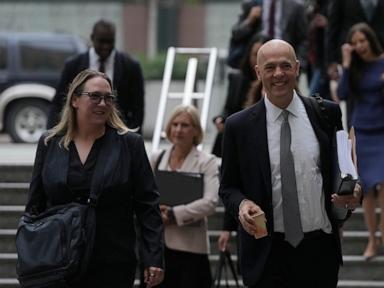
The federal courthouse in Oakland is echoing with arguments that could rewrite the economic foundations of American tech. A coalition of state attorneys general from California, Colorado, Kentucky, and New Jersey has taken Meta to trial, spearheading a multi-state legal assault representing 29 states. They are not merely suing over code or compliance. They are charging that Mark Zuckerberg's empire deliberately weaponized behavioral psychology to engineer addictive platforms for children, hiding internal data while fueling a nationwide mental health collapse.
Meta faces potential damages calculated by its own legal teams to reach an astronomical $1.4 trillion—a figure hovering close to the entire market capitalization of the tech giant.
This courtroom showdown represents the culmination of years of mounting evidence, leaked internal disclosures, and a fundamental shift in how society views digital architecture. For decades, Silicon Valley operated under a convenient shield: the premise that software is neutral, and that users exercise free will. That shield is cracking.
The Anatomy of Behavioral Capture
To understand why this trial is different from past regulatory slaps on the wrist, one must look at the mechanics of engagement. Meta did not stumble into high retention rates by accident. Internal documents brought to light by whistleblowers and state investigators reveal a multi-year effort to optimize products like Instagram and Facebook for continuous loops of dopamine-driven interaction.
Features like the infinite scroll, push notifications, and algorithmic content delivery loops were refined through exhaustive A/B testing. Young brains, structurally wired for peer validation and novelty, processing environments designed by teams of behavioral neuroscientists, stood little chance.
Consider a hypothetical example of how this operates in daily life. A fourteen-year-old opens Instagram to check a single message. An algorithm instantly injects a tailored stream of variable-reward video content. There is no natural stopping point. When the user attempts to close the app, a timed notification alerts them that a friend just posted a story. The loop resets.
The states argue that Meta understood the psychological toll of this architecture. They knew it disrupted sleep, triggered depressive cycles, and exposed minors to predatory content. Yet, growth metrics superseded child safety.
The Legal High-Stakes and the Defenses of Meta
Meta's legal defense relies on a mix of semantic maneuvering and aggressive pushback. Company representatives have argued in court filings that "social media addiction" is not a formally recognized psychiatric diagnosis in standard medical manuals, attempting to invalidate the core premise of the litigation. Furthermore, Meta contends that the financial demands are entirely untethered from reality, calling the $1.4 trillion maximum exposure an unprecedented overreach in consumer protection history.
The corporate strategy insists that age verification and online safety are industry-wide challenges, rather than sins unique to Facebook and Instagram. Meta points to parental controls and recent feature rollouts as proof of self-regulation.
Yet, recent history is not on their side. Juries in separate proceedings have already signaled a profound appetite for holding tech platforms accountable. Earlier this year, a California state court jury found Meta and Google negligent in a bellwether case involving a young user, awarding millions in damages. Meanwhile, a New Mexico judge slapped Meta with a massive penalty over child safety failures.
The Oakland federal trial is orders of magnitude larger. It combines federal statutory claims regarding the illegal collection of data from children under thirteen without parental consent with broader public nuisance theories.
Structural Remedies Over Monetary Fines
The financial totals grab headlines, but the structural demands hiding in the states' prayer for relief strike closer to the core of Meta's business model.
The plaintiffs are not just asking for a check. They are demanding mandatory operational transformations. The coalition wants the court to force Meta to:
- Eradicate infinite scrolling mechanisms entirely.
- Purge all artificial intelligence models and algorithmic training sets derived from children's data.
- Enforce strict daily time limits for minors.
- Reorder recommendation engines to prioritize user well-being over raw engagement metrics.
If a federal judge adopts these remedies, the user experience on Meta platforms will fundamentally change. The endless content firehose would turn into a structured, time-bounded utility. Advertising targeting models would lose their predictive precision. The frictionless expansion that powered social media dominance for two decades would hit a permanent structural wall.
A Reckoning for the Attention Economy
The trial comes at an awkward financial and cultural crossroads for the company. With legal expenses already weighing heavily on balance sheets and top executives like Mark Zuckerberg and Instagram head Adam Mosseri slated to face intense scrutiny on the witness stand, the veneer of untouchable corporate invulnerability has worn thin.
Other titans are watching closely. Alphabet, TikTok, and Snap have quietly settled several parallel state and private actions to avoid the unpredictable theater of a jury trial, leaving Meta largely isolated to fight the federal class-action and state coalition battles head-on. By standing alone at the defense table, Meta absorbs the entirety of the judicial crosshairs.
The proceedings in Oakland will stretch on for weeks. No matter the final verdict, the trial has already shattered the illusion that digital spaces exist outside the boundaries of physical harm and legal liability. The era of unchecked user capture is colliding with the hard reality of public accountability, and the outcome will dictate how a generation interacts with the digital world.