Pixels used to be honest.
You watched them build an image line by slow line on a CRT monitor, a warm hum of electricity translating math into light. If you wanted a moving picture of a city street in 1995, you hired a crew, rented a heavy metal box with glass lenses, waited for the sun to hit the asphalt at precisely four in the afternoon, and prayed the film didn't jam.
Money bought motion. Time bought clarity.
Today, a startup called Higgsfield just pulled a five-point-four billion dollar valuation out of thin air. Goldman Sachs and Intel wrote the checks. The ink is wet. The servers are humming. And the ground beneath the entire entertainment industry is shifting so fast that the people who make movies for a living are trying to figure out if they are the authors or the ghosts.
To understand why Wall Street is throwing billions at an artificial intelligence video company, you have to look past the spreadsheets. You have to look at a small room in Los Angeles.
Imagine a director named Sarah. (Note: Sarah is a hypothetical composite based on dozens of indie creators currently navigating this transition.) She spent four years trying to secure funding for a ten-minute short film about her grandmother's immigration from post-war Europe. She had the script. She had the emotional weight. She lacked one hundred thousand dollars for three days of location scouting, vintage costume rentals, and a permit to block off a historic street corner.
The bank said no. The grants fell through.
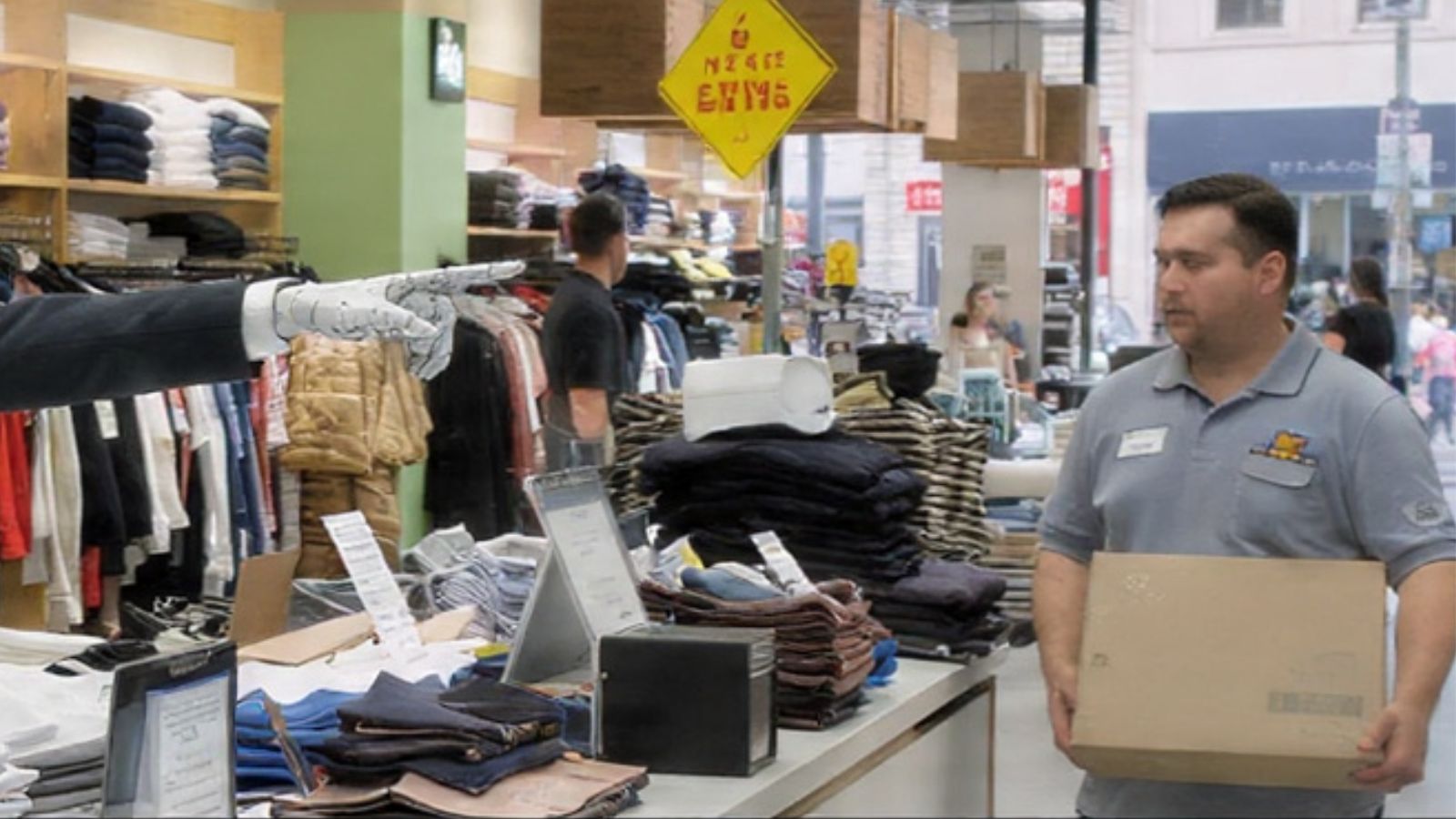
Then she opened a browser window, typed a prompt into a latent space model, and watched a photorealistic, historically accurate cobblestone street materialize in four seconds. The light hit the fictional cobblestones at precisely four in the afternoon. Her grandmother, rendered with startling fidelity, walked down the digital alleyway.
Sarah cried. Not because the technology was brilliant, but because her dream had just been bypassed around the gatekeepers for the price of a cloud subscription.
This is the psychological core of the current gold rush. We are witnessing the democratization of spectacle, paired with an existential terror that is difficult to articulate over a corporate press release.
When financial giants like Goldman Sachs and tech hardware titans like Intel pour capital into Higgsfield at a 5.4 billion dollar price tag, they are not just betting on software. They are betting on the total collapse of friction. They see a world where the multi-million-dollar visual effects house goes the way of the horse-drawn carriage. They see a future where anyone with an internet connection and a vivid imagination can command a virtual army of rendering engines.
Why Intel? Because running these models requires silicon muscle that ordinary laptops can only dream of. Every hyper-realistic frame of AI-generated video is a battlefield of matrix multiplications, a staggering tax on electricity and processing units. Intel is selling the picks and shovels for a gold rush where the gold is made of numbers.
Why Goldman Sachs? Because the margins are terrifyingly good. When you eliminate craftspeople, stunt coordinators, practical location scouts, and craft services from the ledger, the cost of production drops to zero.
And that brings us to the uncomfortable truth that nobody in the boardrooms wants to say out loud.
We are cheering for the underdog while feeding the beast that might consume the human artist.
I remember talking to an animator last year whose hands were stiff from twenty years of drawing individual frames for television commercials. He looked at a modern text-to-video output, took a long drag from his coffee, and said nothing for a full minute. He didn't scream about stolen data or copyright infringement. He just looked tired. He knew that the math had finally caught up to his muscle memory.
When a startup hits a valuation that rivals mid-sized manufacturing economies before they have even released a fraction of their potential capacity, the market is signaling a structural break in reality. We are moving from a culture of capture to a culture of synthesis.
We no longer record the world. We prompt it into existence.
Consider the implications for truth itself. If a video of a city street, a political speech, or a historical event can be conjured from a text box with zero traceable physical footprint, our collective visual memory becomes a malleable fiction. The billions flowing into Higgsfield and its competitors are an investment in our collective hallucination.
Yet, there is a fierce human hunger underneath all of this. Sarah did not use the tool to cheat. She used it because her story was trapped behind a financial wall, beating its wings against glass. The technology gave her a voice when the traditional economy slammed the door in her face.
That duality is where we live now. It is brilliant. It is grotesque. It is wildly expensive.
The servers in Intel-backed data centers will keep cooling fans screaming through the night. The venture capitalists will calculate their projected returns on investment while sipping cold-pressed juice in Manhattan towers.
Meanwhile, somewhere in a dark room, a creator who was told "no" their entire life is staring at a monitor, watching an impossible world load pixel by pixel, wondering if they are holding a magic wand or a loaded gun.
The screen flickers. The render finishes.
And the world changes again, completely silent.