The Breaking Point Behind Closed Doors
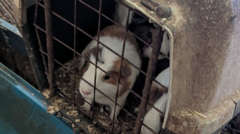
Animal hoarding does not begin with malice. It begins with a slow, rationalized accumulation that eventually crosses the threshold from compassion into clinical pathology. When authorities recently intervened at a residential property to remove one hundred fourteen guinea pigs and thirty-four cats living in squalor, headlines focused entirely on the sheer scale of the neglect. The public shook its head at the grotesque numbers. Observers asked how any human being could allow living spaces to decay into biological hazard zones.
Yet the shock value obscures a much darker systemic reality. These high-profile intervention cases represent only the absolute breaking point of a hidden epidemic. Thousands of domestic environments across modern neighborhoods hover just beneath this exact threshold of discovery. Neighbors walk past quiet front doors every single day without realizing that behind the drywall lies an ecosystem of unchecked breeding, severe psychological distress, and regulatory failure. You might also find this similar story insightful: Inside the Quiet Annexation Blueprint Shifting West Bank Police Powers.
Understanding why ordinary people transform their homes into private rescue facilities requires dismantling popular assumptions. Society prefers to view animal hoarders as cruel monsters operating out of malicious intent. The truth is far more complex and considerably more tragic. Most individuals trapped in this cycle suffer from severe psychological conditions, including profound forms of obsessive-compulsive disorder and acute social isolation.
The Anatomy of Accumulation
The progression from standard pet ownership to pathological hoarding follows a predictable psychological trajectory. It typically starts with a single rescue. A stray animal finds its way onto a porch during a vulnerable moment in the owner's life. The act of saving that creature triggers a powerful neurochemical reward. For someone struggling with depression, grief, or trauma, that immediate validation becomes an addictive emotional anchor. As highlighted in recent reports by Al Jazeera, the effects are notable.
Soon, the math of compassion breaks down.
If saving one animal feels redemptive, logic dictates that saving ten must be tenfold better. When the physical and financial resources to care for those animals run dry, the behavior does not stop. Instead, a wall of denial goes up. The individual becomes convinced that only they can provide adequate shelter. Anyone who suggests otherwise is viewed as an enemy of the animals.
Consider the trajectory of the recent case involving the massive rodent and feline populations. Multiplied by dozens of unsterilized adults, reproduction operates on an exponential curve. A modest collection of pets turns into a massive colony in less than a year. Fecal accumulation contaminates air quality. Structural damage compromises flooring. Still, the occupant remains trapped inside a cognitive distortion field, unable to perceive the rot unfolding around them.
The Failure of the Intervention Pipeline
When the state finally steps in, the response is almost always reactive rather than preventative. Animal control officers and local law enforcement are forced to act as emergency responders to a disaster zone rather than health advocates intercepting a slow-moving crisis.
Our current legal and social frameworks are poorly equipped to handle chronic animal hoarding for several reasons:
- Jurisdictional Fragmentation: Animal control, mental health services, and elder care agencies rarely share operational databases or coordinate early interventions.
- Shelter Capacity Limits: Municipal shelters operate at or near maximum capacity constantly, meaning they cannot accept large intakes without catastrophic strain.
- Punitive Legal Focus: Courts frequently rely exclusively on fines and ownership bans rather than mandatory psychological treatment, guaranteeing high rates of recidivism.
A court order prohibiting an individual from owning pets feels satisfying from a retributive standpoint. It checks a legal box. It signals public disapproval. But without addressing the underlying mental health drivers, the ban is entirely useless. An untreated individual simply finds a loophole, acquires new animals through private channels, or starts the cycle over with a different species that bypasses local monitoring.
The Social Isolation Engine
Modern urban and suburban life creates fertile ground for hoarding behavior to fester unchecked. The breakdown of traditional community structures means neighbors no longer know each other's names. People can live adjacent to a biological catastrophe for years without ever being invited inside.
Furthermore, the social stigma surrounding mental health keeps sufferers silent. Shame acts as a force multiplier for the hoarding dynamic. As the home deteriorates, the owner cuts off contact with friends and family to hide the mounting filth. This isolation cuts off the last remaining reality checks that might have forced an intervention before conditions became life-threatening for both humans and animals.
Veterinary professionals occupy a unique position on the front lines, yet their hands are often tied. A vet might notice that a client brings in an unusually high volume of animals under suspicious circumstances, but patient confidentiality laws and a lack of clear mandatory reporting statutes for animal hoarding create significant hurdles. By the time a veterinarian feels legally safe raising an alarm, the situation has usually escalated beyond local intervention.
Redefining the Path Forward
Solving this crisis demands a fundamental shift in how public health systems treat psychological attachment disorders involving animals. We cannot simply police our way out of a psychological epidemic with animal bans and criminal charges.
Resources must be redirected toward early detection networks. Social workers, housing inspectors, and delivery personnel need training to recognize the subtle behavioral and environmental red flags of hoarding before an emergency occurs. Confidential reporting pathways that offer medical help rather than immediate jail time would encourage struggling individuals to seek assistance early.
Until communities build an integrated infrastructure that treats animal hoarding as a complex mental health crisis rather than a simple animal cruelty infraction, properties will continue to fill up in the dark. The noise behind the front door will grow louder. And society will continue to arrive too late, wondering how the mess got so big while missing the human breaking point that allowed it to happen in the first place.


