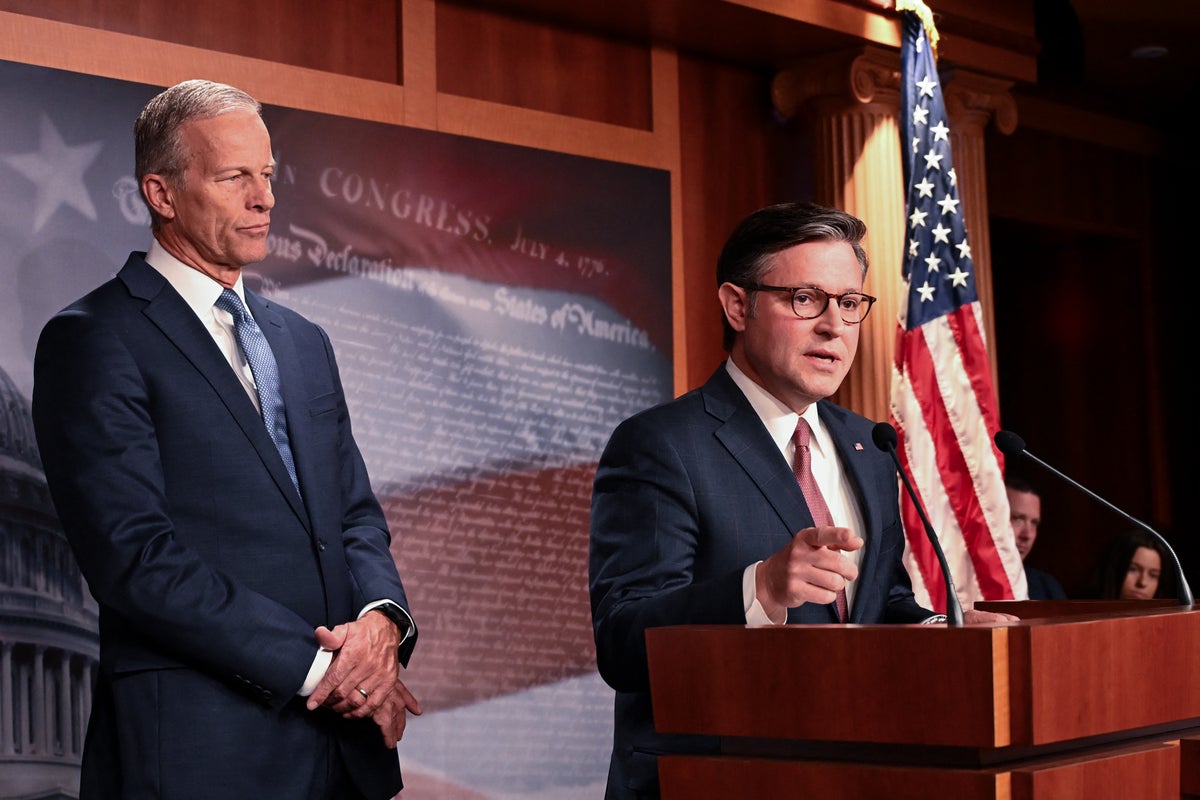
The air inside the House chamber usually smells of old carpet, polished mahogany, and the distinct, sharp tang of collective anxiety. But on this particular afternoon, the atmosphere felt heavier, thick with the kind of tension that precedes a structural collapse. Men and women in tailored suits sat hunched over their desks, staring at voting tallies as if staring hard enough could alter the digital amber glow of the screens.
At the center of the storm was a name, a vacancy, and an escalating fury that threatened to tear the thin veneer of congressional decorum right off its hinges.
When Donald Trump tapped his chosen successor to replace Tulsi Gabbard, he didn’t just throw a wrench into the legislative gears. He dropped a bomb. What was supposed to be a routine exercise in political succession rapidly devolved into an ideological gridlock, culminating in a fierce, red-faced declaration from the Republican leadership that this day, and this specific vote, would live in infamy.
To understand how a single appointment could paralyze the most powerful legislative body on earth, you have to look past the cable news chyrons. You have to look at the people holding the pens, the quiet whispers in the cloakrooms, and the terrifying reality of a government stalled by its own internal warfare.
The Friction of Absolute Certainty
Political capital is a finite resource. It is spent in backroom deals, traded for committee assignments, and occasionally squandered on pride.
Consider the modern lawmaker. They are caught between two unforgiving forces: a demanding base that views compromise as treason, and an institutional structure that requires compromise to pass so much as a highway funding bill. When a high-profile vacancy occurs—especially one left in the wake of a figure as polarizing and unconventional as Tulsi Gabbard—the stakes cease to be merely political. They become existential.
The friction began the moment the nomination was announced. It wasn’t a slow burn; it was an immediate flashpoint.
On one side stood the loyalists, determined to push the President-elect's agenda through the gauntlet without altering a single comma. On the other side sat a fracturing coalition, a mix of deeply alarmed opposition members and traditionalist conservatives who viewed the nominee not as a bold disruptor, but as an institutional wrecking ball.
The disagreement wasn’t over policy details or budgetary line items. It was a fundamental argument about the nature of governance itself. One faction believed the executive branch should have absolute deference in choosing its team. The other believed the legislature’s primary duty is to act as a shield against erratic impulses.
When those two philosophies collide on the House floor, the result is total immobilization.
The Anatomy of a Stalemate
A congressional stalemate is a strange, agonizing spectacle to witness firsthand.
In theory, democracy is about numbers. You count the ayes, you count the nays, and the larger number wins. But in practice, democracy is governed by human psychology, fear, and the unrelenting pressure of optics.
As the hours ticked away, the floor became a theater of desperation. Lawmakers huddled in small, intense circles, their gestures sharp and defensive. Phone screens illuminated worried faces as members checked the latest polling data, frantic text messages from donors, and angry social media posts from constituents demanding that they either hold the line or burn the house down.
The numbers simply weren’t there. The margin was razor-thin, a terrifying reality for a leadership team accustomed to enforcing strict party discipline.
Every single vote became a mountain to climb. Whips roamed the aisles like wolves, cornering undecided members, offering vague promises of future favors or delivering muted threats of primary challenges. Yet, the needle refused to move. The electronic scoreboard remained frozen, a digital testament to a party incapable of consensus.
It was during this peak of paralysis that the Republican leader took the microphone.
The room didn’t fall silent immediately; it took a moment for the gravity of the stance to register. But as the leader’s voice cracked with a mixture of betrayal and rage, the ambient noise evaporated. The declaration that the impending vote would "live in infamy" wasn’t just a dramatic historical echo borrowed from Franklin Roosevelt. It was an admission of profound defeat. It was a public recognition that the internal fabric of the party had frayed to the point of snapping.
The Human Cost of a Frozen Government
It is easy to look at Washington as a distant, abstract board game played by millionaires who suffer no real consequences. We see the arguments, the dramatic walkouts, and the fiery speeches, and we treat it as entertainment.
But the paralysis on the floor has a human cost that ripples far beyond the Capitol dome.
When Congress stalls, the machinery of the state grinds to a halt. Behind every stalled nomination are hundreds of career civil servants waiting for direction, critical intelligence briefings that go unread, and international allies watching with growing alarm as the world's preeminent superpower locks itself in a room to scream at its own reflection.
Imagine an embassy worker halfway across the world, trying to navigate a delicate diplomatic crisis without a clear directive from a fractured leadership team at home. Imagine a military analyst trying to assess a shifting threat landscape while the oversight committees tasked with guiding them are bogged down in a petty civil war over seating arrangements and ideological purity tests.
The tragedy of modern politics is that the people worst affected by the gridlock are almost always the ones who have no say in it.
The stalemate over Gabbard’s replacement isn’t an isolated incident or a bizarre quirk of the current legislative calendar. It is the logical conclusion of a system that has systematically rewarded conflict over competence. For years, the incentives have been skewed. A lawmaker gets more media attention, more campaign donations, and more grassroots adoration for tanking a vote than they do for quietly working across the aisle to ensure the basic functions of government continue uninterrupted.
The Long Shadow of Infamy
As the sun began to set, casting long, dramatic shadows across the House floor, the true nature of the crisis became undeniable. This was never just about a single seat or a specific nominee. It was a referendum on whether a slim majority could actually govern, or if it was doomed to be swallowed whole by its own radical factions.
The word "infamy" carries immense historical weight. It implies an act of betrayal so profound that time itself cannot erase the stain. By using that specific phrase, the leadership wasn't just criticizing their rebellious colleagues; they were drawing a line in the sand, signaling that the fractures within the conservative movement are no longer manageable disagreements. They are open wounds.
The vote, when it finally collapsed under the weight of its own contradictions, solved nothing. It left the seat vacant, the leadership humiliated, and the opposition emboldened.
Walking out of the chamber that evening, the sense of exhaustion was palpable. The grand speeches had been delivered, the press conferences had been held, and the partisan talking points had been blasted out to millions of phones across the country.
But beneath the noise, the silence of an empty, dysfunctional room remained. The lights in the chamber were turned down, leaving the empty desks and the frozen voting screens in the dark. The building stood tall against the night sky, an imposing symbol of democracy that, for one long, bitter day, forgot how to function.