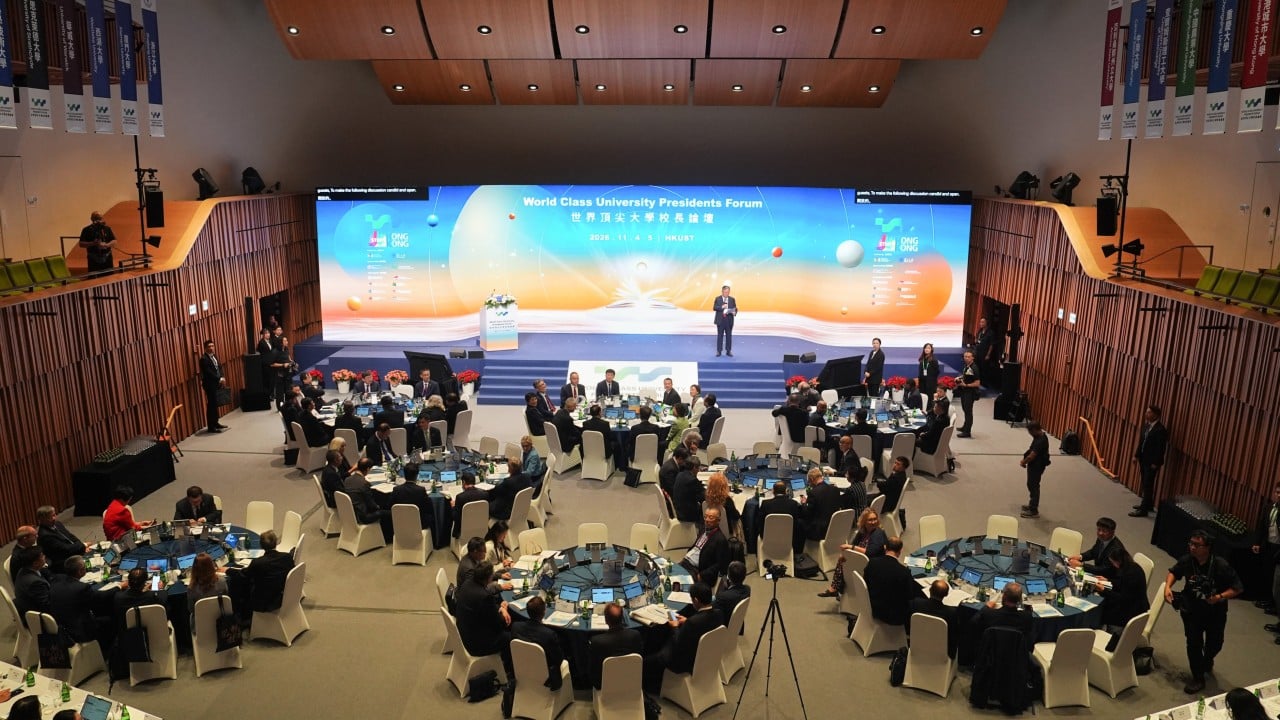
Politicians love a scoreboard they can take credit for without actually doing the heavy lifting. Recently, Hong Kong’s Chief Secretary Eric Chan stepped up to the podium to take a victory lap over the city’s latest global university ranking surges, attributing the climb directly to government policy, funding initiatives, and strategic vision.
It is a neat, tidy, self-congratulatory narrative. It is also complete fiction.
When high-ranking officials claim that bureaucratic policy engineered academic excellence, they are banking on the public not knowing how the sausage is made. Global university rankings—whether QS, Times Higher Education (THE), or ShanghaiRanking—are not objective measures of educational quality, domestic innovation, or intellectual vitality. They are commercial algorithms heavily weighted toward inputs that cash can buy quickly: internationalization ratios, citation counts, and employer reputation surveys.
Hong Kong didn't suddenly transform its undergraduate classrooms into Oxford overnight because a bureaucrat signed a funding memo. What actually happened is far more transactional, and far more fragile.
The Algorithm Gaming Machine
To understand why government victory laps over university rankings are misleading, look under the hood of the ranking methodologies.
Take the QS World University Rankings, the gold standard for press releases across Asia. A massive chunk of a university's score comes from two metrics: International Faculty Ratio and International Student Ratio, alongside Citations per Faculty.
Here is the open secret of higher education administration. If you want to jump ten spots in three years, you do not overhaul your curriculum. You do not spend a decade nurturing homegrown Nobel laureates. You open the checkbook and poach senior researchers from Western institutions who already have massive citation indexes attached to their names, and you count students from mainland China as "international."
That is not a policy triumph. That is arbitrage.
I have sat in strategy rooms with university administrators across East Asia watching them treat ranking criteria like an SEO checklist. They hire consultants to analyze which journals carry the highest weight in Elsevier’s Scopus database. They offer golden hellos to star professors nearing retirement in the US or UK, bringing them on for fraction-of-the-year appointments just to attach the university's affiliation to their existing paper output.
When Hong Kong’s leadership points to five universities sitting in the global top 100 as proof of administrative genius, they are celebrating the efficiency of a checkbook, not the health of an ecosystem.
The Citation Cartel Illusion
Let’s look closely at Citations per Faculty, which accounts for 20% of the QS score and 30% of the Times Higher Education score.
To the layperson, high citations mean groundbreaking research. To anyone who has spent time inside academic publishing, high citations often mean a high volume of incremental papers published in high-frequency fields like materials science, chemical engineering, and computer science—fields where multi-author papers routinely cite dozens of prior works by the same research network.
- The Volume Trap: A single review paper in nanotechnology can rack up hundreds of citations in twenty-four months. A seminal book in humanities or a slow-burn clinical trial in medicine might take ten years to register a fraction of that impact.
- The Poaching Effect: When a Hong Kong university recruits a top-tier lab director from California or London, that professor's historical citation velocity transfers immediately to the new host institution's balance sheet.
- The Subsidy Distortion: Government matching grants, such as the Research Grants Council (RGC) schemes, heavily incentivize publication volume tied to specific, trendy global keywords. Researchers chase the grant money, publish for the metric, and the ranking algorithm rewards the noise.
Crediting government policy for this is like crediting a stadium owner for a winning season because they bought the league's top three free agents in the off-season. You bought the stats; you didn't build the farm system.
The Structural Vulnerability Nobody Mentions
Every contrarian argument has a catch, and here is the honest truth about Hong Kong’s approach: in the short term, buying prestige works.
Parents in Shenzhen, Kuala Lumpur, and Mumbai look at the top 50 list, see the University of Hong Kong (HKU) or the Chinese University of Hong Kong (CUHK), and happily wire tuition fees. Corporate recruiters in Central still filter resumes by brand name. On paper, the flywheel spins.
The downside—and the reason the government’s self-congratulation is dangerous—is that this model creates a hollow core.
When an entire higher education sector optimizes for external ranking algorithms rather than domestic R&D commercialization and academic freedom, three fractures appear beneath the surface.
1. The Commercialization Dead End
Hong Kong has world-class paper writers and a notoriously weak deep-tech commercialization pipeline. Compare the city’s university spin-out track record to Stanford, MIT, or even the National University of Singapore (NUS). For decades, brilliant prototypes created in Kowloon Tong or Pok Fu Lam died in the "valley of death" because local venture capital preferred real estate and late-stage financial plays over risky hardware or biotech startups.
A ranking bump does not fix a risk-averse capital market. You can publish ten thousand papers on artificial intelligence, and still end up importing your core enterprise software from Shenzhen and Silicon Valley.
2. The "International" Definition Sleight of Hand
In global rankings, diversity of thought and global talent flow are supposed to measure how well a university attracts minds from every corner of the globe. In Hong Kong, the overwhelming majority of "non-local" students come from a single source: mainland China.
While mainland students bring fierce academic rigor and work ethic, counting them as "international" to satisfy a Western ranking agency's diversity metric is an accounting trick. Meanwhile, recruiting genuine non-Chinese international faculty and students—from Europe, North America, Southeast Asia, and India—has become markedly harder since 2020 due to geopolitical friction, visa anxieties, and shifting perceptions around campus autonomy.
Imagine a scenario where QS changes its methodology tomorrow to weight geographic dispersion of international students rather than raw headcount of non-local passport holders. Overnight, Hong Kong’s universities would plummet twenty spots without a single professor leaving or a single lecture changing. When your prestige relies on a loophole in a private company's spreadsheet, you do not own your reputation. You are renting it.
3. The Brain Drain at the Mid-Career Level
Senior star professors are well-compensated and insulated. Junior PhD candidates are hungry for credentials. It is the mid-career academics—the associate professors building ten-year research programs—who feel the squeeze of bureaucratic micromanagement and shifting political red lines.
Academic excellence requires friction. It requires scholars who challenge orthodoxies, question state narratives, and pursue unpopular lines of inquiry without checking whether their grant proposal aligns with the latest administrative slogan. You cannot legislate curiosity, and you certainly cannot intimidate it into blooming.
Are We Asking the Wrong Question About Hong Kong Higher Education?
When officials boast about rankings, the public asks: "How can we push our universities even higher into the top 20?"
That is the wrong question. Pushing from #25 to #15 on a commercial league table will not create a single high-paying job for a local graduate, nor will it diversify Hong Kong’s economy away from finance and property.
The real question is: Why does a city with five top-100 universities still struggle to build global technology companies?
Look at the numbers. Hong Kong spends roughly 1% of its GDP on research and development. Compare that to:
- South Korea: Over 4.9% of GDP.
- Israel: Over 5.5% of GDP.
- Shenzhen (just across the border): Over 5.8% of GDP.
- Singapore: Over 2.1% of GDP.
Read those figures again. Hong Kong’s government wants the applause of a global innovation superpower while funding R&D at a fraction of its regional competitors. Throwing targeted, headline-grabbing subsidies at university endowment funds while overall R&D spending languishes around 1% is pure window dressing.
What People Actually Need to Know
If you are a student, a parent, an investor, or a policymaker looking at Hong Kong’s university surge, strip away the political press releases and look at the ground reality:
- Does a higher ranking mean better undergraduate teaching? Almost never. Ranking algorithms barely measure undergraduate teaching quality. In fact, as universities pressure faculty to publish more high-citation papers to boost rankings, undergraduate teaching is often pawned off to adjuncts and teaching assistants so star researchers can stay in the lab.
- Are Hong Kong degrees still valuable in the job market? Yes, particularly across Greater China and Southeast Asia, where brand prestige carries immense social currency. For finance, law, and consulting tracks in Asia, a degree from HKU, CUHK, or HKUST remains a heavy hitter.
- Can government policy actually build a world-class university? Policy can build buildings, buy lab equipment, and subsidize salaries. It cannot manufacture intellectual culture. Great universities—like Cambridge, Chicago, or ETH Zurich—are built over centuries through institutional independence, messy debate, and protection from political interference.
Stop Worshipping the Scoreboard
If Hong Kong’s leadership genuinely wants to earn credit for higher education success, they need to stop treating QS and Times Higher Education like report cards from a strict parent.
Real academic leadership requires three painful moves that no politician likes making because the payoff takes fifteen years instead of one election cycle:
- Decouple funding from publication counts. Stop rewarding academics for gaming citation metrics. Fund high-risk, long-horizon failures—the kind of messy research that produces zero papers for five years and then births an entire industry in year six.
- Protect institutional autonomy fiercely. If you want the best minds from Berlin, Boston, and Bangalore to relocate their families to Hong Kong, stop treating university governance like a branch of the civil service. Let academics govern themselves, even when their conclusions make officials uncomfortable.
- Fix the IP and spin-out bottleneck. Strip universities of their bureaucratic stranglehold over intellectual property. Give student and faculty founders near-total ownership of their patents, modeled on the University of Waterloo’s creator-owned IP policy, so inventions actually leave the campus and enter the market.
Until that happens, every official speech celebrating a two-spot jump on a commercial ranking list is just noise. Anyone with a sovereign wealth fund and a recruitment agency can buy a spot on a leaderboard. Building a culture that actually changes the world is the hard part—and no press release can fake it.