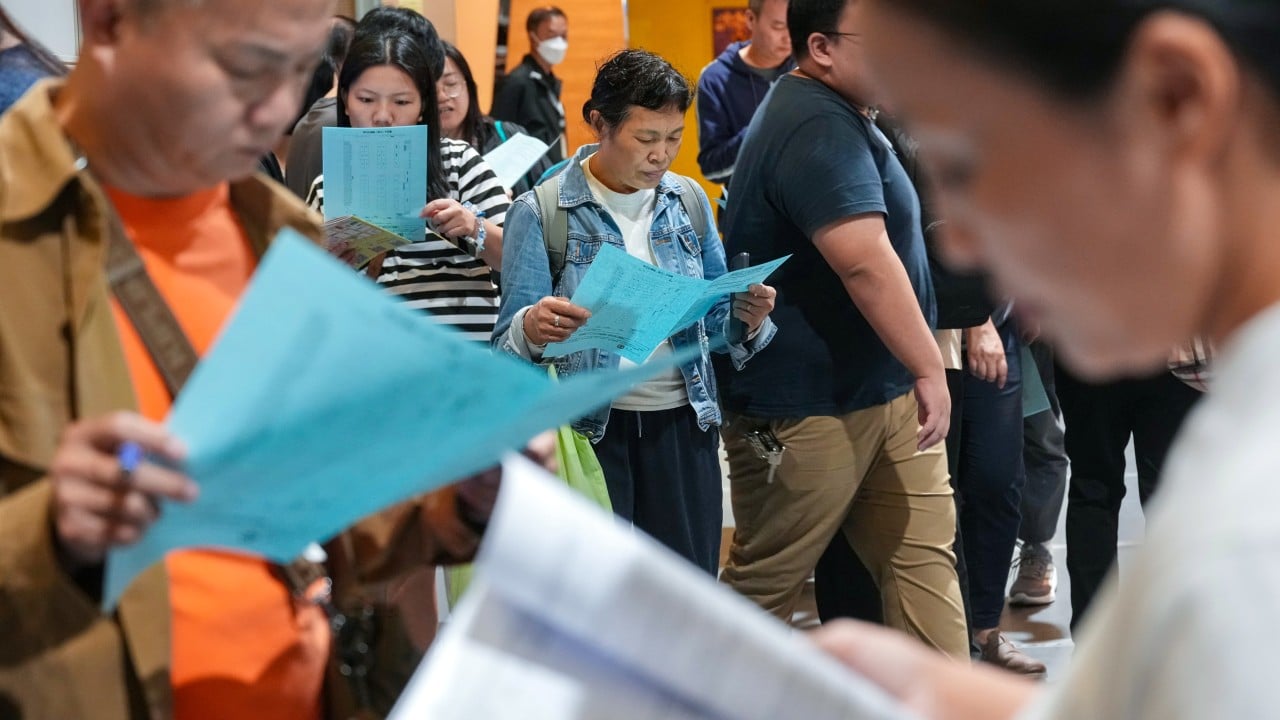
Getting back into the workforce after a long break shouldn't feel like hitting a brick wall. Yet for thousands of middle-aged and older residents in Hong Kong, that's the exact reality they face every single morning.
The city's Re-employment Allowance Pilot Scheme was supposed to fix this. Launched by the Labour Department in July 2024, the three-year program offers cash incentives to people aged 40 and above who haven't held a paid job for at least three consecutive months. It sounded solid on paper. You find a job, stick with it, and collect up to HK$20,000 over a year.
Demand exploded almost immediately. Applications blew past initial government estimates within the first few months, proving just how desperate older workers are for a bridge back into steady employment. Now, Hong Kong lawmakers are pushing the government to widen access to these re-employment allowances before rigid eligibility rules leave huge chunks of the labor force behind.
I've followed Hong Kong's labor policies for years, and this bottleneck wasn't hard to predict. When you design a subsidy around strict bureaucratic boxes, real people fall through the cracks.
How the Re-Employment Allowance Scheme Actually Works
Before we get into why legislators are demanding changes, you need to understand what the current program actually offers. It isn't free money handed out at the door. The Labour Department structured the payouts to reward job retention rather than just getting hired.
Under the existing rules, eligible applicants must be Hong Kong residents aged 40 or older who have been unemployed for three consecutive months or more before starting a new job. Once hired, the payouts come in two stages:
- Working continuously for six months nets a full-time employee HK$10,000 (part-time workers get HK$5,000).
- Staying in that same job for a full 12 months unlocks another HK$10,000 for full-timers, or HK$5,000 for part-timers.
Employers also get a piece of the pie through complementary on-the-job training allowances under the Employment Programme for the Elderly and Middle-aged. The government budgeted for roughly 6,000 participants a year when it rolled out the pilot.
They miscalculated. Badly.
Within months of the July 2024 launch, the Labour Department recorded tens of thousands of applications—far exceeding the original 6,000-person annual target. Retail, catering, property management, and security firms snapped up applicants, while workers jumped at the chance to pad modest entry-level wages with a government bonus.
The Eligibility Traps Lawmakers Want Removed
High application numbers look great in a press release. They look less impressive when you examine who gets rejected at the screening stage.
Members of the Legislative Council (LegCo) have been vocal about the friction points built into the scheme. During panel discussions on manpower and welfare, lawmakers from across the political spectrum pointed out that the current rules penalize the exact behaviors the government claims to encourage.
The Three-Month Unemployment Rule Backfires
Take the mandatory three-month continuous unemployment requirement. On paper, it prevents people from quitting their current jobs just to game the system for a HK$20,000 bonus. That makes sense in theory.
In practice, it punishes hustle.
Suppose a 52-year-old former logistics coordinator gets laid off. To pay rent, he takes a few weeks of temporary gig work or odd shifts while hunting for a permanent role. Under strict continuity rules, that short-term hustle can reset his unemployment clock, disqualifying him from the allowance once he lands a proper full-time contract. Lawmakers argue this rule forces struggling workers to sit completely idle for 90 days just to qualify for support.
Part-Time and Casual Workers Get Shortchanged
Hong Kong's service economy runs on flexible shifts. Many older workers—especially women balancing caregiving duties for aging parents or grandchildren—can't commit to a rigid 44-hour workweek.
Right now, part-time employees receive half the allowance of full-time staff, and strict minimum weekly hour thresholds apply. Legislators have urged the Labour and Welfare Bureau to lower the working-hour requirements and boost payouts for part-time staff. If someone works 20 hours a week consistently for a year, they're still contributing to the economy and easing the city's severe labor crunch. Cutting their incentive in half ignores the reality of how mature workers actually participate in the job market.
The Age 40 Cutoff Misses Younger Long-Term Unemployed
While 40 is the entry point for the pilot scheme, several lawmakers have questioned why long-term unemployed residents in their 30s—especially those displaced by structural shifts in retail, finance, and cross-border trade—are locked out entirely. Economic restructuring doesn't check your ID card before eliminating your department.
Why Hong Kong's Labor Shortage Makes This Urgent
You can't separate the debate over re-employment allowances from Hong Kong's demographic math. The city is aging faster than almost anywhere else in Asia.
According to projections from the Census and Statistics Department, roughly one in three Hong Kong residents will be aged 65 or older by the 2040s. Meanwhile, the local labor force shrank noticeably between 2019 and 2023 due to retirement waves and emigration. Even with aggressive talent import schemes bringing in professionals and sector-specific workers from mainland China and overseas, frontline industries remain chronically understaffed.
Walk through any district in Kowloon or Hong Kong Island during lunch hour. You'll see recruitment posters taped to the windows of cha chaan tengs, supermarkets, and clinics. Restaurants cut operating hours because they can't find dishwashers or floor staff. Property management companies struggle to fill overnight security shifts.
Tapping into the local pool of middle-aged and older residents is the most logical fix available. These workers already live here. They don't need housing visas, they speak Cantonese, and they understand local workplace culture.
Paying HK$20,000 over 12 months to bring an inactive resident back into a tax-paying, self-supporting role is a bargain compared to long-term social welfare dependency through the Comprehensive Social Security Assistance (CSSA) scheme. Lawmakers understand the math, even if treasury officials worry about budget expansion.
What Critics and Economists Are Concerned About
Not everyone thinks throwing more cash at the allowance scheme is a silver bullet. And honestly, the skeptics raise valid points that deserve a fair look.
Wage Suppression Risks
Some labor union representatives warn that generous government wage subsidies can make employers lazy about raising base pay. If a security firm knows a new hire will collect an extra HK$1,666 a month on average from taxpayers, what's the incentive to offer a competitive market salary?
Once the 12-month allowance dries up, the worker is left with a low base wage that hasn't kept pace with Hong Kong's brutal cost of living. That's a recipe for high turnover at month 13.
Job Hopping After the Final Payout
There's also the retention cliff. Because the second and final payout arrives at the 12-month mark, critics worry some workers will treat the one-year anniversary as an exit date, cycling out of jobs once the bonus clears. To prevent revolving-door hiring, some economists suggest tapering the payouts differently or pairing the cash with genuine career progression and skills training.
Administrative Bottlenecks
When applications surged past projections in 2024 and 2025, processing delays became an immediate headache. Widening eligibility without expanding back-office staffing at the Labour Department could bog down verification checks—especially when verifying employment records across multiple part-time employers.
How the Government Has Responded So Far
The Labour and Welfare Bureau hasn't slammed the door on reforms, though officials are moving cautiously. Secretary for Labour and Welfare Chris Sun has acknowledged the overwhelming response to the pilot scheme, noting that the high application volume shows the policy hit a real nerve in the community.
Because the program was explicitly launched as a three-year pilot running through mid-2027, officials have maintained that a comprehensive review is built into the timeline. They want hard data on 12-month retention rates before committing permanent public funds or overhauling the eligibility criteria mid-stream.
That cautious stance makes sense from a fiscal discipline perspective. Hong Kong has posted consecutive budget deficits in recent years, forcing every government bureau to justify new recurring spending. Treasury officials don't like open-ended liabilities.
Still, waiting until 2027 to fix obvious design flaws risks wasting two years of momentum while businesses are begging for staff right now. Lawmakers are pushing for interim adjustments—specifically relaxing the strict continuity rules around temporary work and expanding support for caregivers—rather than waiting for a post-mortem review years down the road.
Practical Steps If You Are Applying or Hiring Under the Scheme
If you're an older job seeker in Hong Kong—or a business owner trying to fill empty shifts—you don't need to wait for LegCo debates to wrap up. You can use the current scheme right now, provided you avoid the common traps that get applications tossed out.
For Job Seekers Aged 40 and Over
- Audit your employment timeline before signing a contract. The Labour Department checks Mandatory Provident Fund (MPF) contribution records and tax filings to verify your three-month unemployment period. If you did a single day of paid freelance or casual work with MPF deductions during those 90 days, confirm with a Labour Department employment center whether it resets your eligibility clock before you assume you qualify.
- Register with the Labour Department first. Don't wait until your sixth month on the job to figure out the paperwork. Enroll in the scheme through the Interactive Employment Service or an employment center as soon as you begin your job search or accept an offer.
- Keep every single pay slip and employment contract. Payouts at the six-month and 12-month marks require proof of continuous employment and working hours. Missing bank transfer records or informal cash-in-hand arrangements will stall your claim.
- Watch your weekly hours closely. If you take a part-time role, confirm your contract clearly states your minimum weekly hours so you don't accidentally dip below the threshold during a slow month and forfeit the part-time payout tier.
For Employers Hiring Mature Workers
- Pair the allowance with the Employment Programme for the Elderly and Middle-aged. While the worker gets the re-employment allowance, your company can separately apply for on-the-job training subsidies—up to HK$5,000 per month for hiring workers aged 60 or above, and up to HK$4,000 per month for those aged 40 to 59.
- Structure clear employment contracts. Ambiguous shift schedules create headaches during Labour Department audits. Spell out whether a role is full-time or part-time, set clear weekly hour expectations, and ensure MPF contributions are filed on time every month.
- Plan for month 13 now. Don't rely on the government's HK$20,000 bonus to keep your staff forever. Build a small internal pay bump or performance bonus at the one-year mark so your best hires stay after their government allowance ends.
Lawmakers will keep pressing the Labour and Welfare Bureau to loosen the purse strings and widen the net as applications continue to climb. Until those changes pass, knowing the exact rules—and documenting every hour worked—is the only way to guarantee the money actually lands in your bank account.