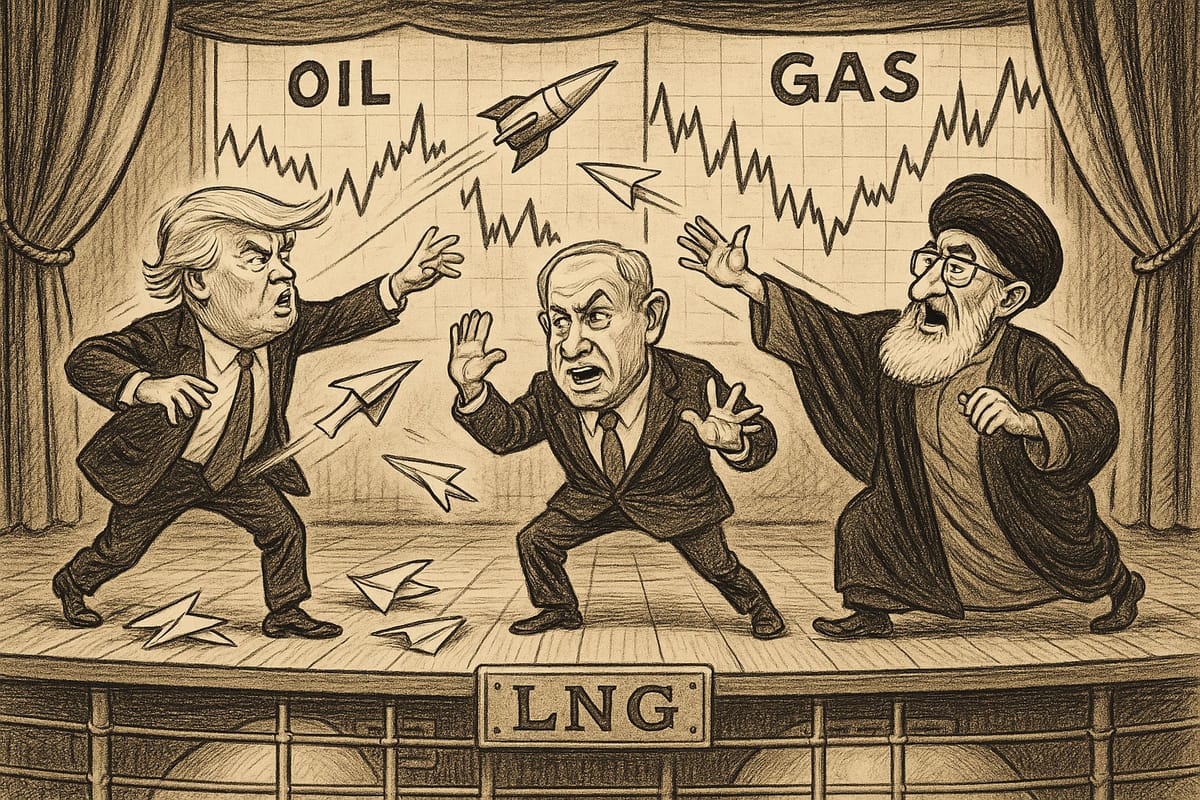
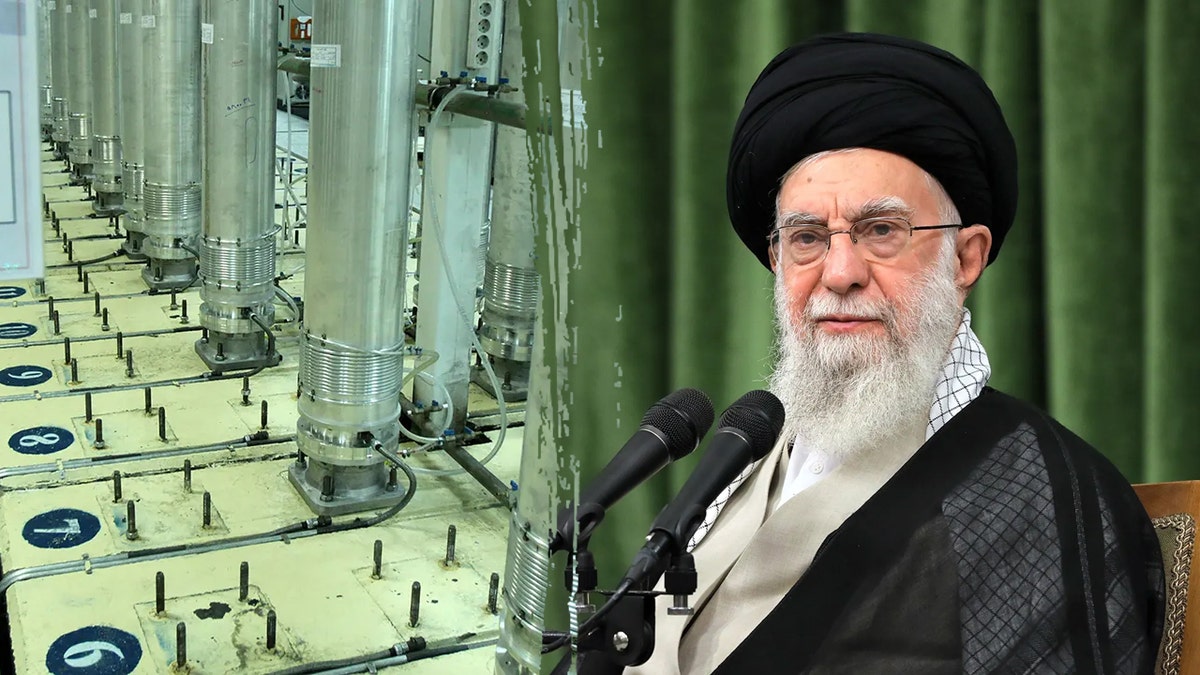
The radar screens in the Persian Gulf don’t care about rhetoric. They blink with the cold, rhythmic pulse of reality. On a humid Tuesday, as the salt air clung to the hulls of destroyers, a new narrative began to circulate from the highest levels of American power—a claim that a war had been won before the first major salvo was even fired.
Donald Trump stood before the microphones and laid out a vision of a neutered adversary. He spoke of an Iranian navy in ruins and a missile capability that had withered to a mere 9% of its former strength. To hear him tell it, the dragon had been declawed. The threat that had loomed over the Strait of Hormuz for decades was suddenly portrayed as a paper tiger, shredded by the sheer pressure of American presence and economic strangulation.
But victories in the modern age are rarely as clean as a scoreboard at a stadium.
The Ghost Fleets of the Strait
Consider a young sailor on an Iranian fast-attack craft. In the official briefing, he doesn't exist. He is a data point. A fraction of a percentage. In the hypothetical scenario where he receives orders to harass a tanker, he isn't looking at a spreadsheet of degraded capabilities. He is looking at a coastline he knows by heart and a swarm of "mosquito" boats that cost less than the paint on a U.S. carrier.
When we talk about "winning" a war with Iran, we are often talking about two different definitions of reality. To the administration, the math is simple. If you take out the big ships and the long-range silos, the math says you win. 9% is a staggering number. It suggests a total collapse of infrastructure. It implies that the gears of the Iranian war machine are grinding against rusted metal.
Numbers, however, can be a form of blindness.
The Iranian strategy has never been about matching the United States hull-for-hull or wing-for-wing. It is a philosophy of asymmetrical irritation. It is the art of being just dangerous enough to make the cost of engagement unbearable. If their missile capability is truly at 9%, does that 9% represent the old, clunky Scuds, or does it represent the precision-guided drones that can bypass multi-billion dollar defense systems?
The shift in the Persian Gulf isn't just about hardware. It's about the psychological weight of the water. When a leader declares a war "already won," he is making a bet. He is betting that the adversary accepts the same math he does. He is betting that the loss of material translates to a loss of will.
The Architecture of a Claim
To understand how we arrived at the 9% figure, one has to look at the invisible war of attrition. Sanctions aren't just lines on a legal document; they are the slow starvation of a supply chain. Every time a microchip is diverted or a shipment of high-grade steel is intercepted, the potential of a missile launch is slightly diminished.
The administration’s claim of an "already won" war is a masterclass in the theater of dominance. It is built on a specific architecture. First, there is the visible destruction of assets. Second, there is the internal rot within the Iranian command structure as its funding pools dry up. Third, there is the public proclamation of victory, which serves to demoralize the opponent and reassure the ally.
Wait.
There is a fourth pillar, one that is often left out of the official press briefings. It is the reality that a "won" war in the Gulf is a war that never actually starts. This is the paradox of the current moment. By claiming victory, the United States is essentially daring Iran to prove otherwise. It is a strategic taunt disguised as a report card.
The Invisible Stakes at Sea
Imagine the bridge of a massive oil tanker—a vessel the size of a skyscraper laid on its side—drifting through the narrowest part of the Strait of Hormuz. The captain isn't concerned with the 9% or the 91% that is gone. He is concerned with the 1% that is left.
The stakes are invisible until they aren't. They are hidden in the wake of every ship and the shadow of every drone.
When the news cycle moves on, the sailors remain. They are the ones who have to live in the gap between the rhetoric of a won war and the reality of a persistent, if diminished, threat. To them, the "victory" feels more like a stalemate, a tense silence that can be broken by a single rogue commander or a miscalculated maneuver.
The story of the Iranian navy is the story of a fleet that has learned to live under the radar. They have traded their large, lumbering frigates for swarms of fast, agile boats that can disappear among the waves. These aren't just vessels; they are instruments of a different kind of war. A war that doesn't rely on the strength of a missile’s payload but on the unpredictability of its launch.
The Cost of Certainty
When we lean into the idea that a conflict is over, we stop looking for the signs that it is merely evolving. This is the hidden cost of the 9% statistic. It creates a false sense of finality. It suggests that the problem has been solved, when in fact, the problem has only been condensed.
The Iranian missile capability might be at 9%, but if that 9% is concentrated in high-precision, low-cost technology, it becomes more dangerous than the 100% of the previous decade.
We are living in an era where the definition of power is being rewritten by the very actors we claim to have defeated. A war is only "already won" if the other side agrees to stop fighting. In the shadow-filled alleys of the Gulf, the fight hasn't stopped; it has simply changed its shape.
The water in the Strait of Hormuz is deep, dark, and indifferent to the claims of men on either side of the ocean. It keeps its secrets until the moment of impact.
The victory we are being told about is a victory of numbers, but the war we are living in is a war of shadows.
As the sun sets over the Gulf, the radar screens continue their silent, rhythmic sweep. Each blink is a reminder that the 9% is still there, waiting in the darkness for a reason to move.
Would you like me to analyze the specific types of "asymmetrical" weapons that typically make up that 9% of Iranian capability?