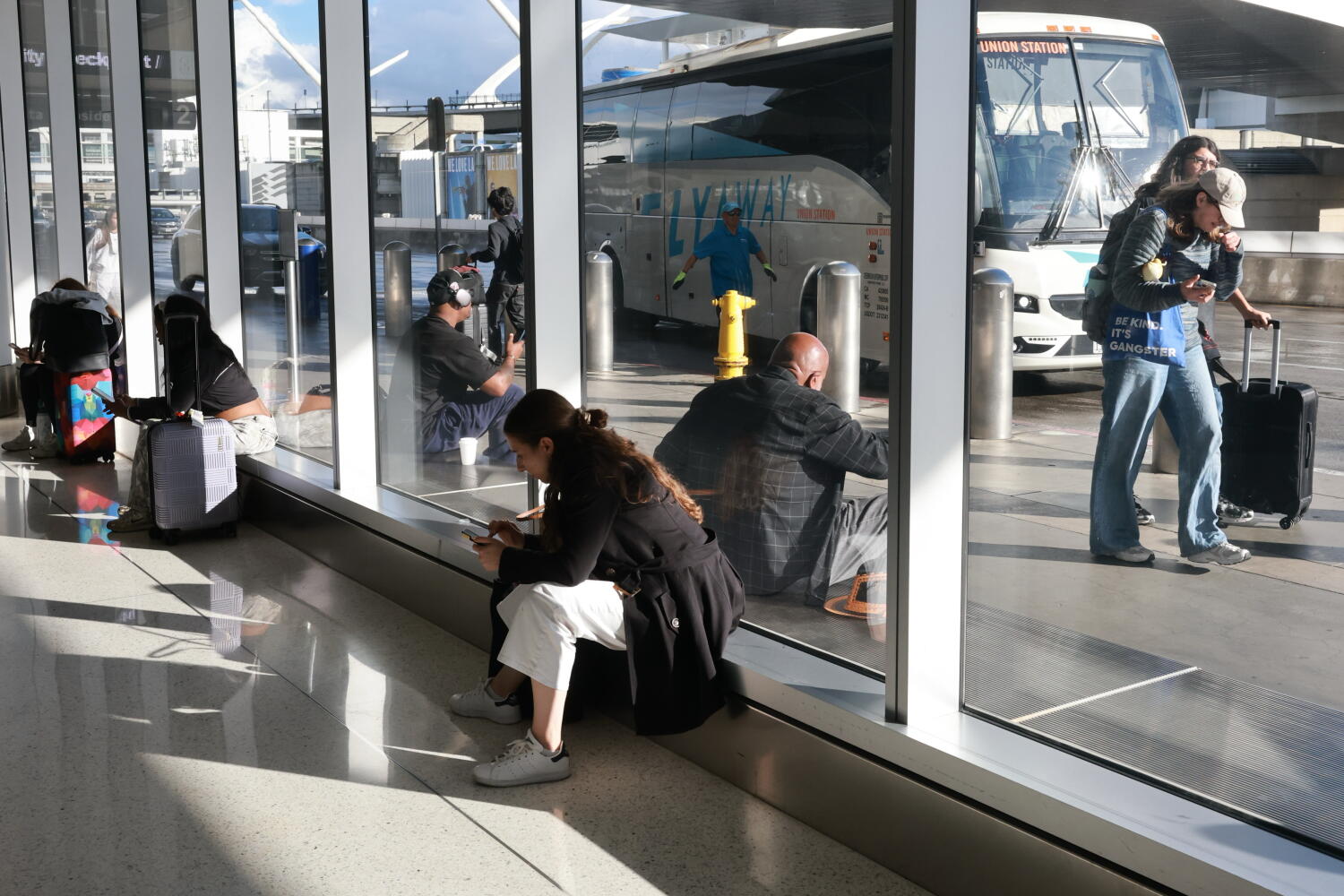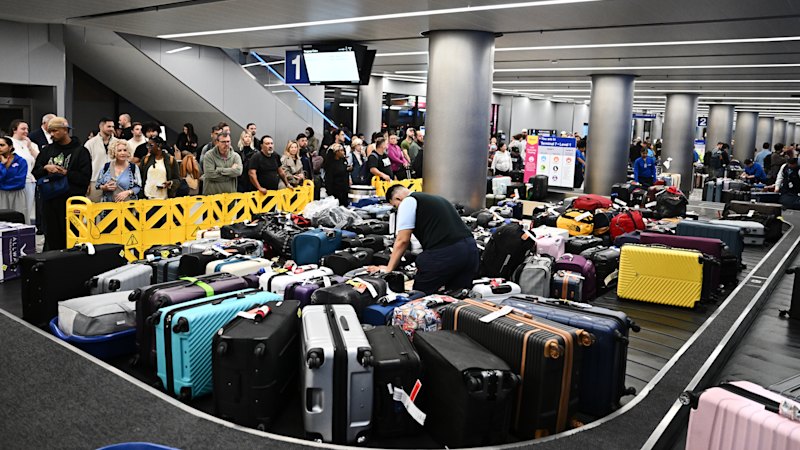
The terminal floor at Heathrow is cold. You know this because you have spent the last six hours staring at a departure board that refuses to change from "Delayed" to anything resembling a gate number. Across the concourse, a dozen different news crews are filming the exact same segment. They pan across a sea of exhausted faces, zoom in on a crying toddler, and drop a punchy, cynical headline about how "Love Actually" lied to us. Love is not in the air. Only misery, overpriced airport sandwiches, and stranded passengers.
It is the easiest piece of journalism in the world to write. Blame the greedy airlines. Mock the romanticized idea of holiday reunions. Paint the modern aviation sector as a broken, predatory machine designed solely to ruin your December.
That narrative is lazy, emotionally manipulative, and completely backwards.
If you look past the immediate, visceral frustration of sleeping on a luggage carousel, the chaotic reality of holiday travel disruptions reveals a truth nobody wants to admit while standing in a customer service queue. Those massive, systemic delays are the direct result of democratized, hyper-affordable global transit operating at the absolute razor's edge of physical capacity—and the alternative to this chaos is a world where you could never afford the ticket in the first place.
The Myth of the Golden Age of Aviation
Whenever a winter storm or an air traffic control strike grounds a thousand flights, commentators immediately start romanticizing the 1960s and 1970s. They talk about legroom, complimentary hot meals on ceramic plates, and stress-free terminals where people dressed in suits just to board a regional hopper.
They conveniently leave out the price tag.
In 1978, before the Airline Deregulation Act reshaped global aviation, a round-trip economy ticket from New York to London cost roughly $550. Adjusted for inflation, that is well over $2,600 today. Flying was not a mass-market utility; it was an exclusive luxury product subsidized by strict government route monopolies and artificially inflated fare floors. Terminals were quiet because the vast majority of the working and middle class were priced out of the sky entirely. You did not see thousands of stranded passengers during the holidays because those thousands of people were stuck in cars on icy interstate highways or riding Greyhound buses for thirty-six hours.
I have spent fifteen years analyzing airline yield management and network operations, and I have watched legacy carriers burn hundreds of millions of dollars trying to chase the illusion of "buffer capacity." Every time an airline builds slack into its schedule—leaving spare aircraft sitting idle on the tarmac just in case a snowstorm hits Chicago or fog rolls into London—it has to pass that deadweight capital cost directly onto the passenger.
A grounded wide-body jet costs tens of thousands of dollars per day just to exist on a balance sheet, factoring in lease payments, depreciation, insurance, and crew standby retainers. When you buy a $49 budget fare across Europe or a $250 transcontinental ticket during peak holiday season, you are buying a seat inside a system with zero fat on its bones. The plane lands, the passengers deplane in twenty minutes, the cleaners run through in ten, and the aircraft is back in the air before the brakes have cooled.
That relentless, high-utilization efficiency is the only reason you are standing in that terminal instead of watching your family celebrate over a grainy video call. You cannot demand rock-bottom, hyper-accessible airfares and simultaneously expect the operational cushion of a private charter fleet.
Why Airlines Physically Cannot "Just Fix" Holiday Meltdowns
The loudest critics of holiday travel chaos usually propose solutions that violate basic mathematics and federal safety regulations. When weather or technical failures cascade across a network, angry passengers and pundits alike demand to know why the airline cannot simply "bring in another crew" or "put on an extra flight."
They fundamentally misunderstand the mechanics of hub-and-spoke network topology and crew legality limits.
Modern airlines do not operate point-to-point shuttles in isolation; they run tightly synchronized waves. An aircraft flying from Madrid to London is carrying passengers who are connecting to flights bound for New York, Tokyo, and Johannesburg. If a forty-minute crosswind delay hits Madrid, the airline faces a brutal mathematical triage. Hold the New York flight for forty minutes, and you save thirty connections, but you push the New York aircraft out of its transatlantic slot, causing its crew to time out before they can return, which cancels three flights the next morning.
Let us run a quick thought experiment to see how fast this unravels. Imagine a scenario where a major carrier decides to eliminate holiday delays by maintaining a 15 percent reserve fleet and a 20 percent reserve pilot pool exclusively for the two weeks surrounding Christmas and New Year's.
- Pilot Certification Bottlenecks: You cannot put a Boeing 737 captain into the cockpit of an Airbus A321. Pilots are strictly type-rated for specific aircraft families. Maintaining a 20 percent reserve means paying hundreds of specialized captains full-time, six-figure salaries year-round just to sit in hotel rooms during the last week of December.
- Slot Scarcity: Major international hubs like Heathrow, JFK, and Frankfurt are slot-constrained. Even if an airline has a spare plane and a fresh crew ready to go at 4:00 PM, air traffic control cannot physically squeeze an extra takeoff between planes landing every ninety seconds.
- The Fare Shock: To recoup the hundreds of millions of dollars spent keeping idle iron and reserve crews on standby for fifty weeks of the year, base ticket prices across the entire calendar would have to jump by 25 to 35 percent.
The moment airlines actually implement the fixes demanded by viral social media posts, the same travelers cheering for passenger rights immediately abandon the carrier for whichever ultra-low-cost rival undercut them by forty dollars. Consumers vote with their credit cards every single day of the year, and their vote is overwhelmingly for cheap seats over operational resilience.
The Dirty Secret of Airport Disruption Economics
Here is what the news cameras never show you when they film those miserable terminal crowds: airport retail and legacy carriers actually operate inside an incentive structure that tolerates friction far better than you think.
When thousands of passengers are trapped airside for six hours, spending spikes. Duty-free shops, airport bars, and grab-and-go food vendors see massive surges in captive-audience revenue. More importantly, look at the load factor—the percentage of available seats filled with paying passengers. During peak holiday weeks, global airline load factors routinely push past 90 to 95 percent.
When a flight cancels under normal circumstances, the airline simply moves you to the next flight three hours later, which happens to be 70 percent full. When a flight cancels on December 23rd, there are no empty seats left in the entire national airspace system until December 27th. The airline is not refusing to rebook you out of malice; they are physically out of aluminum tubes moving through the sky.
Furthermore, aggressive passenger compensation laws—like EU261 in Europe—have inadvertently created a perverse financial calculation for carriers. Under EU261, airlines must pay up to €600 per passenger for delays exceeding three hours, unless the delay is caused by "extraordinary circumstances" such as severe weather, air traffic control restrictions, or security risks.
Because a single wide-body cancellation can trigger €200,000 in statutory cash payouts on top of hotel vouchers, airlines have become hyper-conservative. If a storm is forecast to hit a hub, carriers will preemptively cancel hundreds of flights twenty-four hours in advance. It looks terrible on the evening news, and it leaves thousands of people stranded in terminals, but from a balance-sheet perspective, triggering an early weather cancellation protects the fleet from getting trapped out of position and shields the airline from catastrophic statutory liability.
You are not looking at incompetence when you see a board full of red cancellations. You are looking at an algorithm executing a cold, precise risk-management strategy to keep the company solvent.
Answering the Questions Travelers Actually Ask
If you search online while sitting on that cold terminal floor, you will run into the same recycled travel-blog advice. Most of it is useless during a genuine systemic meltdown. Let us strip away the fluff and deal with the reality of what actually happens when the system breaks.
Why don't airlines just refund everyone automatically and put them on competitors?
They do have interline agreements—contracts that allow Airline A to endorse your ticket over to Airline B during a disruption. However, those agreements are negotiated at wholesale rates that heavily penalize the airline issuing the rebooking. If you bought a basic economy ticket for $120, and the only open seat left in the city is a full-fare economy seat on a rival carrier priced at $1,100, the airline will fight tooth and nail to keep you on their own metal, even if it means making you wait forty-eight hours. On a basic economy fare, you have zero margin for the carrier to absorb a $980 loss on your behalf.
Is travel insurance actually worth buying for holiday flights?
Standard trip cancellation policies sold at checkout are largely a waste of money because their payout triggers are narrow, their deductibles are high, and they force you to front the cash and fight a claims adjuster for three months. The only protection that genuinely works during a terminal meltdown is a high-tier travel credit card with built-in trip delay reimbursement—specifically cards that trigger after a six-hour delay rather than twelve, and cover "reasonable expenses" like hotels and meals without requiring you to prove the airline was at fault.
What is the single biggest mistake stranded passengers make?
Standing in the physical customer service line at the gate. By the time a flight is officially canceled, two hundred people are sprinting toward two exhausted gate agents working on green-screen terminal software from the 1980s. Those agents have the exact same seat inventory access as the airline's mobile app and phone reservations desk—often less, because they are restricted by local airport supervisor overrides. If you stand in that physical line, you are guaranteed to get the worst leftover seats.
How to Weaponize the Chaos in Your Favor
I am not defending the misery of sleeping next to a charging station at Heathrow or O'Hare. Nobody enjoys watching their holiday plans evaporate while a gate agent reads a scripted apology over a crackling intercom. The flaw in my own argument is obvious: efficiency means nothing if the product fails to deliver you to your destination when it actually matters. A cheap ticket to a family wedding you missed is still a worthless piece of digital paper.
Because the aviation industry will never sacrifice its low-cost, high-utilization model to save you from winter weather, you have to stop treating air travel like a guaranteed schedule and start treating it like a probabilistic logistics game.
- Book the First Flight Out, Always: Delays are cumulative. An aircraft scheduled for 6:30 AM has been sitting at the gate overnight. It is not waiting on an inbound flight from a snowed-in hub. Data from the Bureau of Transportation Statistics consistently shows that early morning departures suffer a fraction of the cancellation and delay rates of afternoon flights. If you book a 6:00 PM flight during Christmas week, you are volunteering to be the domino that falls.
- Execute the Triple-Channel Pivot: The second your flight shows a delay that threatens your connection, do not wait for the official cancellation. Open the airline app to look for self-service rebooking options, dial the airline's international support line (such as their UK, Canadian, or Australian call centers, which often have zero hold times when US lines are jammed), and walk toward an airport lounge if you have day-pass access. Lounge agents have higher-tier system permissions and ten people in line instead of two hundred.
- Buy One-Way Tickets on Separate Carriers: Round-trip loyalty is a trap during peak disruption periods. If your outbound flight on Carrier A gets canceled, they will automatically cancel your return leg if you skip it and buy a last-minute ticket on Carrier B. Booking two separate one-way tickets—even across competing airlines—protects your return journey and gives you total tactical freedom to jump ship when one network collapses.
- Target Secondary Airports: Major hubs are single points of failure. Flying into Burbank instead of LAX, Midway instead of O'Hare, or Gatwick and Stansted instead of Heathrow reduces your exposure to air traffic control ground stops and gives you faster ground transit out of the terminal when things go sideways.
The Uncomfortable Truth About That Crowded Terminal
Look back at that iconic opening scene of Love Actually—the one the cynics love to mock every December. The whole point of that monologue was never that airports are pristine, frictionless temples of luxury. It was that despite the stress, the delays, the lost luggage, and the sheer logistical madness of moving millions of human beings across oceans in metal tubes during the worst weather of the year, people still show up.
Those thousands of dispirited passengers sitting on the floor at Heathrow are not victims of a failed industry. They are proof of an unprecedented triumph of modern engineering and economics. For the first time in human history, ordinary people—students, grandparents, line cooks, teachers—can cross continents for the price of a nice dinner to hug the people they love.
Next time your holiday flight flashes red on the departure board, spare yourself the self-pity and skip the outrage articles. Open your phone, grab the last seat on the 6:00 AM regional hop before the crowd around you even realizes the flight is dead, and be grateful you live in an era where you could afford to be stranded in London in the first place.