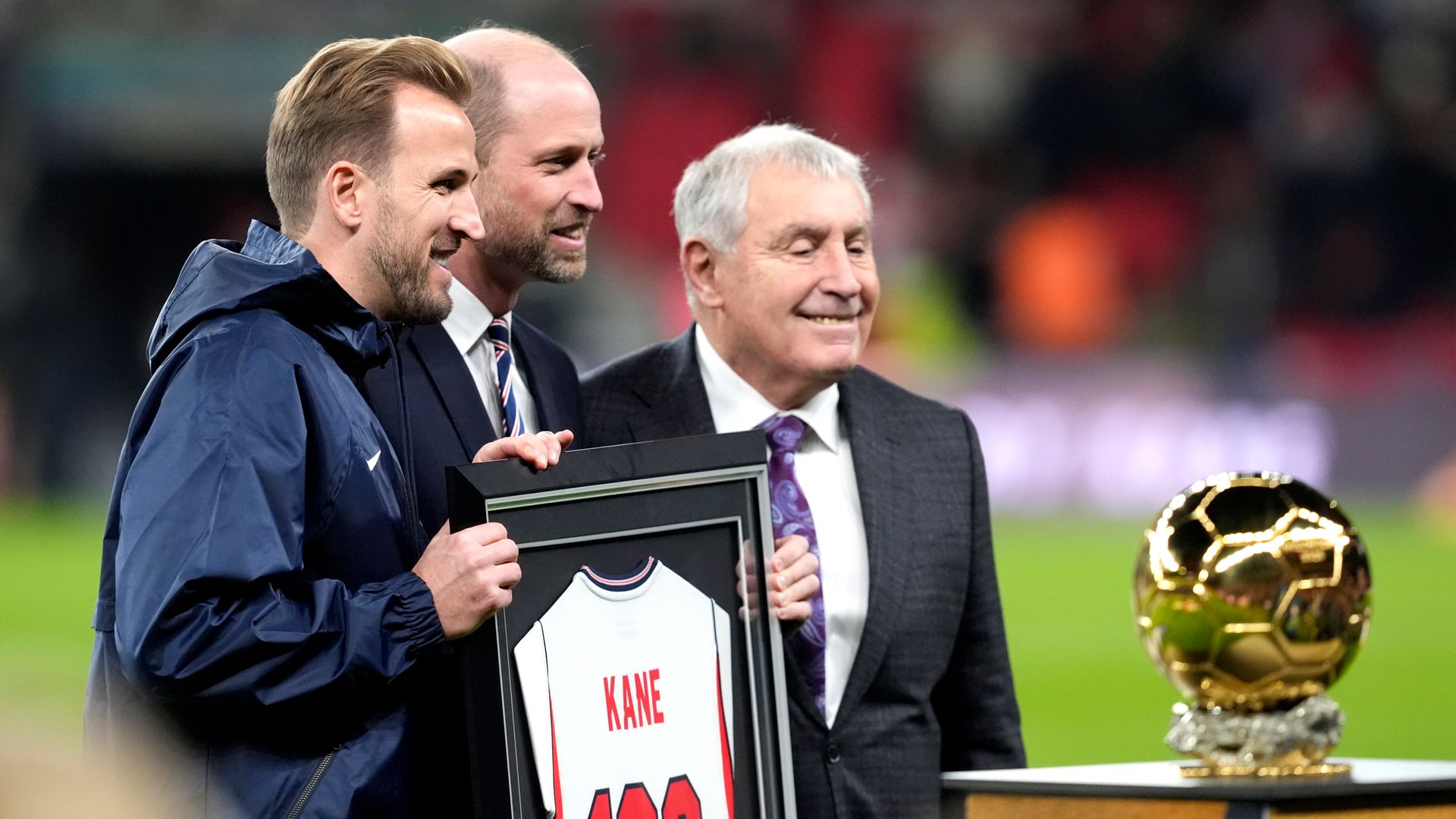
Harry Kane marked his record-breaking England cap with a goal at Wembley, cementing his place as the most prolific and durable striker the national team has ever produced. While the stadium erupted in celebration of a historic milestone that surpassed Peter Shilton's long-standing appearance record, the performance itself exposed a familiar, unresolved tension at the heart of English football. Even on a night built entirely around legacy and individual permanence, England's reliance on its aging captain raised uncomfortable questions about tactical evolution, squad succession, and whether a team built around a single irreplaceable figure can actually clear the final hurdle at a major tournament.
Numbers rarely tell the whole story in international football. Yet with Kane, the numbers have become impossible to ignore. Don't miss our previous article on this related article.
Over more than a decade in an England shirt, the Bayern Munich forward has systematically dismantled every scoring benchmark placed in front of him, outpacing Wayne Rooney, Bobby Charlton, and Jimmy Greaves long before he ever closed in on the all-time appearance mark. Scoring on the exact night he claimed the cap record was classic Kane—clinical, unsentimental, and timed for maximum theatrical effect. He took his chance with the same low-backlift efficiency that has defined his career since his breakout months at Tottenham Hotspur.
The Anatomy of an Unlikely Endurance Record
To understand how Kane reached this summit, you have to look past the highlight reels and examine the brutal physical economics of modern elite football. Outfield players are not supposed to break appearance records held by goalkeepers. Peter Shilton played until he was forty, benefiting from a position that spared him the high-speed sprints, violent aerial collisions, and relentless hamstring strain that prematurely end the careers of center-forwards. To read more about the context of this, The Athletic offers an informative summary.
Kane entered his thirties carrying a medical file that once looked like a warning sign. Between 2016 and 2020, recurring ankle ligament injuries threatened to turn him into a cautionary tale of overwork. Critics routinely questioned whether his body would hold up past twenty-eight, let alone carry him deep into his thirties as an international starter.
Instead, Kane radically overhauled his physical maintenance and his movement profile. He stopped chasing lost causes into the corner flags. He began conserving explosive bursts for the final twenty yards of the pitch, operating with the spatial economy of a veteran quarterback rather than a frantic pressing forward. By shedding wasted motion, he turned himself into a ninety-minute fixture who rarely misses a camp, rarely takes a friendly off, and almost never yields his starting spot when healthy.
That availability is his true superpower. Talent gets you into the England squad; durability keeps you there across four different tournament cycles and multiple managerial regimes.
What the Wembley Milestone Actually Masks
The pageantry at Wembley was well-earned, complete with golden commemorative presentations and standing ovations. Still, stripped of sentimentality, the match followed a script that has worried tactical analysts for years. England looked sharpest when the tempo dropped and the ball moved through Kane's feet in the pockets between midfield and defense, yet visibly struggled whenever opponents compressed the central lanes and forced the team to stretch the play vertically.
This is the Kane Paradox that England has never fully resolved.
When your best finisher is also your best passer, the gravitational pull toward the center of the pitch becomes overwhelming. Kane naturally drops deep to collect possession, spraying thirty-yard diagonal passes to wide runners. It is aesthetically dazzling and statistically productive against mid-tier international opposition. Against elite tournament defenses, however, that tendency vacates the penalty box at the exact moment England needs a focal point pinning center-backs backward.
Wembley saw flashes of both sides of that coin. His goal came from disciplined penalty-box occupation—holding his line, reading the cutback early, and finishing through traffic before the goalkeeper could set his feet. For long stretches before and after that strike, though, he was operating forty yards from goal, effectively acting as a supplementary midfielder while younger, faster teammates hesitated to run beyond him.
The Structural Failure of Succession Planning
A record-breaking night for a veteran captain usually triggers a comfortable conversation about passing the torch. In England's case, there is no obvious hand reaching out to grab it.
For nearly ten years, the Football Association's development pipeline at St. George's Park has produced an assembly line of elite attacking midfielders, inverted wingers, and ball-playing full-backs. What it has failed to produce is a true, ready-made successor at number nine. Every alternative auditioned behind Kane has come with a glaring caveat:
- The pure runners offer vertical pace in behind, stretching backlines in transition, but lack the technical security to link play when England dominates seventy percent of the ball against low blocks.
- The penalty-box poachers thrive on high-volume cross delivery in club systems, yet look isolated and peripheral in an international setup built around patient circulation.
- The false-nine hybrids replicate Kane's dropping movements without possessing his devastating ball-striking range or aerial presence on set pieces.
Because no understudy has forced the issue, successive England managers have defaulted to the safest decision on the team sheet. You do not bench a captain who guarantees a goal every other game, especially when dropping him invites immediate media scrutiny if the experiment falters.
The consequence is a subtle organizational dependency. Younger attackers arrive at international camps knowing they are competing for spots around Kane, never for Kane's spot. Over time, that dynamic stifles tactical experimentation. Instead of building a flexible attacking structure that can function with different striker profiles, England has spent a decade tailoring its geometry to fit one man's exact dimensions.
The Bayern Munich Factor and Late-Career Evolution
Leaving the Premier League for Germany could have softened Kane's international standing. Historically, English players who moved abroad drifted out of sight and out of mind, losing the weekly visibility that kept them entrenched in the national consciousness.
Kane flipped that precedent on its head. Moving to Bayern Munich sharpened his ruthless edge in front of goal while insulating him from the relentless fixture congestion of English domestic cup competitions and winter schedules. Playing in a dominant Bundesliga side allowed him to refine his one-touch finishing and penalty-area positioning, arriving at international breaks fresher than he often looked during his final seasons in North London.
At Wembley, that sharpness showed in the economy of his touches. He did not need six shots to find the corner of the net. He needed one clean half-yard of separation and a crisp strike that beat the keeper on pure placement rather than raw power.
Yet club dominance cuts both ways. Dominating domestic league matches in Munich creates habits suited to teams that camp permanently outside the opponent's eighteen-yard box. International knockout football is far more chaotic, transitional, and unforgiving. The physical demands of tournament football—seven high-stakes matches compressed into roughly thirty days—test recovery rates in ways a weekly club rhythm never does.
Why International Records Mean Less Than Silverware
English football culture has a complicated relationship with individual statistical milestones. For decades, records like Shilton's cap total or Rooney's goal tally served as emotional consolation prizes for a nation starved of international trophies since 1966. Celebrations at Wembley often carried a bittersweet undertone: we may not have won the tournament, the unspoken logic went, but at least we watched greatness up close.
That mindset no longer flies.
The current generation of England players does not measure success in commemorative caps or golden boots. They have reached major finals, suffered agonizing near-misses, and raised expectations to a level where individual records feel incomplete without a trophy to validate them. Kane knows this better than anyone in the dressing room. Throughout his career, every personal accolade has been shadowed by the same question regarding collective silverware.
Breaking the appearance record while scoring at Wembley puts him in rarefied air, alongside figures like Cristiano Ronaldo, Lionel Messi, and Luka Modric—players who became synonymous with their national teams across multiple eras. Still, history judges captains differently than it judges accumulators. Shilton's record stood for decades, yet his international legacy remains inextricably bound to specific tournament moments in 1986 and 1990 rather than a routine qualifier in November.
The Coaching Dilemma Ahead of the Next Cycle
Whoever occupies the technical area at Wembley faces an immediate strategic choice now that the ceremonial milestone is in the books. Sentimental loyalty is fatal in international tournament preparation.
Managing Kane's minutes intelligently over the next eighteen months will require genuine courage from both the coaching staff and the player himself. Treating a veteran striker as an automatic ninety-minute starter in every group-stage match and friendlies against lower-ranked opposition is a recipe for diminishing returns by the quarter-final stage.
Look at how successful tournament winners have handled aging icons in recent memory. Spain phased out veteran forwards selectively during their dominant run, prioritizing fresh legs in the pressing unit. Argentina built a relentless, mobile midfield engine around Lionel Messi so their captain only needed to expend energy in decisive attacking zones. France integrated Olivier Giroud as a tactical battering ram while allowing younger, faster attackers to carry the transitional burden.
England has rarely shown that kind of structural discipline. Too often, when an England match grows tight in the final twenty minutes, the instinct is to keep Kane on the pitch hoping for a moment of individual rescue—a late penalty, a deflected free kick, a header from a deep cross—rather than injecting speed to turn a tired defense around.
Wembley applauded a monument on the night Kane took the record, and the applause was deserved. Monuments, however, do not sprint behind high defensive lines in the eighty-fifth minute of a knockout match in July, and until England builds an attack capable of thriving without its greatest ever striker on the pitch, every celebration at home will carry the quiet anxiety of what happens when the clock finally runs out.