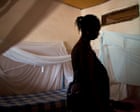
Fluorescent tubes hummed low over a crowded waiting bench where the air smelled of lemon disinfectant, roasted groundnuts, and damp cotton. A newborn—barely forty-eight hours old, wrapped tightly against the morning chill—let out a thin, reed-like cry that faded almost before it began. Across the aisle sat a clipboard bearing rows of checkmarks, consent initials, and an American grant header.
Halted.
Three letters on a regulatory notice can freeze years of planning, freeze cold-chain freezers across an ocean, and leave parents standing in a doorway wondering whether the needle meant for their child was a shield or a gamble.
I have spent years sitting inside public health briefings and clinic corridors watching global trials unfold from the outside looking in, and I will admit something candidly: even for people who read ethics protocols for breakfast, newborn research in low-resource settings is terrifyingly easy to misunderstand. One side sees urgency measured in infant mortality curves; the other sees power asymmetries that have scarred global medicine for generations. When a US-backed vaccine trial in African newborns stops mid-stream, nobody walks away feeling clean. Everyone feels the weight of what might go wrong either way.
A Hypothetical Morning At The Clinic
To see why a trial pause hits with such force, consider a hypothetical composite family modeled on real clinic dynamics in sub-Saharan Africa—let us call the mother Amina and her son Tariq. (Amina and Tariq are hypothetical characters created to illustrate how policy decisions land in a real room.)
Tariq weighed less than a bag of flour. In the ward next door, a nurse moved with brisk, practiced economy between bassinets while a ceiling fan stirred warm air without cooling it. Amina had walked three kilometers before dawn because a community health worker she trusted had spoken well of the clinic's neonatal team. Still, when the research coordinator slid a laminated flip-chart across the table and explained a study testing an early-life vaccine supported by US funding, Amina's thumb lingered on the edge of the paper.
She wanted Tariq safe. Every mother in that room wanted the same thing. Yet safety in a newborn is a delicate arithmetic. An infant's immune system is still learning its own language—immature, finely tuned, sensitive to signals that an adult body shrugs off. Giving an experimental immunization at birth can either prime defenses before dangerous pathogens strike or trigger questions about how maternal antibodies, timing, and dosing interact.
Think of a newborn's immune system like a newly wired house during a monsoon. Flipping the main breaker too early, or sending a sudden surge down thin copper lines, can trip the circuit before the lights even settle. Researchers run early-stage trials precisely because theory on a whiteboard cannot guarantee how tiny bodies respond in real life.
Then word arrives that enrollment is paused or halted.
For Amina, sitting beside her sleeping son, a halt does not read like a neutral scientific checkpoint. It sounds like an alarm bell echoing backward over the syringe she nearly accepted. Doubt creeps in—not necessarily hatred toward doctors, and not blind obedience either, just a sharp, quiet ache: If it is safe, why did they stop? If it is risky, why was it offered here first?
Why Newborn Trials Trigger Deep Fault Lines
When a US-backed neonatal study stalls or is shut down, the debate rarely stays inside immunology journals. It widens into a collision of history, geography, and trust.
Historically, global health has carried heavy baggage. Decades ago, clinical research across borders sometimes fell short of modern ethical standards—failing to secure clear informed consent, offering scant post-trial access, or testing interventions in communities that lacked basic care while wealthier nations reaped the rewards. Even when modern oversight boards, local ethics committees, and international guidelines are strictly enforced, memory has a long half-life. A single headline about a halted American-funded trial in African babies can ignite old fears that foreign laboratories treat distant communities as proving grounds.
At the same time, look at the opposite danger, which is just as real and far quieter.
Roughly half of all under-five child deaths globally occur in the newborn period, with sub-Saharan Africa bearing a disproportionate share of preventable infections and birth complications. When researchers delay studying vaccines or preventive tools in the populations most burdened by a disease, life-saving protection can arrive years late—or fail to account for local strains, coinfections, and maternal health realities. Avoiding hard questions does not make babies safer; sometimes it leaves them exposed to threats we already know how to fight.
That is the trap at the heart of so many stalled trials. You can be criticized for moving too fast in vulnerable populations, and you can be criticized for leaving vulnerable populations behind.
What A Halt Actually Means Beneath The Headlines
Outside observers often treat a paused or halted clinical trial as a verdict of failure, scandal, or bad faith. In reality, stopping a study can mean very different things depending on what triggered the decision.
A Data and Safety Monitoring Board—an independent group of clinicians, statisticians, and ethicists—may hit pause because an unexpected adverse event occurred, or because early data looks ambiguous and demands closer review before another infant is enrolled. Sometimes funding shifts, regulatory questions arise over protocol design or community engagement, or recruitment slows to a crawl after rumors outpace facts.
Consider what happens next when communication lags behind a pause.
Rumors travel faster than press releases. In tight-knit neighborhoods, if a clinic suddenly stops offering a study vaccine without clear, visible explanations from respected local leaders, speculation fills the silence. Parents who already weighed household chores, transport costs, and family opinions before showing up may conclude the whole enterprise was reckless. Rebuilding that trust takes years; losing it takes an afternoon.
Conversely, when a trial is halted because independent monitors spotted a genuine safety signal or an ethical flaw, stopping is not a betrayal of science—it is science working as a brake rather than a runaway train. A brake feels jarring when you are moving forward. Yet nobody wants a car without one on a steep hill.
The Invisible Stakes For Families And Researchers
Behind every regulatory memo are human beings whose stakes are unequal.
A trial sponsor or funding agency can pivot budgets, convene panels, or shelve a candidate vaccine and move to the next line in a portfolio. A local clinician can return to standard routine care, even if that care has fewer tools than anyone wishes.
A parent cannot swap out a baby's first month of life.
For mothers and fathers navigating newborn care, every decision carries an emotional tax. You are asked to trust institutions across oceans, languages, and bureaucracies while holding a fragile human being who cannot speak for themselves. When uncertainty enters the room, parents bear the psychological cost of wondering whether they made the right call—or whether staying away cost an opportunity that will not knock again.
Local researchers and nurses face their own quiet pressure. Many African scientists and clinicians dedicate their careers to closing health gaps in their own countries, pushing for rigorous standards, fair partnerships, and local ownership of data. When outside controversies erupt, local teams often stand right in the crossfire—answering tough questions at the clinic door while trying to keep routine immunizations and everyday care running smoothly.
If we flatten this story into a cartoon of "good guys" versus "bad guys," we miss the real tension. Most people working in maternal and newborn health wake up wanting fewer grieving parents. Where they clash is over how to protect children without trading away dignity, transparency, or fairness.
Measuring What Matters When Trials Stop
When a controversial newborn trial is halted, the most useful question is not simply Who is to blame? It is What must be true for trust and safety to survive?
First, transparency has to be early and plainspoken. Technical jargon hides behind polite phrases while families look for straight answers: What was being tested? Why did the stop happen? Were any babies harmed by the study product itself, or was the pause precautionary? Plain language is not "dumbing down" a story; it is respecting the intelligence of the people living inside it.
Second, local authority cannot be decorative. Ethical research requires genuine partnership with local health authorities, community elders, mothers' groups, and independent African ethics reviewers who have real say—not just a rubber stamp at the finish line. When decisions are rooted locally, accountability lives closer to the people affected.
Third, we have to separate the question from the execution. Asking whether a newborn vaccine can safely prevent severe illness in high-burden regions is a legitimate scientific question. How that question is framed, consented to, monitored, and communicated determines whether it honors human life or undermines it.
A halted trial is a mirror held up to global medicine. It shows how fragile confidence is when power and vulnerability meet in a delivery room or a clinic chair.
In the quiet of that ward, long after the clipboards are closed and the statements are drafted, a baby still breathes in short, fluttering rhythms against a mother's chest, waiting for a world wise enough to protect both life and trust.