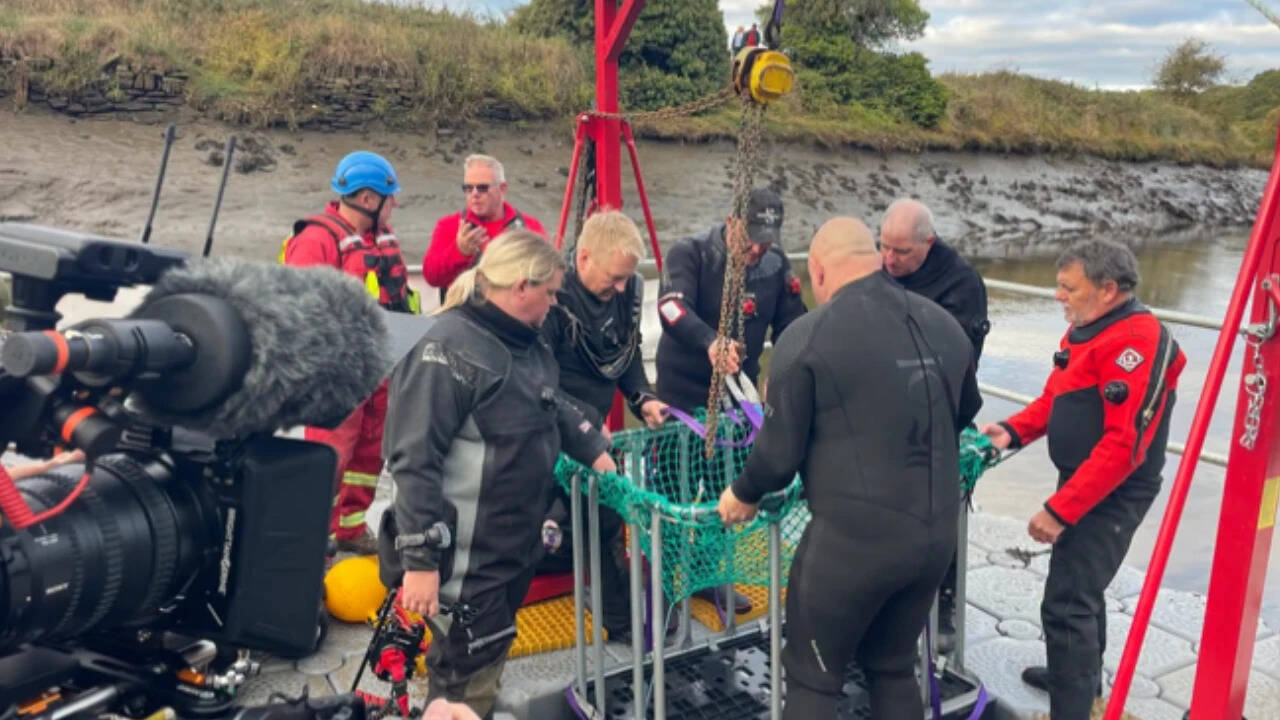
Most people scrolling past a headline about a diver pulling a giant three-legged iron cauldron out of England’s River Wear probably shrug and move on. A rusty pot in a river? Happens all the time.
Except it doesn't. Not like this.
When a diver searching the riverbed of the River Wear hauled up a massive three-legged cast-iron cauldron, it wasn't just another piece of scrap metal clogging up an old industrial waterway. Riverbeds across Northern England act as anaerobic time capsules, and the Wear—cutting straight through Durham and Sunderland—has spent centuries swallowing everything from medieval domestic goods to heavy industrial debris. Finding an intact, heavy three-legged cauldron on the bottom of the River Wear gives historians, archaeologists, and local heritage groups a rare, physical anchor to everyday life along one of Britain's most storied waterways.
Let's be honest about how river finds usually go. Nine times out of ten, divers pull up shopping trolleys, rusted bike frames, or modern boat anchors. Once in a blue moon, the silt gives up something that actually survived centuries of currents, coal-mining runoff, and shipbuilding traffic.
What Makes a Three-Legged Iron Cauldron So Significant
If you've ever handled real antique cast iron, you know the weight hits you first. A large three-legged cauldron wasn't a disposable kitchen gadget. People bought these vessels to last generations, passing them down in wills alongside land and livestock.
The three-legged design exists for a very specific reason. Before modern stoves or suspended crane hooks became universal in every cottage, cooks placed cauldrons directly into the glowing embers of an open hearth. Those three stubby legs lifted the rounded belly just high enough off the stone floor so air could circulate underneath, keeping the fire alive while heating stews, pottage, or boiling water evenly.
Here is why finding one in the River Wear catches the eye of serious river archaeologists:
- Cast iron versus copper alloy: Earlier medieval cauldrons were almost always made from cast bronze or copper alloy, which could be melted down and recycled when cracked. Large cast-iron cauldrons became much more common from the 17th through 19th centuries as ironfoundries expanded across County Durham and the North East.
- Surviving the river environment: Iron usually rusts into flaky oblivion in oxygenated water. When an iron object sits buried under thick river silt, mud, and clay, oxygen gets cut off. That low-oxygen pocket slows corrosion dramatically, preserving the legs, lug handles, and casting seams.
- Size matters: Small skillets and posnets turn up occasionally in antique markets. A huge, heavy cauldron capable of feeding a large household, a tavern, or a crew of workers is much harder to lose accidentally—which raises immediate questions about how it ended up on the riverbed.
Why the River Wear Is a Hotspot for Submerged History
You can't separate this discovery from the river itself. The River Wear runs roughly 60 miles from Wearhead in the North Pennines down to the North Sea at Sunderland. For over a thousand years, it served as a highway, a border, a food source, and an industrial engine.
Think about the sheer volume of human activity packed along those banks. In Durham City, medieval bridges, mills, and riverside tenements crowded right up to the water's edge. Further downstream toward Washington, Penshaw, and Sunderland, the river became the backbone of coal staithes, glassworks, ironworks, and massive shipyards.
Anyone who has spent time diving UK rivers knows visibility is usually terrible. You aren't gliding through crystal-clear Caribbean water. You're feeling your way through cold, dark, silt-heavy currents where torch beams bounce off suspended sediment two feet in front of your mask. Pulling a bulky, waterlogged iron cauldron off the bottom of the River Wear takes serious physical effort, lift bags, and patience.
Gary Bankhead, one of the best-known underwater archaeologists working in the River Wear around Durham, has spent years demonstrating just how much history sits hidden in that dark silt. His dives near Elvet Bridge alone recovered thousands of historic objects—from medieval pilgrim badges and lead cloth seals to coins, tools, and domestic hardware—proving that British rivers hold dense archaeological layers that land excavations often miss completely.
When a diver spots the unmistakable curve of a three-legged cauldron sticking out of the Wear's mud, they're looking at an object that almost certainly didn't wash down from miles away. Heavy cast iron drops straight down and stays put.
How a Heavy Cauldron Ends Up at the Bottom of a River
People rarely drop a giant, expensive iron cooking pot into deep water by accident while taking a casual stroll. When heavy domestic or industrial gear lands on a riverbed, it usually points to one of a few real-world scenarios.
River transport and capsized boats
Before paved roads and railways linked the North East, small flat-bottomed boats called keels and cobles moved goods up and down the Wear. Household goods, tavern supplies, and foundry wares traveled by water because moving heavy iron overland over rutted tracks was brutal work. One sudden squall, a submerged snag, or an overloaded boat meant cargo went straight to the bottom.
Riverside living and structural collapses
Medieval and post-medieval buildings along the Wear frequently leaned right over the water. Floods were common and destructive. The Great Flood of November 1771 tore through the River Wear, destroying bridges, sweeping away riverside houses, and dumping entire households' worth of furniture, tools, and kitchenware straight into the channel. A giant cauldron sitting near a hearth in a riverside cottage could easily have been carried into the river when stone walls gave way.
Deliberate dumping when things broke
Cast iron is brittle. Unlike bronze, which a local tinker could patch or a foundry could easily melt down for scrap value, a cracked cast-iron cauldron was notoriously difficult to repair. Once a big iron pot split down the side or lost a leg, tossing it into the deepest part of the river was a quick way to clear space in a cramped yard or workshop.
Ships' galleys and riverside industry
Downstream toward Sunderland, shipbuilding and maritime trade dominated life on the Wear for centuries. Large cauldrons weren't just for farmhouse kitchens—they were used to boil pitch and tar for caulking wooden hulls, dye cloth, render tallow, or cook bulk rations for dockworkers and crews.
What Divers and Finders Should Do Next With River Finds
If you're a recreational diver, magnet fisher, or river walker in England, finding something historic in a river comes with real responsibilities—and plenty of common mistakes that ruin artifacts before an expert ever sees them.
The biggest mistake people make? Letting iron dry out completely in the open air and taking a wire brush or angle grinder to it.
Once waterlogged iron hits dry oxygen, trapped salts inside the metal crystallize and expand. Within weeks, thick layers of rust begin flaking off, taking original foundry marks, surface details, and structural strength with them. Scrubbing it aggressively destroys the original surface layer forever.
If you ever pull historic ironwork from a UK river, follow the basic conservation rules used by archaeological teams:
- Keep it wet initially: If the object came out of waterlogged silt, keep it damp or submerged in clean water until you get advice from a local finds officer. Don't bake it in the sun or stick it next to a radiator.
- Record the exact location: Note the precise stretch of river, depth, and whether it was buried in silt or resting on gravel. Without provenance, an artifact loses half its historical value.
- Report it to the Portable Antiquities Scheme: In England and Wales, the Portable Antiquities Scheme works with local Finds Liaison Officers (FLOs) to record archaeological discoveries made by the public. Recording a find doesn't mean someone automatically confiscates it—it means the location and details get logged into the national historical record so researchers can map human activity along rivers like the Wear.
- Check local navigation and landowner permissions: Diving, magnet fishing, and searching riverbeds in England often require permission from landowners, local authorities, or navigation bodies depending on the stretch of river. Checking rules beforehand keeps you out of legal trouble and builds trust with heritage groups.
Why Everyday Objects Beat Gold Treasure Every Time
Gold coins and jeweled swords grab flashy headlines, yet historians get genuinely excited over heavy, utilitarian objects like a three-legged iron cauldron from the River Wear.
Coins tell you about trade and kings. A massive cooking cauldron tells you how real people actually survived. It shows what families ate, how they heated their homes, how local ironfoundries cast heavy goods, and how closely daily life hugged the banks of the River Wear.
Next time you walk across a bridge over the Wear—whether you're looking down at the dark water beneath Elvet Bridge in Durham or watching the tide push inland at Sunderland—remember that the riverbed isn't empty mud. Beneath the current sits a dense, preserved layer of working-class Northern history, waiting for the right diver with a good torch to bring another piece back into the light.