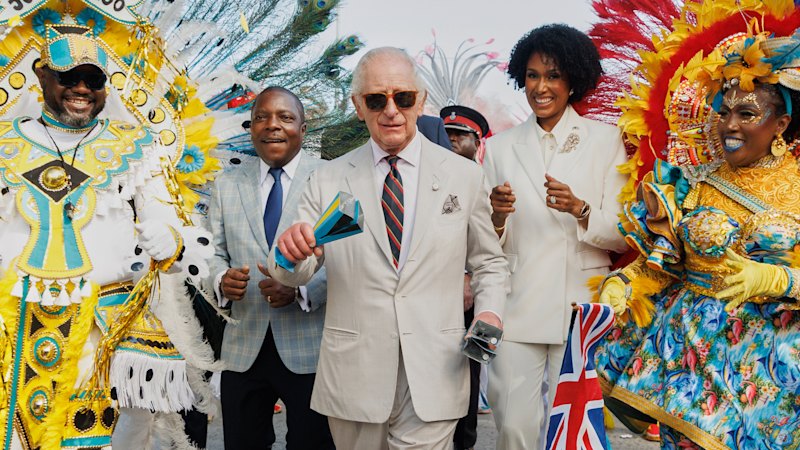
The optics were an immediate liability for Buckingham Palace. While King Charles III joined a traditional Junkanoo rush in Nassau during a royal visit to the Bahamas, a coalition of Caribbean leaders, legal scholars, and grassroots activists intensified demands for formal slavery reparations from the British Crown. That contrast between ceremonial goodwill and unaddressed historical debt defines the modern crisis facing the Commonwealth.
For decades, royal tours across the Caribbean relied on predictable choreography. A smile on the tarmac. A carefully worded expression of "profound sorrow" over past atrocities. A dance with local performers to generate warm headlines back in London. Yet that diplomatic playbook no longer absorbs the political heat. Across the region, governments are moving beyond symbolic apologies toward structured financial, institutional, and legal demands aimed directly at the British state and the monarchy itself.
The Anatomy of a Diplomatic Misfire
When royal handlers schedule cultural participation during state visits, the objective is straightforward. They want images of connection, humility, and shared heritage. In the Bahamas, participating in local festivities was meant to signal respect for Bahamian culture and reinforce ties within the Commonwealth realm.
Instead, the footage became instant ammunition for critics who argue that the monarchy treats the legacy of the transatlantic slave trade as a public relations hurdle rather than an active legal and moral obligation.
The friction stems from a fundamental disconnect in how both sides view the past. From the perspective of Downing Street and Buckingham Palace, acknowledging the horrors of slavery while focusing on future cooperation—such as climate change financing and trade—represents a pragmatic path forward. From the perspective of Caribbean nations, skipping accountability to talk about future partnerships feels like an attempt to erase a massive, quantifiable economic debt.
Why the Crown Is Directly in the Crosshairs
Unlike prime ministers who cycle out of office every few years, the British monarchy represents institutional continuity. The current sovereign sits at the head of an institution that did not merely observe the transatlantic slave trade from a distance; it actively sponsored, regulated, and profited from it.
Historical records archived in London and across the Caribbean establish clear links between the Crown and the human trafficking economy:
- Royal Charters and Monopolies: In 1660, King Charles II and his brother James, Duke of York, established the Company of Royal Adventurers Trading into Africa, which later became the Royal African Company. This entity held a state-backed monopoly over English trade along the West African coast, transporting tens of thousands of enslaved Africans across the Atlantic.
- Direct Financial Extraction: The British monarchy collected taxes, duties, and licensing fees from the sugar, tobacco, and rum industries built entirely on unfree labor in colonies like Barbados, Jamaica, and the Bahamas.
- The 1833 Compensation Payout: When Britain passed the Slavery Abolition Act in 1833, the government borrowed £20 million—roughly 40 percent of its national budget at the time—to compensate the enslavers for their lost "property." Not a single penny went to the formerly enslaved people. British taxpayers only finished paying off the interest on that debt in 2015.
Because the institution survived intact, inheriting vast estates, art collections, and sovereign grants built over centuries, activists argue that the Crown cannot claim immunity from historical liability.
King Charles III has gone further than any previous British monarch in acknowledging this history. He has publicly described the slave trade as an "appalling atrocity" and opened royal archives to independent researchers investigating the monarchy's historic ties to slavery. Yet research access falls far short of what Caribbean nations are actually asking for.
The CARICOM Ten-Point Plan Explained
A common misconception in British media coverage is that reparations simply mean writing a massive check to every citizen in the Caribbean. That framing is inaccurate and often used to dismiss the entire movement as economically impossible.
In reality, the Caribbean Community (CARICOM) Reparations Commission has laid out a structured Ten-Point Action Plan focused on developmental repair rather than individual cash handouts. The framework targets the systemic deficits left behind when European powers extracted wealth for centuries and departed with minimal infrastructure in place.
The core demands include:
- A Full Formal Apology: Moving past expressions of "regret" or "sorrow," which carry no legal weight, toward an unambiguous apology that accepts institutional responsibility.
- Repatriation Programs: Funding and legal pathways for descendants of enslaved Africans who wish to return to their ancestral homelands.
- Indigenous Peoples Development Programs: Addressing the near-total decimation of native Caribbean populations during European colonization.
- Cultural Institutions: Building museums, research centers, and libraries in the Caribbean to house historical artifacts currently held in European collections.
- Public Health Crisis Intervention: The Caribbean suffers from disproportionately high rates of chronic illnesses such as hypertension and type 2 diabetes. Researchers link these public health emergencies directly to generational trauma and the forced nutritional shifts imposed during plantation slavery.
- Illiteracy Eradication: Investing heavily in educational infrastructure to reverse centuries of deliberate educational deprivation.
- African Knowledge Programs: Establishing cultural and educational exchange bridges between the Caribbean and West Africa.
- Psychological Rehabilitation: Funding mental health initiatives to address the lingering social impact of generational trauma.
- Technology Transfer: Sharing modern industrial, agricultural, and scientific capabilities to allow Caribbean economies to compete globally rather than remain dependent on raw exports and tourism.
- Debt Cancellation: Wiping out crushing sovereign debts held by Caribbean nations, many of which were incurred shortly after independence just to build basic hospitals, roads, and schools that colonial powers neglected to construct.
Putting a Price Tag on Centuries of Extraction
When economists attempt to calculate the financial scale of the transatlantic slave trade, the numbers quickly enter the trillions.
A landmark report presented at the University of the West Indies, backed by researchers from the Brattle Group, estimated that Britain alone owes roughly $24 trillion in reparations for its role in transatlantic chattel slavery across 14 Caribbean nations. Other assessments, including calculations cited by United Nations officials, place the broader European liability even higher when factoring in lost wages, compound interest, and intergenerational wealth suppression.
Critics argue these figures are purely theoretical. They contend that applying modern economic valuations to seventeenth- and eighteenth-century commerce produces numbers so vast that no living economy could ever pay them.
Supporters of reparations counter that the size of a debt does not invalidate its existence. In any commercial or legal dispute, the inability of a debtor to pay the full balance immediately does not mean the creditor walks away empty-handed. Instead, both parties negotiate a settlement structure—such as multi-decade sovereign debt relief, climate adaptation grants, and targeted infrastructure funds.
The Domino Effect Across the Commonwealth
The tension visible during the Bahamas visit is part of a broader geopolitical shift across the region. For years, the late Queen Elizabeth II served as a personal buffer against republican sentiment. Many Caribbean leaders respected her longevity and delayed constitutional changes out of personal deference.
That buffer is gone.
Barbados removed the British monarch as head of state in 2021, becoming a parliamentary republic while remaining inside the Commonwealth. Jamaica has signaled clear intentions to follow the same path, establishing a Constitutional Reform Committee to guide its transition away from the Crown. Similar debates are accelerating in Belize, Saint Vincent and the Grenadines, and the Bahamas itself.
For these nations, removing the British monarch as head of state is step one. Step two is negotiating the terms of historical redress from a position of complete constitutional independence.
The Counter-Arguments Blocking Action in London
Despite growing international pressure, the British government has maintained a rigid refusal to engage in reparations talks. Prime Ministers from both the Conservative and Labour parties have stated unequivocally that the United Kingdom will not pay reparations or offer a formal apology that could trigger legal liability.
Understanding why London refuses to budge requires looking at three primary pressures:
- Domestic Political Blowback: With the British public navigating stagnant wages, inflation, and strained public services, any politician who proposes sending billions of pounds overseas for historical grievances faces immediate electoral suicide.
- The Legal Precedent Trap: In international law, a formal apology is rarely just words. Legal advisors in Whitehall warn that an official apology for slavery could open the floodgates to binding lawsuits in international courts, stripping the UK government of control over the financial terms.
- The Slippery Slope: Britain was not the only empire involved in global exploitation. Officials fear that conceding reparations to the Caribbean would immediately trigger parallel claims from India, Kenya, Nigeria, and dozens of other former colonies, creating an endless cycle of sovereign litigation.
Where the Leverage Actually Lies
If London holds the purse strings and refuses to negotiate, why do Caribbean leaders continue pressing the issue during high-profile royal visits? Because the leverage has shifted away from traditional diplomacy toward global reputation and geopolitical competition.
Britain no longer commands unchallenged influence in the Caribbean. China has poured billions of dollars into regional infrastructure through its Belt and Road Initiative, building ports, highways, and stadiums across Jamaica, Barbados, and the Bahamas with few political conditions attached. As Beijing expands its footprint in the Western Hemisphere, London risks losing its remaining diplomatic allies in the region.
Furthermore, the Caribbean is on the front lines of the global climate crisis. Low-lying island nations like the Bahamas face existential threats from rising sea levels and intensifying hurricanes, despite contributing almost nothing to global carbon emissions. Caribbean leaders have successfully linked historical colonialism to modern climate vulnerability, arguing that nations enriched by centuries of colonial extraction bear a direct obligation to fund climate resilience today.
When King Charles stepped onto the dance floor in Nassau, the cameras captured a moment designed to project unity and warmth. Outside the barricades, however, the conversation had already moved past pageantry. Caribbean nations are no longer asking for a royal wave or a sympathetic speech; they are auditing the ledger, and they expect the balance to be addressed.