Silence.
That is the first thing you notice inside a hardened command bunker three thousand miles away from a conflict zone—not the Hollywood hum of servers or the frantic shouting of generals, but a thick, pressurized quiet where the only sound is the soft click of a refresh button being pressed by a twenty-four-year-old intelligence analyst staring at a grainy, compressed video clip on a secondary monitor.
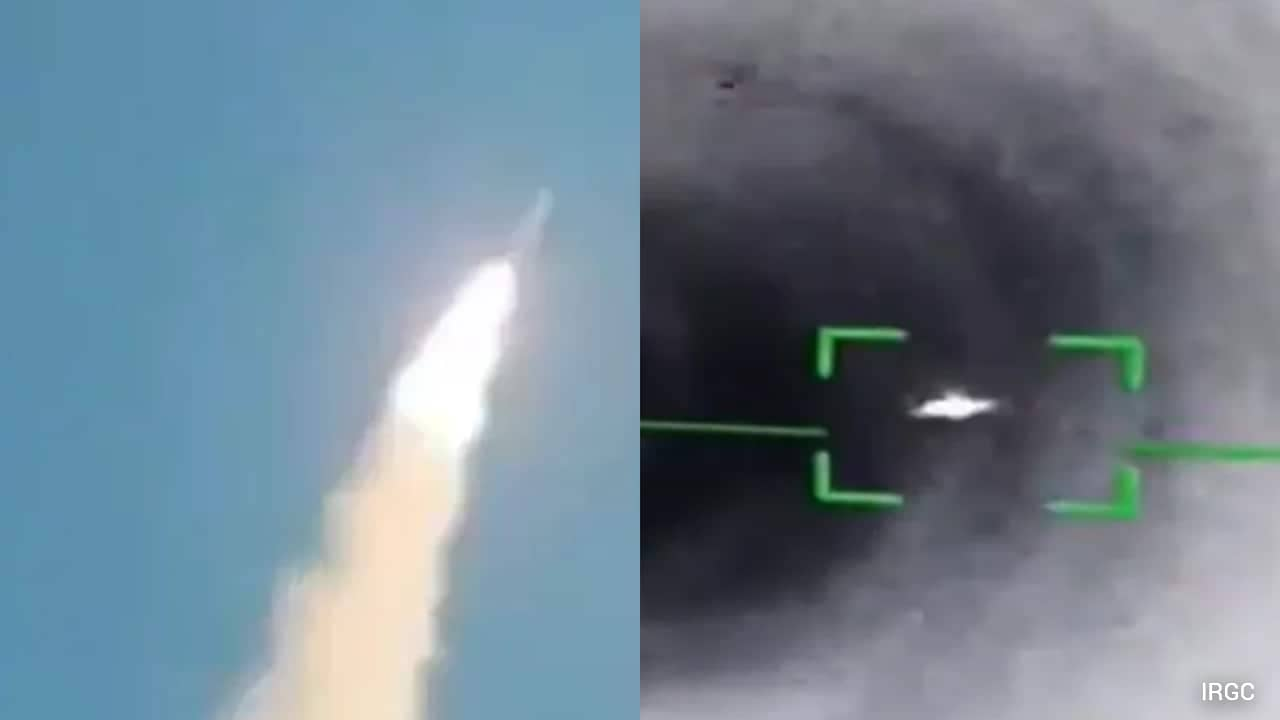
In the early hours of a tense regional flare-up, a claim erupted across state-aligned channels and ricocheted through social media feeds before most of the world had finished its morning coffee. Iranian military channels and affiliated amplifiers declared a dramatic strike. They claimed their air defenses had successfully targeted and damaged an American F-16 Fighting Falcon—a multibillion-dollar symbol of Western air superiority—forcing it out of the sky or limping back to base in disgrace.
Within minutes, the clip was everywhere. Blurred, shaky, bathed in the sickly green tint of night-vision optics or the washed-out glare of a telephoto lens, it showed a streak of light, a flash against the dark belly of the clouds, and a voiceover vibrating with triumph. Millions watched it. Millions shared it. For a breathless, terrifying window of time, the geopolitical math of the Middle East seemed to tilt on its axis.
Then came the fact-check.
And when the forensic light hit that viral claim, the entire narrative didn't just crumble; it evaporated into thin air, exposing a far more unsettling truth about modern warfare. We are no longer fighting just with steel, jet fuel, and radar-guided missiles. We are fighting inside a hall of mirrors where a fabricated pixel can trigger a real-world escalation before a single truth-teller can lace up their boots.
The Anatomy of a Phantom Strike
To understand why a rumor about a damaged F-16 carries the weight of a physical explosion, you have to step inside the cockpit—not the real one, which remained completely untouched on a tarmac miles away, but the hypothetical cockpit of the story being sold to the public.
Imagine, for a moment, a pilot we will call Captain Vance. This is a hypothetical composite based on standard tactical protocols, yet the stakes he represents are entirely real. In the version of reality peddled by the initial viral broadcasts, Vance is flying a Block 50 F-16 Viper through contested airspace at thirty thousand feet. The air outside is minus forty degrees. Inside his helmet, the Heads-Up Display paints glowing green telemetry over the black void ahead. Suddenly, the Radar Warning Receiver screams—a high-pitched, rhythmic warble that means an enemy surface-to-air missile battery has locked onto his airframe. In the propaganda version, the missile detonates close enough to shred his fuselage, peppering the titanium skin with tungsten fragments, severing hydraulic lines, and forcing him into a desperate, smoke-trailing limp toward friendly territory.
It makes for extraordinary theater. It feeds a deep, visceral hunger for a David-and-Goliath upset.
Now, step out of the theater and look at the cold, unyielding forensics that followed the claim.
When independent open-source intelligence (OSINT) investigators, military analysts, and defense reporters began dissecting the footage frame by frame, the illusion unraveled within hours. First, there was the metadata and visual provenance. The video circulating as "proof" of the damaged F-16 did not belong to the incident at all. In several iterations of the rumor, the footage was recycled from entirely different engagements—some months or even years old, others showing routine flare drops during training exercises, and still others depicting unrelated munitions intercepts where bright streaks in the night sky are easily mislabeled by anyone with a video editor and a propagandist's agenda.
Second, there was the physical reality of military aviation accountability. Modern fighter operations are not conducted in a vacuum. Every F-16 sortie operating in a high-tension theater is tracked across multiple overlapping radar networks, satellite constellations, tanker refueling logs, and allied transponder corridors. When a fourth-generation fighter takes battle damage—even minor shrapnel scarring—it triggers an immediate, unmistakable cascade of operational footprints. Emergency squawk codes broadcast across monitored frequencies. Divert airfields clear runways and scramble crash-fire-rescue crews. Ground maintenance logs, satellite imagery of aprons, and official Pentagon readiness reports reflect the loss or repair of an airframe worth tens of millions of dollars.
None of it happened.
U.S. defense officials flatly refuted the claim, confirming that no American F-16 had been struck, damaged, or lost in the reported window. More tellingly, independent verification teams cross-referenced commercial satellite passes over regional airbases and monitored aviation distress channels, finding zero evidence of an emergency recovery, a damaged airframe, or a disrupted flight schedule. The "damaged F-16" existed exclusively in the pixels of a deceptive social media campaign.
Why Information Moves Faster Than Mach 2
I remember the first time I watched a fabricated military claim hijack a newsroom in real time. It was years ago, during another midnight crisis, when a grainy photograph of smoke rising over a runway hit the wire services. Nobody wanted to be the last outlet to report a major escalation. Editors paced behind desks, their faces lit by the blue glow of scrolling feeds, torn between the journalistic duty to verify and the commercial terror of being scooped. By the time a satellite analyst noticed that the shadows on the runway pointed in the wrong direction for that time of day, three major networks had already run chyrons speculating on casualties.
That feeling—that sickening lurch in your stomach when you realize speed has outrun truth—is the exact psychological terrain modern information warfare is engineered to exploit.
Think of a viral military claim like a flashbang grenade tossed into a crowded room. Its primary purpose is not to destroy the walls; it is to blind and deafen everyone inside for ten critical seconds so the person who threw it can change position unnoticed.
In asymmetrical conflict, perception is often more valuable than hardware. Building an integrated air defense network capable of reliably detecting, tracking, and engaging a modern F-16 equipped with electronic warfare pods and high-speed anti-radiation missiles costs billions of dollars and decades of engineering. Manufacturing a convincing rumor that you damaged one costs a smartphone, a stolen video clip, and a coordinated network of accounts ready to amplify the lie in four languages simultaneously.
For domestic audiences inside an authoritarian state, the lie serves as an immediate morale booster—proof that the state's defensive shield is impenetrable and that a superpower can be made to bleed. For international audiences, it plants a seed of doubt. Even after the fact-check arrives, a fraction of the public walks away thinking, Where there's smoke, there's fire. Maybe they covered it up.
That lingering residue of doubt is the real payload.
Inside the Detective Work of Modern Fact-Checking
If the lie is a flashbang, the fact-check is a slow, painstaking forensic reconstruction conducted under a magnifying glass. It rarely goes as viral as the initial claim, largely because truth requires context, and context rarely fits inside a fifteen-second vertical video.
When analysts tore apart the Iran F-16 claim, they relied on a toolkit that would have looked like science fiction to journalists a generation ago. To understand how they proved a negative—how you prove an airplane was not hit—imagine trying to verify whether a specific delivery truck had a fender-bender in a busy city without ever walking onto the street. You wouldn't just ask the driver. You would check traffic cameras at every intersection, review GPS pings from surrounding vehicles, inspect municipal repair bay schedules, and analyze the weather patterns visible in the background of any photo claiming to show the crash.
OSINT investigators applied that exact rigor to the skies over the Middle East:
- Chronolocation and Weather Matching: Analysts pulled archived meteorological data—cloud ceiling heights, wind vectors, and lunar illumination—for the exact coordinates and timestamp of the alleged strike. When the cloud formations or visibility in a viral video contradict the actual atmospheric conditions recorded by weather satellites at that hour, the footage is immediately exposed as archival or staged.
- Optical Signature Analysis: Every aircraft and missile leaves a distinct thermal and visual fingerprint. An F-16's single Pratt & Whitney or General Electric afterburner produces a specific plume geometry, while defensive chaff and flare dispensers eject decoys in programmed burst intervals. Frame-by-frame inspection revealed that the lights hailed online as a "burning jet" matched standard anti-aircraft tracer fire or countermeasure flares rather than a catastrophic engine fire or structural breakup.
- Network Amplification Mapping: Digital forensics teams traced the earliest timestamps of the claim, revealing how identical phrasing and identical cropped videos appeared simultaneously across synchronized bot networks and state-linked Telegram channels before migrating onto mainstream platforms.
This methodical dismantling is deeply unglamorous. There is no dramatic explosion at the end of a geolocation thread—just a quiet, devastatingly clear conclusion that the emperor has no clothes.
The Invisible Stakes of the Verification Gap
It is tempting to shrug off a debunked military rumor as harmless internet noise. Nobody died in the fake strike. No F-16 actually crashed into the desert. So why should anyone care?
Because the gap between a lie being told and a lie being debunked is the most dangerous window in modern statecraft.
Consider what happens when decision-makers—not just casual scrollers, but mid-level commanders, diplomats, and market algorithms—are forced to react inside that window. Automated financial trading systems scan breaking news feeds for keywords like US fighter jet, Iran, and shot down, triggering instantaneous spikes in oil futures and defense stocks within milliseconds. Diplomatic backchannels light up with urgent demands for clarification. Regional militias, emboldened by the belief that American air power has just been humbled, may decide to launch a real attack of their own, miscalculating the true balance of deterrence.
In other words, a fake strike can easily provoke a real war.
There is also a quieter, more corrosive casualty: public trust. When people are bombarded daily with dramatic claims that are retracted or debunked forty-eight hours later, they develop a reflexive cynicism. They stop believing anything—including verified warnings when a genuine crisis actually unfolds. If every bright streak in the night sky is labeled a historic victory by one side and dismissed as fake news by the other, ordinary citizens lose their ability to tell when the roof is actually catching fire.
Living With Uncertainty in an Age of Synthetic War
I will be honest with you: even with the best forensic tools on earth, following these stories in real time is exhausting, and occasionally unsettling. There is always a brief, nagging moment when a dramatic claim breaks where even seasoned observers have to pause and ask, What if this time it's true? Air defenses do evolve. Planes are vulnerable under the right conditions. Healthy skepticism requires admitting that no military platform is invincible, and that official denials from any government deserve independent scrutiny rather than blind acceptance.
That is precisely why the fact-check matters so much—not because we should automatically trust every official statement, but because independent verification forces every claim, regardless of which flag it flies under, to submit to physical evidence.
When the dust settled on the F-16 rumor, the contrast could not have been sharper. On one side stood a loud, theatrical assertion backed by recycled video and algorithmic noise. On the other stood verifiable telemetry, satellite corroboration, and the quiet persistence of investigators willing to check the shadows against the clock.
Look back at that twenty-four-year-old analyst in the bunker, staring at the glowing screen long after the viral storm has moved on to the next outrage. Outside, the world keeps spinning, largely unaware of how close a phantom headline came to rewriting the day's reality. On the screen, the grainy video loops one final time—a bright, meaningless streak against a dark sky, frozen in the exact frame where truth finally caught up with the lie.