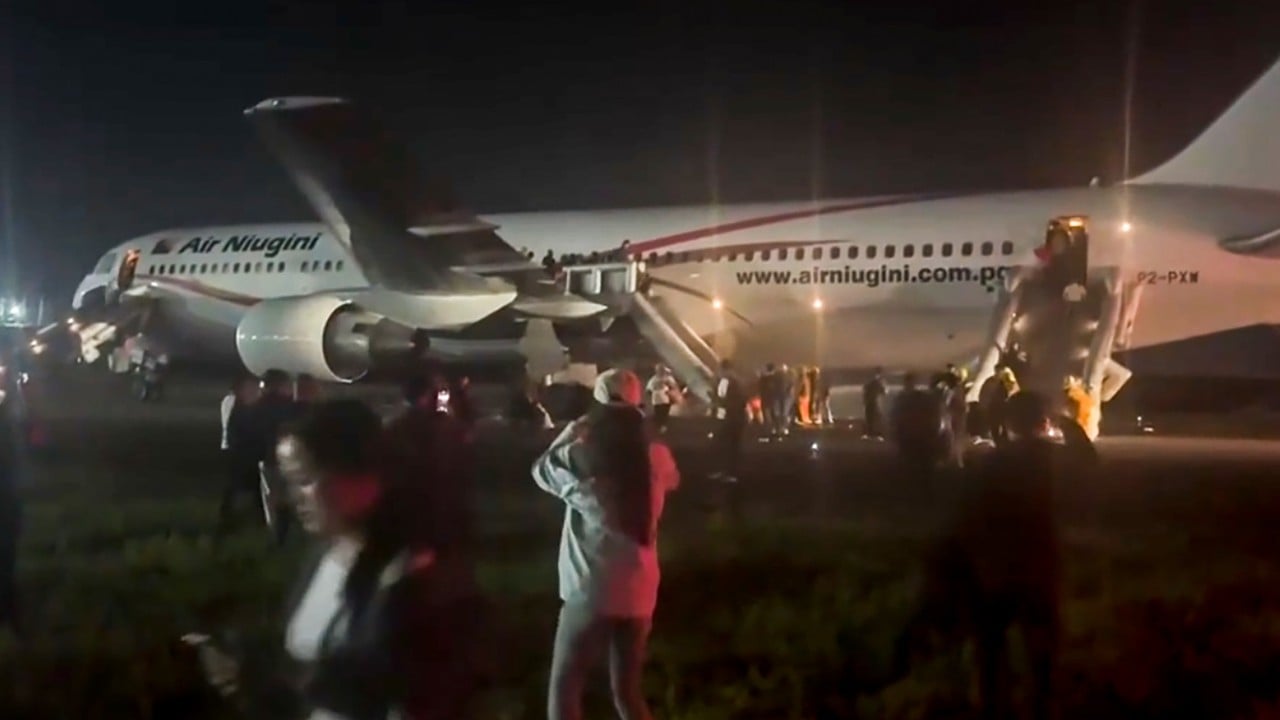
An engine fire indication on a commercial flight departing Hong Kong for a regional or transoceanic destination triggers a deterministic, high-stakes cascade of thermodynamic containment, cockpit resource management, and geopolitical airspace negotiation that terminates in an unscheduled Philippine diversion. Standard aviation reporting reduces these events to sensationalist headlines about terrified passengers and dramatic touchdowns, obscuring the actual operational mechanics that prevent a hull loss. When a flight crew executes an emergency landing in Manila, Clark, or Laoag following an engine fire alert, they are executing a pre-engineered failure mode governed by strict aerodynamic constraints, Extended-range Twin-engine Operational Performance Standards (ETOPS) boundaries, and bilateral air traffic control protocols.
The Geopolitical and Spatial Logic of Philippine Diversions
Aircraft departing Hong Kong International Airport (HKG) on southern, southeastern, or trans-Pacific tracks immediately enter one of the most politically fragmented and meteorologically volatile airspaces in global aviation. Within twenty minutes of climb-out, flight paths intersect the boundaries of the Hong Kong Flight Information Region (FIR), the Sanya FIR controlled by mainland China, and the Manila FIR administered by the Civil Aviation Authority of the Philippines (CAAP).
When an anomalous sensor reading occurs in this corridor, the decision to divert to the Philippines rather than returning to Hong Kong is rarely a matter of passenger convenience; it is a function of vector geometry, wind vectors, and runway availability.
- The Point of Equal Time (PET) Calculation: Every flight plan calculates the dynamic equilibrium point between two suitable diversion airfields based on real-time upper-level wind speeds. Once an aircraft crosses the southbound PET between Chek Lap Kok and northern Luzon, turning back into a prevailing headwind consumes more fuel and requires more time than continuing toward Laoag International Airport (LAO), Clark International Airport (CRK), or Ninoy Aquino International Airport (MNL).
- Terrain Clearance Constraints: Returning to Hong Kong during an engine-out scenario forces the aircraft to navigate the mountainous topography of Lantau Island and the Pearl River Delta while operating on reduced thrust. In contrast, the western coastline of Luzon offers sea-level approaches over open water, minimizing obstacle clearance penalties during a single-engine missed approach.
- Airspace Deconfliction: The South China Sea corridor carries heavy north-south trunk traffic between Northeast Asia and Southeast Asia, alongside restricted military zones. Declaring a Mayday initiates immediate vertical and lateral separation by Manila Area Control Center, clearing lower flight levels for a rapid drift-down descent.
Thermodynamic Realities of a Modern Turbofan Fire Alert
A cockpit "ENG FIRE" warning is not a singular observation of flames; it is the synthesis of dual-loop pneumatic or electronic sensing systems detecting abnormal thermal spikes within the engine nacelle. Modern high-bypass turbofans operate with core exhaust gas temperatures exceeding 900 degrees Celsius under normal takeoff thrust, meaning the detection architecture must distinguish between extreme operational heat and actual boundary breaches.
The Architecture of Detection and False Positives
Engine fire detection loops run parallel along the core casing and the fan zone, continuously monitoring electrical resistance or gas pressure changes. To prevent an inadvertent engine shutdown caused by a single damaged wire, the Fire Detection Unit (FDU) requires simultaneous fault signals from both Loop A and Loop B before illuminating the master warning light and sounding the continuous repetitive chime.
Three distinct physical events trigger this dual-loop confirmation:
- Bleed Air Duct Rupture: High-pressure, high-temperature air bled from the compressor stages to power anti-ice and cabin pressurization systems escapes through a failed seal or cracked manifold. This superheated air impinges directly on the detection loops, mimicking an open fuel fire without actual combustion outside the combustor can.
- Fuel or Hydraulic Fluid Atomization: A fractured fuel nozzle line or hydraulic actuator leak sprays combustible mist onto the hot turbine casing. Because the nacelle is ventilated by ram air during flight, this atomized fluid ignites instantly, creating a localized blowtorch effect that threatens the structural integrity of the pylon attaching the engine to the wing.
- Sensor Loop Degradation: Moisture ingress, extreme vibration from a fan blade-off event, or chafe damage shorts both detection loops simultaneously. While less common, a dual-loop short produces an identical cockpit alert, compelling the crew to treat the indication as an active, life-threatening fire until physical inspection on the ground proves otherwise.
The Engine Fire Memory Checklist
Flight crews do not troubleshoot an engine fire indication; they execute a rigid sequence of memory items designed to isolate the nacelle within thirty seconds of the alert. Delays beyond this window risk burn-through of the titanium firewall separating the engine from the wing fuel tanks.
- Thrust Lever Retardation: The pilot monitoring confirms the affected engine and retards its thrust lever to idle, immediately reducing fuel flow and rotational energy.
- Fuel Control Switch Cutoff: Moving the fuel switch to cutoff closes the spar valve in the wing, starving the engine of combustible fuel at the structural boundary rather than merely at the engine-driven fuel pump.
- Fire Switch Extraction: Pulling the illuminated fire handle mechanically trips the engine-driven hydraulic pump shutoff valve, isolates the bleed air valve, de-energizes the electrical generator, and arms the halon fire extinguishing bottles.
- Agent Discharge: Rotating the fire switch discharges the first pressurized bottle of Halon 1301 into the nacelle, displacing oxygen and chemically interrupting the combustion chain. If the warning light remains illuminated after thirty seconds, the crew discharges the second bottle.
Aerodynamic and Energy Management During Drift-Down
Shutting down one engine on a twin-engine airliner—such as an Airbus A330, Airbus A350, Boeing 777, or Boeing 787 commonly deployed on Hong Kong routes—instantly eliminates fifty percent of available thrust while creating massive asymmetric drag. The dead engine acts as a giant airbrake, and the pilot must apply significant rudder deflection to counter the yawing moment, which induces further aerodynamic drag.
At typical cruising altitudes between 35,000 and 41,000 feet, the remaining operating engine cannot produce enough thrust to sustain level flight at standard cruise Mach numbers. The aircraft must execute a drift-down procedure.
- Thrust-to-Drag Equilibrium: The crew sets Maximum Continuous Thrust (MCT) on the operating engine and allows the aircraft to descend gradually at its optimal green-dot or best-lift-over-drag speed. As the aircraft descends into denser air, the remaining turbofan recovers volumetric efficiency and generates increased thrust, eventually establishing a new, lower equilibrium altitude—typically between 20,000 and 26,000 feet—where level flight is sustainable.
- Cabin Pressurization and Fuel Burn Penalties: Operating at lower altitudes dramatically increases parasite drag, elevating fuel burn per nautical mile on the remaining engine by roughly fifteen to twenty-five percent compared to normal two-engine cruise. This heightened consumption rate reinforces the urgency of diverting to the nearest suitable Philippine airfield rather than attempting to stretch range toward a major maintenance hub.
Operational Triage: Selecting the Diversion Airfield
Once the fire is extinguished and the aircraft is stabilized in a single-engine drift-down toward Luzon, the captain must evaluate the trade-offs between runway length, Aircraft Rescue and Firefighting (ARFF) category, and post-landing logistics. The three primary Philippine diversion nodes present distinct operational profiles.
Ninoy Aquino International Airport (MNL)
Manila offers the most comprehensive maintenance infrastructure, international passenger handling, and heavy-lift ground support equipment in the Philippines. However, MNL suffers from chronic airspace congestion, intersecting runways, and frequent convective weather delays. Landing an overweight, single-engine aircraft with compromised braking redundancy on a congested airfield introduces secondary collision and runway excursion risks.
Clark International Airport (CRK)
Located roughly eighty kilometers northwest of Manila, Clark is a former US Air Force base featuring a 3,200-meter runway, wide taxiways, and unobstructed approaches over the central Luzon plain. CRK operates with significantly lower traffic density than MNL, allowing air traffic control to grant immediate, straight-in approaches without holding patterns. For widebody aircraft executing an overweight landing without reverse thrust on the shut-down engine, Clark represents the optimal aerodynamic and safety compromise.
Laoag International Airport (LAO)
Positioned on the northwestern tip of Luzon, Laoag is the closest landfall for flights experiencing catastrophic emergencies shortly after leaving Hong Kong airspace. While its runway can accommodate narrowbody jets and medium widebodies under emergency conditions, LAO possesses lower ARFF ratings and virtually zero heavy-aircraft maintenance capability. A crew only selects Laoag when an uncontrollable fire or severe structural vibration makes an additional twenty minutes of flight time to Clark an unacceptable gamble.
The Overweight Landing and Ground Evacuation Calculus
An aircraft diverting within the first hour of a long-haul or regional flight carries near-maximum takeoff fuel, placing its gross weight well above the structural Maximum Landing Weight (MLW). If the aircraft is equipped with a fuel jettison system—standard on the Boeing 777, Boeing 747, and select Airbus A330 variants, though absent on the Airbus A321neo and Boeing 737—the crew faces a tactical dilemma: dump fuel to reduce landing weight, or land immediately while overweight.
- The Jettison Trade-Off: Dumping fuel reduces kinetic energy at touchdown, lowering brake temperatures and structural stress on the landing gear. However, fuel jettisoning consumes critical time—often fifteen to twenty minutes—during which a contained nacelle fire could reignite or compromise adjacent hydraulic lines. Under strict aviation safety doctrine, an active or unverified fire indication overrides weight limits; crews execute an immediate overweight landing rather than circling over the South China Sea to burn or dump fuel.
- Thermal Brake Runaway: Touching down twenty to forty metric tons above MLW, combined with the loss of fifty percent of reverse thrust capability, forces the carbon wheel brakes to absorb immense kinetic energy. Brake temperatures routinely spike past 800 degrees Celsius, risking tire deflation via thermal fuse plugs or wheel-well hydraulic fires.
- The Evacuation Threshold: Upon stopping on the runway, emergency response vehicles conduct an immediate thermal imaging scan of the affected nacelle and landing gear. The captain must weigh the risk of a hidden fire against the statistical certainty of passenger injuries during an emergency slide evacuation. If thermal sensors confirm the fire is extinguished and no smoke enters the cabin, keeping passengers onboard while towing the aircraft to a remote stand prevents broken bones and sprains. Conversely, any sign of persistent combustion mandates an immediate ninety-second evacuation via inflatable slides.
Systemic Limitations and Risk Blind Spots
While modern aviation protocols successfully convert nearly all in-flight engine fire alerts into safe diversions, the system harbors three structural vulnerabilities that industry operators must continuously manage.
- Sensor Ambiguity and Unnecessary Shutdowns: Dual-loop detection systems cannot differentiate between a genuine fuel-fed fire and a ruptured hot-air bleed duct. Consequently, crews are forced to shut down a mechanically healthy engine and execute a high-risk overweight diversion for what is fundamentally a pneumatic plumbing failure. Until multi-spectrum optical flame sensors and chemical vapor detectors become standard inside commercial nacelles, false-positive fire shutdowns will remain an unavoidable operational tax.
- Asymmetric Information Across FIR Boundaries: Handoffs between Hong Kong, Sanya, and Manila air traffic control still rely heavily on voice communications and non-integrated radar feeds over open water. During rapid drift-down emergencies, altitude deviations can temporarily degrade VHF radio clarity, creating brief windows of controller uncertainty precisely when airspace deconfliction is most critical.
- Post-Diversion Recovery Bottlenecks: Secondary diversion airfields like Clark and Laoag lack spare widebody engines, specialized hydraulic tooling, and certified type-rated mechanics. A successful emergency landing solves the immediate safety crisis but initiates a complex logistical recovery requiring airlines to dispatch relief aircraft, ferry specialized maintenance teams, and navigate Philippine customs protocols for replacement parts.
Strategic Mandate for Airline Flight Operations
Airlines operating high-frequency corridors between Hong Kong and Southeast Asia or the trans-Pacific must shift their diversion planning from static route manuals to dynamic, real-time risk modeling. Flight dispatchers should integrate automated nacelle telemetry—specifically continuous bleed-air pressure and loop-resistance trending—into flight-following dashboards to differentiate pneumatic leaks from true combustion before an alert triggers. Concurrently, carriers must pre-negotiate ground handling, ARFF augmentation, and rapid maintenance-ferry clearances at Clark International Airport, establishing CRK as the primary standardized diversion hub for South China Sea emergencies rather than defaulting to congested Manila airspace.