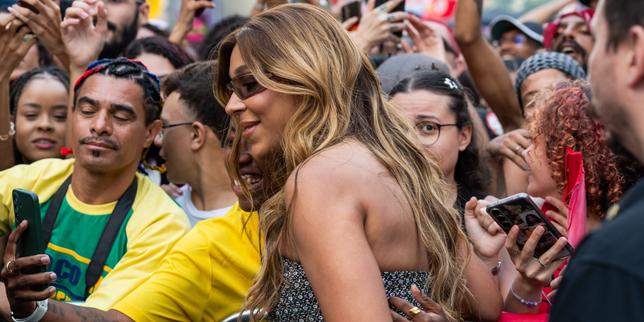
Erika Hilton’s ascent in Brazilian federal politics is not an accident of viral celebrity, nor is it merely a symbolic milestone for marginalized demographics. Her trajectory represents a replicable operational model: converting cultural visibility into legislative throughput within a polarized, institutional environment. Standard political commentary treats her "pop" aesthetic as a superficial contrast to traditional parliamentary decorum. That framing misses the structural mechanism at work. In modern attention economies, aesthetic fluency and pop-culture literacy function as distribution channels that lower the cost of voter acquisition, bypass hostile legacy media gatekeepers, and generate the external pressure required to advance bills through a conservative legislature.
To understand how a first-term federal deputy representing São Paulo operates at peak approval while belonging to a minority left-wing bloc (PSOL), one must separate her media presence into distinct operational inputs and outputs. You might also find this similar coverage insightful: La capture de Fausto Isidro Meza Flores et la restructuration mécanique des cartels mexicains.
The Architecture of Asymmetric Political Capital
Traditional Brazilian politicians accumulate power through slow, capital-intensive networks: municipal patronage, regional party machinery, religious endorsements, or legacy broadcast concessions. Entering the Chamber of Deputies without access to these historical pipelines creates a severe structural deficit. Hilton inverted this disadvantage by building an asymmetric capital engine anchored in three interdependent variables.
1. Low-Friction Narrative Distribution
Conventional legislative work is dense, procedural, and invisible to the average voter. Most lawmakers fail to translate committee debates into public comprehension, leaving a vacuum filled by opponents. Hilton’s communication model treats every parliamentary intervention as a self-contained media asset. By pairing high-fashion visual presentation with sharp, rhythmically structured rhetoric, she exploits algorithmic preferences on short-form video platforms. As discussed in detailed reports by NPR, the effects are worth noting.
The mechanism is straightforward:
- Visual Disruption: High-glamour styling inside austere neoclassical chambers creates immediate visual contrast, arresting scroll velocity on social feeds.
- Rhetorical Compression: Complex constitutional or labor arguments are condensed into 60-to-90-second clips with clear moral stakes, optimizing completion rates and shares.
- Cross-Demographic Bridging: Pop-culture references—spanning Brazilian funk, international music icons, and internet vernacular—allow her messaging to travel through non-political entertainment networks before reaching politically engaged cohorts.
This is not vanity branding; it is customer acquisition at near-zero marginal cost. When a deputy can reliably command millions of organic views on a committee speech, party leaders and committee chairs must factor that external audience into their internal bargaining calculations.
2. Intersectional Coalition Building
A common failure mode for identity-focused legislators is narrowing their constituency to a demographic niche, which caps their electoral ceiling and isolates them during floor votes. Hilton avoided this trap by linking identity-based civil rights directly to universal economic survival.
Her legislative portfolio demonstrates a deliberate expansion from specific human rights protections to broad working-class grievances. By championing the abolition of the 6x1 work schedule (six days of work for one day off) via a Proposed Amendment to the Constitution (PEC), she shifted her public positioning from a defender of minority rights to an advocate for the entire Brazilian service and retail workforce.
The cause-and-effect relationship here is critical:
- Phase One (Base Consolidation): Elected to the São Paulo City Council in 2020 with over 50,000 votes and to the Federal Chamber in 2022 with over 256,000 votes, her initial base consisted of LGBTQ+ voters, Black movements, and progressive urban youth.
- Phase Two (Issue Expansion): Using the platform secured in Phase One, she introduced and amplified labor and economic justice proposals that affect tens of millions of non-ideological workers.
- Phase Three (Approval Surge): Working-class voters who previously had no affinity for progressive identity politics began associating her brand with tangible relief from economic exhaustion.
This progression explains why her approval ratings decoupled from the narrower electoral ceiling of her party. She successfully merged cultural representation with material class politics.
3. Institutional Fluency Under Hostile Conditions
Visibility without procedural competence produces influencers, not effective lawmakers. Entering the National Congress elected in 2022 meant operating inside one of the most conservative legislatures in Brazil’s recent democratic history, alongside an aggressive far-right opposition.
Hilton’s survival and advancement inside this environment rely on strict adherence to parliamentary rules. Rather than abandoning institutional norms in favor of pure protest, she uses the internal mechanisms of the Chamber—points of order, committee presidencies, formal requests for information, and strategic rapporteurships—to force opponents onto the defensive. When she assumed the presidency of the Human Rights, Minorities, and Racial Equality Commission, she used the gavel to control agenda-setting, transforming a defensive institutional outpost into an offensive platform for national debate.
The Conversion Funnel: From Viral Clip to Legislative Leverage
Most political observers fail to trace how a trending topic on X (formerly Twitter) or TikTok translates into actual power inside Brasília. The conversion funnel operates through four sequential stages:
- Agenda Seizure: A specific grievance—such as extreme working hours, transphobic violence, or racial discrimination in retail—is framed around a clear antagonist and an immediate human cost.
- Digital Saturation: Coordinated release of vertical video clips, supported by organic amplification from fan accounts and cultural figures, pushes the issue into mainstream news cycles. Legacy journalists, forced to cover what is driving national search volume, pick up the story.
- Institutional Cost Imposition: Once an issue achieves national saturation, opposing it carries a visible reputational cost for centrist lawmakers (Centrão) who rely on broad voter goodwill to maintain their local hegemony.
- Negotiation Leverage: Armed with demonstrable public backing, the legislator enters closed-door negotiations with party leaders not as a supplicant from a small party, but as a proxy for an active, vocal electorate.
This funnel explains how the anti-6x1 workweek proposal moved from a grassroots petition (the VAT movement, Vida Além do Trabalho) to collecting the 171 required signatures to be formally filed in the Chamber of Deputies, forcing even reluctant congressional leaders to acknowledge the debate.
The Cost Function and Structural Vulnerabilities
Every high-velocity political strategy carries an embedded cost function. Applying rigorous operational analysis requires identifying where this model breaks down and what limits its scalability.
The Polarization Tax
High visibility in a deeply divided society generates symmetrical backlash. The same algorithmic engines that amplify Hilton’s speeches to supporters also feed them to far-right outrage networks. As a Black trans woman occupying a senior legislative seat, she absorbs a disproportionate volume of coordinated harassment, death threats, and institutional obstruction.
From an operational standpoint, this creates an attention tax:
- Security protocols restrict spontaneous public movement and increase logistical overhead.
- Staff bandwidth must be diverted toward legal defense, ethics committee complaints, and digital threat monitoring.
- Far-right deputies intentionally provoke confrontations during committee hearings to harvest their own viral clips, attempting to drag her into unproductive spectacles that dilute her substantive legislative messaging.
The Expectation-Delivery Gap
When a politician uses mass pop-culture mobilization to champion structural economic reforms—such as ending the 6x1 work schedule—they create immense expectations among millions of desperate workers. However, passing a Constitutional Amendment in Brazil requires a three-fifths majority (308 votes out of 513) in two separate rounds in the Chamber, followed by the same threshold in the Senate.
The structural bottleneck is severe:
- Business lobbies, retail federations, and agricultural blocs hold decisive influence over the congressional majority.
- If the legislative machinery stalls, dilutes, or buries the proposal, the very audience mobilized by the viral campaign risks turning cynical.
- Managing the gap between rapid digital mobilization and slow, compromised institutional bargaining is the hardest balancing act in modern democratic politics.
The Celebrity Dilution Risk
Pop-culture integration is a double-edged sword. Attending international fashion weeks, appearing on magazine covers, and maintaining proximity to entertainment elites reinforce her cultural capital and international soft power. Yet in moments of acute domestic economic anxiety, opponents weaponize these exact appearances to frame her as detached from working-class realities. Sustaining credibility requires continuous discipline: every high-fashion or pop-cultural appearance must remain visibly tethered to a concrete political or social demand, preventing the aesthetic from eclipsing the policy.
Strategic Forecast and Operational Directives
Erika Hilton’s current peak in political standing marks an inflection point. Her model has proven that digital-native cultural fluency can shatter traditional barriers to entry in Brazilian politics and force neglected class issues onto the national agenda. However, moving from agenda-setter to legislative closer requires a shift in operational posture.
To prevent her political capital from plateauing under the weight of congressional gridlock, the strategic execution over the next electoral cycle must prioritize three moves:
- Decentralize the Messenger Network: Over-reliance on a single charismatic figure creates a single point of failure. The movement around her legislative priorities must cultivate secondary validators—union organizers, small business owners who support humane schedules, and economists—to carry the technical argument into regional media markets where her personal brand faces higher ideological resistance.
- Shift from Maximalist Framing to Tactical Wins: While the constitutional abolition of the 6x1 schedule serves as an effective rallying banner, congressional reality demands intermediate legislative victories. Securing sector-specific labor protections, municipal pilot programs, or tax incentives for companies adopting shorter workweeks will provide tangible proof of execution, insulating her from the expectation-delivery gap.
- Institutionalize International Soft Power: Her global recognition—evidenced by international awards and foreign press coverage—should be systematically converted into diplomatic and financial pressure on domestic human rights and labor standards, making institutional regression costly for the Brazilian state on the world stage.
The ultimate measure of Hilton’s political model will not be her social media engagement metrics or her approval ratings among progressive urbanites. It will be her capacity to translate that asymmetric cultural leverage into durable statutory changes that survive the shifting majorities of Brasília.