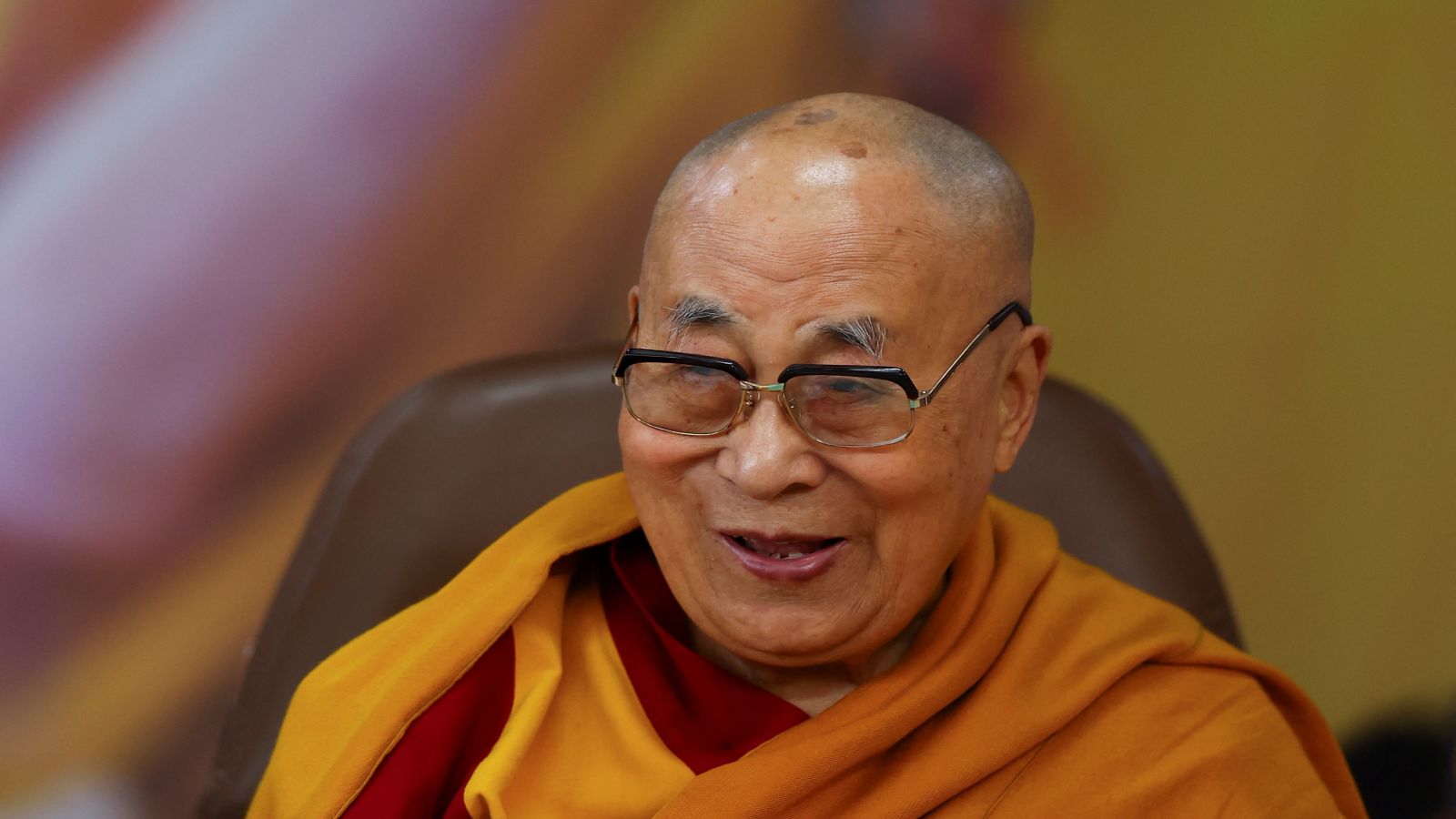
The upcoming succession of the 14th Dalai Lama is not a theological dispute; it is an asymmetric geopolitical bottleneck that will force a direct collision between state sovereignty and religious authority across the Himalayas. When a bipartisan U.S. congressional panel urges the executive branch to open formal diplomatic dialogues with India regarding this transition, it signals that Washington views the selection of the 15th Dalai Lama as a primary theater of strategic competition with Beijing. The core operational problem is straightforward: the Chinese Communist Party (CCP) intends to use bureaucratic statecraft to manufacture a compliant religious figure, while the Tibetan exile community—anchored in Dharamshala, India—operates under traditional spiritual protocols that explicitly reject Beijing's jurisdiction. Without pre-emptive bilateral alignment between Washington and New Delhi, Beijing will exploit institutional ambiguity to fracture the Tibetan diaspora, neutralize a key diplomatic lever against China, and destabilize India's northern border security architecture.
The Institutional Mechanics of the Legitimacy Contest
To understand why a U.S. panel—specifically the Congressional-Executive Commission on China (CECC)—prioritizes bilateral coordination with India, one must examine the competing legal and spiritual frameworks governing Tibetan Buddhism. This conflict represents a classic clash between institutional isomorphism and traditional charismatic authority.
Beijing’s strategy relies on administrative codification. In 2007, China’s State Administration for Religious Affairs issued Order No. 5, officially titled "Measures on the Management of the Reincarnation of Living Buddhas in Tibetan Buddhism." This regulation mandates that all reincarnations of senior lamas must receive explicit approval from Chinese state organs, effectively transferring the locus of spiritual validation from monastic lineages to an atheist state apparatus. Beijing’s historical precedent for this maneuver occurred in 1995, when the CCP abducted Gedhun Choekyi Nyima—the 11th Panchen Lama recognized by the Dalai Lama—and installed its own candidate, Gyaincain Norbu. By controlling the Panchen Lama, who traditionally plays a critical role in validating the next Dalai Lama, Beijing constructed an internal mechanism to ratify its future selection.
Conversely, the 14th Dalai Lama, Tenzin Gyatso, has systematically dismantled the traditional vulnerabilities that Beijing plans to exploit. In 2011, he devolved his political authority to the democratically elected Central Tibetan Administration (CTA), severing the temporal power of the Tibetan exile government from the spiritual office of the Dalai Lama. Regarding his reincarnation, he has outlined several non-traditional contingencies:
- Emanation Before Death (Ma-dhey Tulku): The designation of a successor while the 14th Dalai Lama is still alive, bypassing the traditional post-mortem search phase where state interference is easiest to execute.
- Geographic Exclusion: A definitive declaration that if he reincarnates, he will be born in a "free country," explicitly excluding any territory under the jurisdiction of the People's Republic of China.
- Institutional Abolition: The option to end the lineage entirely if the Tibetan people determine the institution no longer serves its foundational purpose.
The friction between these two frameworks guarantees a bifurcated outcome. Upon the passing of the 14th Dalai Lama, the global community will likely face two competing claimants: a Beijing-appointed figure backed by state media, financial incentives, and coercive diplomacy, and an exile-recognized figure validated by the Gaden Phodrang Trust and traditional monastic leaders.
Why New Delhi Holds the Decisive Operational Lever
Washington’s legislative apparatus, notably through the Tibetan Policy and Support Act (TPSA) of 2020, has already established domestic legal parameters. The TPSA makes it official U.S. policy that the succession of the Dalai Lama is strictly a religious matter for Tibetan Buddhists, threatening sanctions against Chinese officials who interfere in the process. However, unilateral U.S. sanctions cannot physically secure the institutions that will execute the succession. That operational capacity resides entirely in India.
India is the host nation for the 14th Dalai Lama, the Central Tibetan Administration, roughly 70,000 Tibetan exiles, and the major re-established monastic universities (such as Sera, Drepung, and Ganden) in southern India. Under international relations theory, India possesses the territorial monopoly necessary to protect the institutional infrastructure of Tibetan Buddhism. If the 15th Dalai Lama is identified within India or neighboring Himalayan regions like Nepal or Bhutan, New Delhi’s domestic security apparatus, visa regimes, and diplomatic recognition will determine whether that successor can function as a viable spiritual leader.
The U.S. panel’s call for dialogue addresses a critical vulnerability in New Delhi’s historical posture: strategic ambiguity. For decades, India has walked a diplomatic tightrope:
- Asylum Without Sovereignty: India granted sanctuary to the Dalai Lama in 1959 and allowed the Tibetan community to build parallel cultural and educational institutions, yet it officially recognizes the Tibet Autonomous Region (TAR) as part of the People's Republic of China.
- The "Tibet Card" Calibration: New Delhi has historically restricted the political activities of the CTA during periods of Sino-Indian diplomatic thaw, only to relax those restrictions when border tensions flare along the Line of Actual Control (LAC).
- Domestic Himalayan Sensitivities: India’s own border regions—specifically Ladakh, Himachal Pradesh, Sikkim, and Arunachal Pradesh (which Beijing claims as "South Tibet")—are deeply integrated into the Tibetan Buddhist cultural sphere.
If Beijing successfully installs a compliant 15th Dalai Lama and coerces regional neighbors into recognizing him, China gains a direct ideological conduit into India's northern frontier populations. Conversely, if India actively backs the exile-selected successor, it risks a severe diplomatic rupture with Beijing and potential military escalation along the LAC. The U.S. panel recognizes that New Delhi cannot navigate this dilemma in isolation without facing immense asymmetric pressure from China.
The Cost Function of Diplomatic Inaction
Failing to establish a synchronized U.S.-India protocol before the succession crisis begins creates predictable, compounding failures across three strategic dimensions.
1. The Fragmentation of the Tibetan Diaspora
Without unified external backing from major democracies, the Tibetan exile community faces severe internal stress. A prolonged vacuum or a contested succession allows Beijing to deploy targeted financial co-optation and disinformation campaigns within exile settlements in India and Nepal. Beijing already leverages economic aid and infrastructure investments in Kathmandu to restrict the movement and political expression of Tibetan refugees in Nepal. If Nepal recognizes a Beijing-backed Dalai Lama, the traditional Himalayan transit and monastic networks will fracture, isolating the Dharamshala leadership.
2. The Erosion of Soft Power and Normative Standards
The succession dispute is a test case for whether an authoritarian state can unilaterally rewrite the rules of a global religious tradition to serve its internal security objectives. If China successfully imposes its state-selected candidate on the international community through economic coercion—forcing countries, international organizations, and corporations to use Beijing’s nomenclature under threat of market exclusion—it establishes a precedent for transnational ideological control. This directly degrades the normative power of democratic coalitions in the Indo-Pacific.
3. Asymmetric Escalation Along the Line of Actual Control
The geopolitical reality of Tibet is inseparable from the physical geography of the Sino-Indian border. Following the 2020 Galwan Valley clashes, the bilateral relationship between India and China shifted from managed competition to structural hostility. Beijing views the Dalai Lama's presence in India as a persistent threat to its internal stability in Tibet. During the succession transition, China will likely use military posturing along the LAC to deter New Delhi from facilitating the recognition or enthronement of an exile-selected successor. Without pre-negotiated intelligence sharing, diplomatic backing, and deterrence assurances from Washington, Indian policymakers may face an acute crisis where domestic political pressure to support the Tibetan cause collides with the military risk of a two-front border confrontation.
Executing a Synchronized Bilateral Architecture
To neutralize Beijing’s bureaucratic preemption, Washington and New Delhi must move beyond rhetorical support and build a concrete diplomatic and operational framework while the 14th Dalai Lama is still active. The limitations of this strategy are clear: India fiercely guards its strategic autonomy and will reject any framework that appears to subordinate its China policy to Washington’s directives. Furthermore, neither Washington nor New Delhi can dictate theological outcomes to the Gaden Phodrang Trust without undermining the very principle of religious non-interference they claim to defend.
Therefore, an effective U.S.-India dialogue must focus strictly on creating an insulated operational environment for the Tibetan monastic leadership, structured around four tactical pillars:
- Pre-Emptive Diplomatic Recognition Protocols: Washington and New Delhi should quietly coordinate a coalition of democratic allies—including key European partners, Japan, and Australia—to establish a unified diplomatic stance prior to the transition. This coalition must commit to recognizing only the successor validated by the 14th Dalai Lama’s designated religious institutions, thereby denying Beijing’s candidate international legitimacy from day one.
- Border and Diaspora Security Guarantees: The U.S. must link its broader Indo-Pacific defense and intelligence-sharing frameworks (such as the Quad and bilateral foundational agreements) to India’s northern border stability. By providing real-time intelligence on People's Liberation Army (PLA) deployments and logistics in the Tibet Autonomous Region, Washington lowers the strategic cost for New Delhi to resist Chinese coercive diplomacy during the succession window.
- Institutional Protection in Nepal and Bhutan: Because Nepal serves as a critical demographic and geographic buffer, the U.S. and India must coordinate economic and diplomatic leverage in Kathmandu to ensure the physical security of Tibetan refugee communities and prevent Beijing from using Nepal as a staging ground to legitimize its state-selected candidate.
- Counter-Disinformation and Financial Interdiction: Both governments must establish joint monitoring mechanisms to track and expose Chinese state-sponsored influence operations aimed at bribing monastic leaders or manipulating succession narratives across South Asia. Enforcing the sanctions provisions of the Tibetan Policy and Support Act must be paired with Indian regulatory scrutiny over illicit financial flows entering Himalayan monastic institutions.
The window for low-cost diplomatic preparation is closing. Once the 14th Dalai Lama passes, the transition will immediately shift from a theoretical policy discussion to a high-stakes operational crisis characterized by rapid information warfare and military signaling. The U.S. and India must finalize their diplomatic coordination, intelligence-sharing parameters, and coalition recognition protocols immediately, ensuring that when the succession occurs, Beijing’s bureaucratic candidate is met by a unified, pre-positioned diplomatic firewall that renders China’s state-manufactured legitimacy irrelevant outside its own borders.